Info
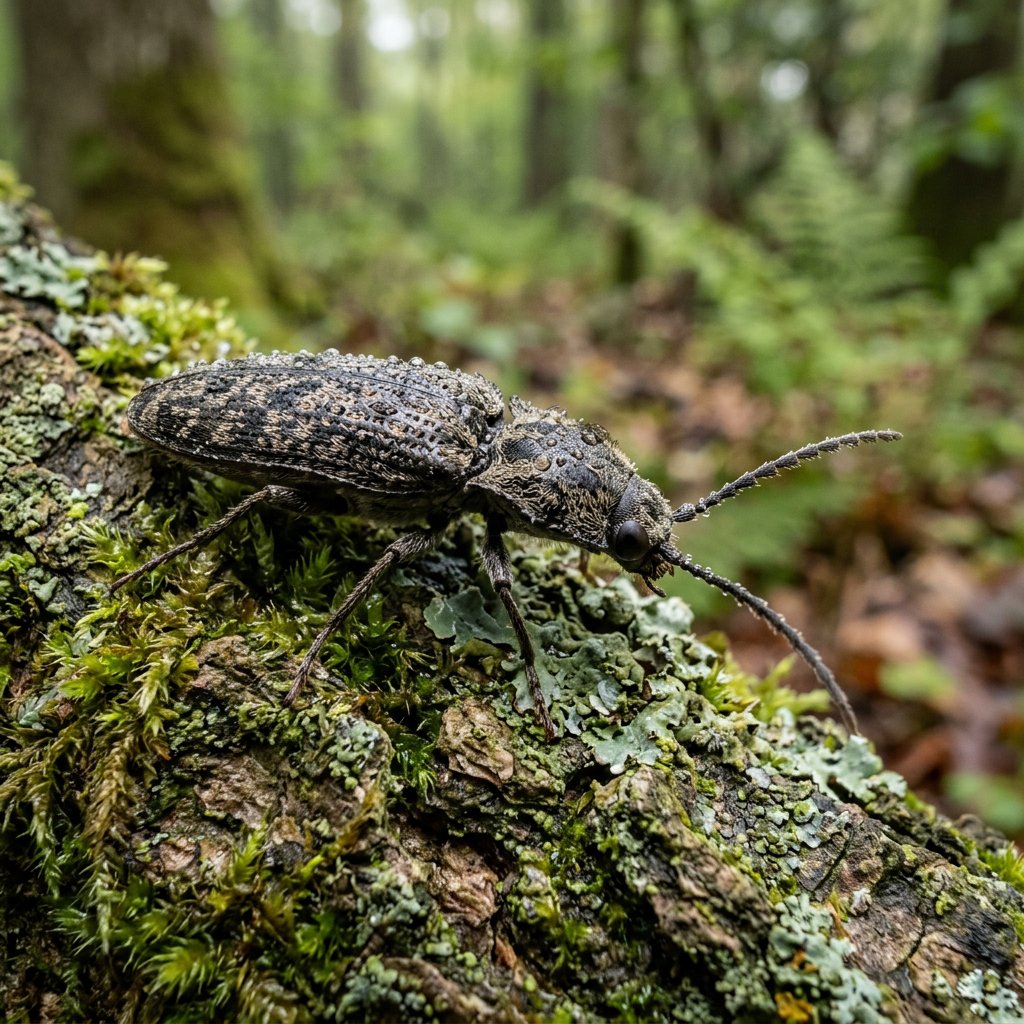
Often called the Rhomboid Click Beetle, this insect is a true master of forest camouflage. Found lurking in ancient European woodlands, it looks like a living piece of weathered bark or a fragment of lichen. While its size and sudden "clicking" sound might startle a casual gardener, it is a fascinating acrobat and a sign of a very healthy, mature ecosystem.
🔍 How to Identify
- 🪲 The "Rhombus" Pattern: It gets its name from the distinct, dark diamond-shaped (rhomboid) markings on its brownish-grey wing covers.
- 📏 Substantial Size: This is one of the larger members of the click beetle family, often reaching over 2 centimeters in length, making it feel quite heavy in the hand.
- 🧥 Velvety Texture: Its entire body is covered in a fine, downy "fuzz" of greyish hairs, which helps it blend perfectly against the trunks of oak and beech trees.
🌲 Habitat & Ecology
- 🌳 Ancient Woodland Resident: This beetle is a "deadwood specialist." You will typically only find it in areas with old-growth trees and plenty of decaying logs, as it relies on rotting wood for its life cycle.
- 🍗 The Wood-Log Predator: While the adults are shy and nocturnal, the larvae (often called wireworms) are fierce predators. They live inside decaying wood for several years, hunting the larvae of other wood-boring beetles.
- 🔦 Dusk Explorer: During mid-summer, the adults become active at twilight. They are frequently attracted to artificial lights, so you might find one resting on a window screen or a porch light during a warm July night.
⚠️ Safety & Toxicity
- 🛡️ Harmless Acrobat: The Stenagostus rhombeus is completely non-toxic and lacks any form of stinger or venom. It is safe to handle, though it may be quite wiggly!
- 💥 The "Click" Defense: If it feels threatened, it will use a specialized "peg and socket" mechanism on its underside to snap its body, creating a loud click and launching itself into the air. This is a survival tactic to escape the beaks of hungry birds.
✨ Fun Fact
The "click" of this beetle is one of the fastest movements in the animal kingdom. When it snaps its spring-loaded chest, it can experience an acceleration equivalent to 400 times the force of gravity (400G)—that is roughly 40 times what a fighter pilot experiences during a high-speed maneuver!
More Details








