Info
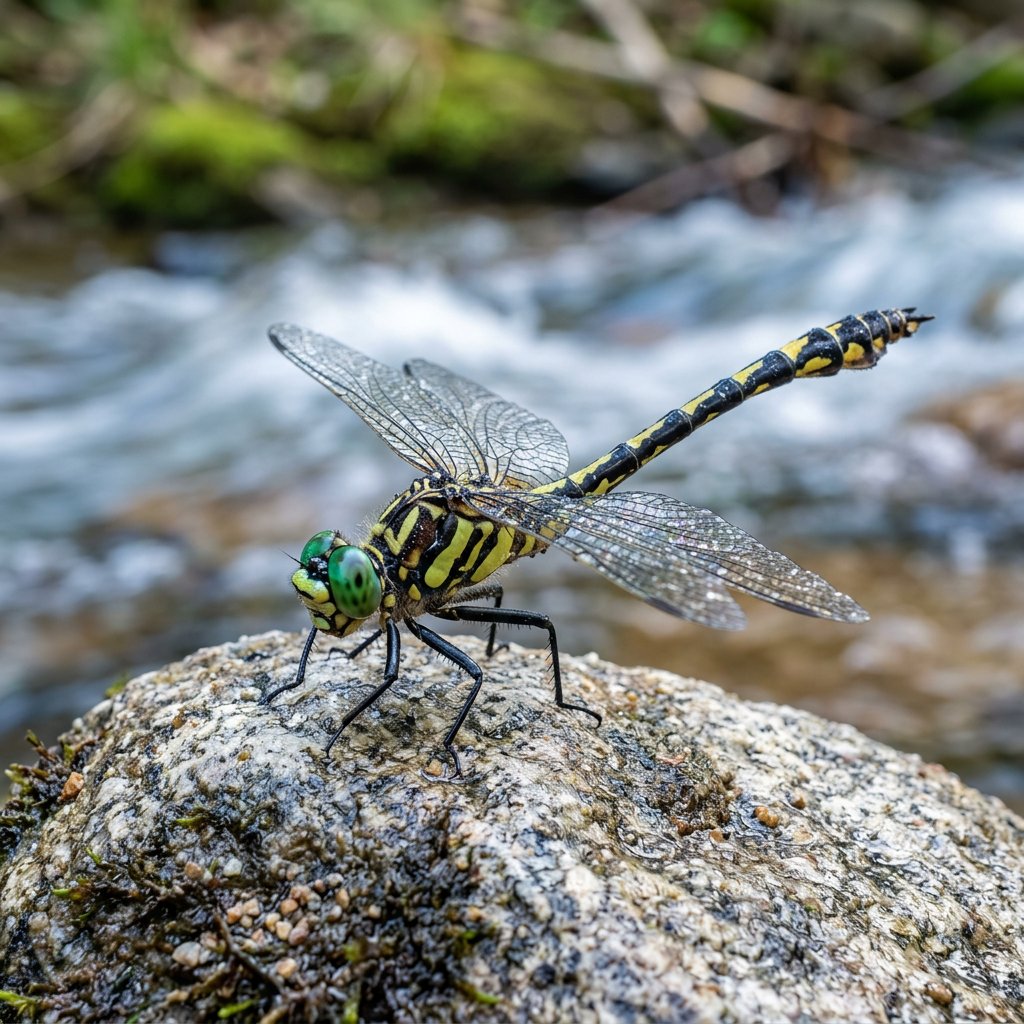
Often called the Zebra Clubtail, this dragonfly is a master of camouflage against the dappled light of woodland streams. With its bold black-and-yellow stripes and distinctively swollen tail, it looks like a miniature tiger of the air. It is a definitive "friend" to hikers and gardeners alike, spending its days patrolling clean water sources and snatching pesky flies right out of the sky.
🔍 How to Identify
- 👀 Widely Set Eyes: Unlike many common dragonflies whose eyes touch at the top of the head, the Zebra Clubtail’s green or turquoise eyes are distinctly separated.
- 📉 The Clubbed Tail: The end of the abdomen (the "tail") features a noticeable flare or swelling, resembling a small club or mace.
- 🏁 High-Contrast Pattern: Its body is deep black, broken up by crisp, bright yellow or creamy-white rings and thorax stripes that mimic the patterns of a zebra.
🌲 Habitat & Ecology
- 🏞️ Clean Water Indicator: These dragonflies are picky about their real estate; they are almost exclusively found near clear, fast-moving rivers and streams with sandy or silty bottoms.
- 🧗 The Low Perch: While some dragonflies prefer the tops of tall trees, you’ll often find the Zebra Clubtail resting on sunny rocks, low-hanging leaves, or even the bare ground near the water’s edge.
- 🦟 Mosquito Control: As an apex predator of the insect world, it serves as a natural pest controller, devouring hundreds of mosquitoes and midges during its adult lifespan.
⚠️ Safety & Toxicity
- 🛡️ Completely Harmless: The Zebra Clubtail has no stinger and is not venomous. It is safe to observe and poses no threat to humans.
- 🦷 The "Nip" Factor: Like all large dragonflies, it has strong mandibles for crunching prey. If handled roughly, it might give a tiny, harmless nip, but it will never go out of its way to bite a human or pet.
✨ Fun Fact
The larvae of the Zebra Clubtail are "sand-divers." Unlike other aquatic insects that swim or crawl, these larvae use their specialized, shovel-like legs to bury themselves entirely under the riverbed sand, leaving only their "snorkel" exposed to breathe while they wait for prey to pass by!
More Details








