Info
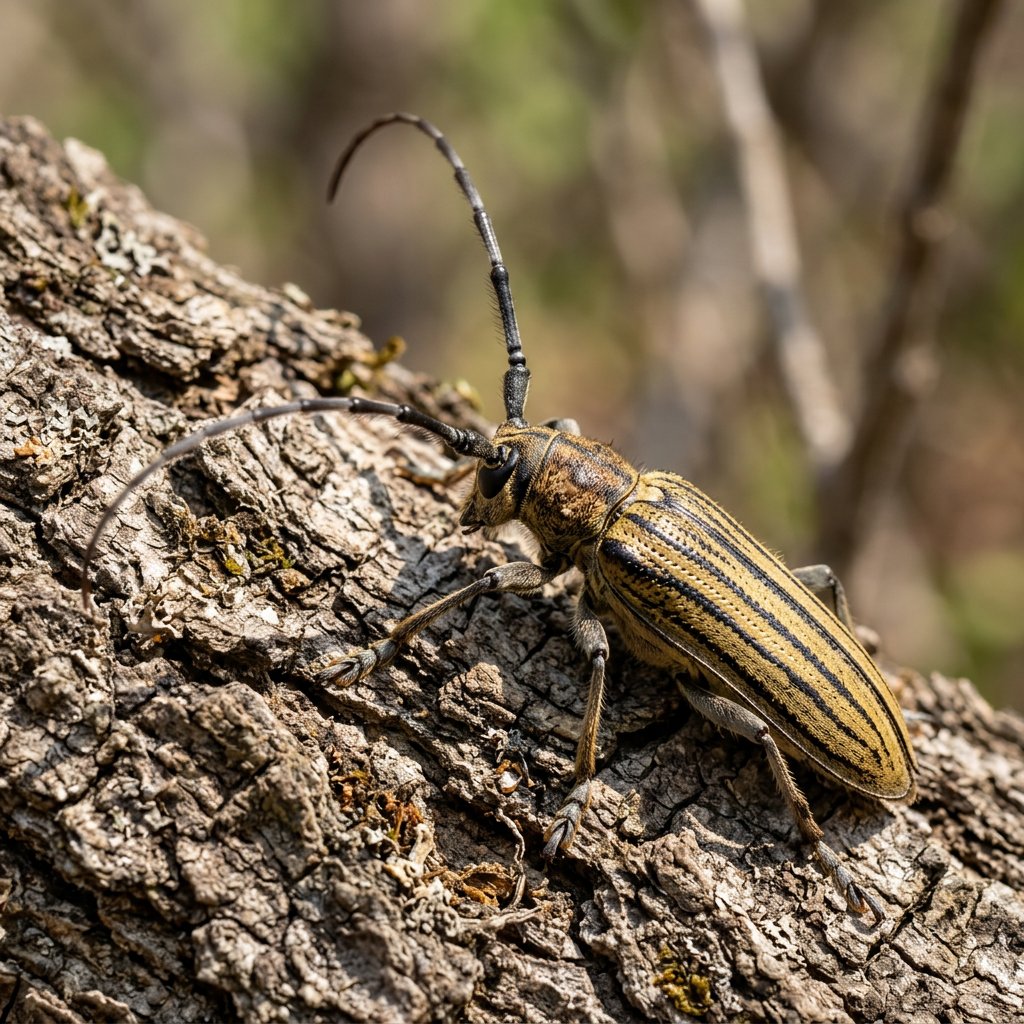
Often called the Eight-Spotted Longhorn Beetle, Susuacanga is a striking member of the wood-boring beetle family. These beetles look like they have been hand-painted with ivory or golden ink, wandering through the forests of the Americas. While their long, sweeping "horns" and armored bodies might look intimidating, they are actually gentle forest recyclers that play a vital role in their ecosystem.
🔍 How to Identify
- 🪲 The "Horns": They possess exceptionally long, segmented antennae that curve backward, often exceeding the total length of their own bodies.
- 🎨 Ivory Markings: Their dark, textured wing covers (elytra) are typically adorned with distinct, symmetrical pale spots—often appearing as four pairs of "eyes."
- 🛡️ Robust Frame: They have an elongated, sturdy body with a rough-textured thorax that mimics the appearance of rugged tree bark.
🌲 Habitat & Ecology
- 🌳 Nature's Recycler: These insects are primarily found in tropical and subtropical forests. The larvae spend their early life tunneling through dead or fallen wood, helping to break down timber and return nutrients to the soil.
- 🌙 Night Owls: Many species in this genus are nocturnal or crepuscular. You might find them attracted to porch lights or resting quietly on tree trunks during the day, perfectly camouflaged against the lichen.
⚠️ Safety & Toxicity
- ✅ Harmless to Humans: Susuacanga is not venomous and does not possess a stinger. They are generally shy and will fly away if disturbed.
- 🤏 Watch the Jaws: Like most longhorn beetles, they have powerful mandibles designed for chewing through wood. If handled roughly, they may deliver a sharp, defensive pinch. It is best to admire them with your eyes rather than your hands.
- 🐾 Pet Safety: They are not toxic to cats or dogs, though the crunchy exoskeleton might cause minor stomach upset if swallowed.
✨ Fun Fact
The name Susuacanga is derived from Tupi-Guarani (Indigenous South American languages), where it roughly translates to "Deer Head." This is a nod to their magnificent, antler-like antennae that they use to "smell" their way toward mates and food sources.
More Details








