Info
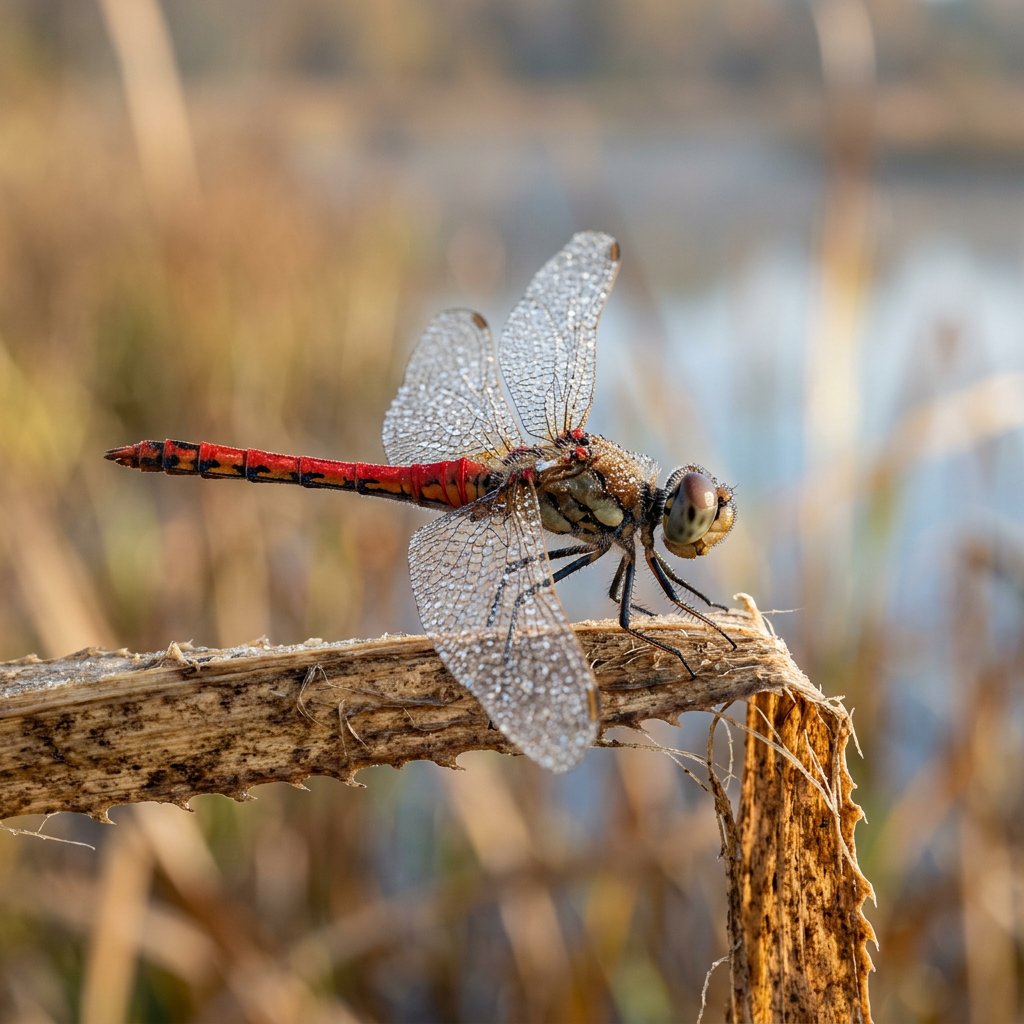
Meet the Vagrant Darter, the intrepid traveler of the dragonfly world. Often seen patrolling sun-drenched gardens and pond edges late into the autumn, these agile flyers are named for their tendency to wander far from their birthplaces. In European folklore, dragonflies were once called "Devil’s Darning Needles," but the Vagrant Darter is far more of a helpful garden guardian than a mythological threat.
🔍 How to Identify
- 下 The "Moustache": The most reliable way to identify this species is a thin black line on its face (the frons) that runs downward along the edge of the eyes, looking like a tiny, drooping moustache.
- 🎨 Color Dimorphism: Mature males boast a dusty, brick-red abdomen that slightly broadens near the tip, while females and young males are a golden-yellow or tawny brown.
- 🦵 Striped Legs: Look closely at the legs; they are predominantly black but feature a distinct pale yellow or brownish stripe running down the length.
🌲 Habitat & Ecology
- 🦟 The Aerial Ace: As a top-tier predator of the insect world, the Vagrant Darter spends its day "perch-hunting." It sits on a sunny twig or stone, darting out with incredible speed to snatch flies, mosquitoes, and midges mid-air.
- 🗺️ The Wanderer: Unlike many dragonflies that stay glued to their home pond, this species is highly migratory. You might find them in meadows, woodland clearings, or even high-rise urban gardens, miles away from the nearest body of standing water.
⚠️ Safety & Toxicity
- 🛡️ Harmless Friend: Despite their pointed tails and fast flight, the Vagrant Darter is completely harmless to humans and pets. They do not possess a stinger and are not aggressive toward people.
- 🦗 Pest Control: They are actually a benefit to your outdoor space! By consuming hundreds of mosquitoes and gnats daily, they act as a natural, chemical-free form of pest management.
✨ Fun Fact
The Vagrant Darter is one of the most cold-tolerant dragonflies in Europe. While most other species die off at the first sign of frost, these hardy flyers can often be seen basking in the weak October sun, clinging to warm bricks or wooden fences to jump-start their engines.
More Details








