Info
🐞 The Red-Femured Milkweed Borer
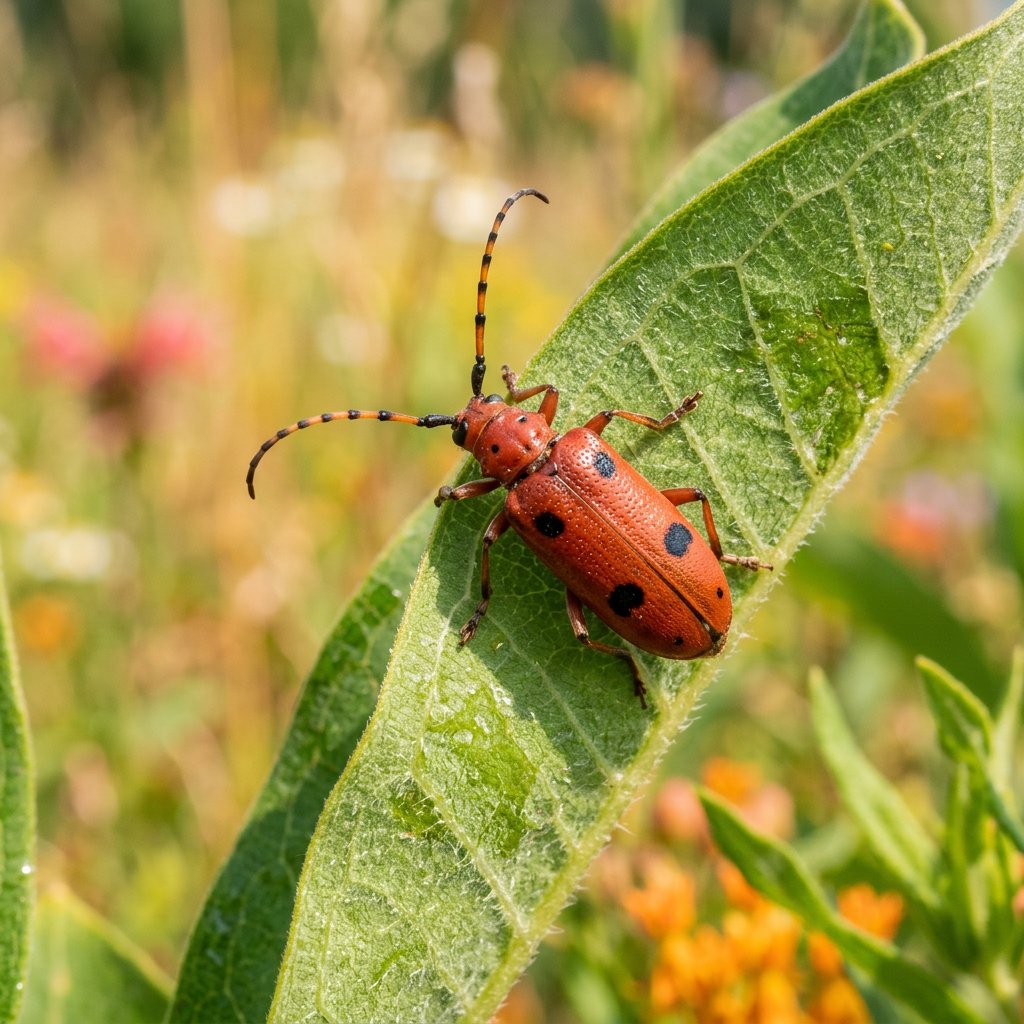
Often mistaken for a ladybug gone wrong due to its striking black-and-red warning colors, the Red-Femured Milkweed Borer (Tetraopes femoratus) is a master of camouflage within its favorite snack bar: the milkweed patch. Despite its vibrant, "don't-eat-me" appearance, this beetle is actually a specialized herbivore that spends its entire life cycle deeply connected to its host plant.
🔍 How to Identify
- 🔴 Coloring: These beetles sport a vivid, brick-red to orange-red body covered in tiny, fine hairs.
- ⚫ Patterning: Look for a distinct set of four black circular spots on the wing covers (elytra) and an additional black patch behind the head.
- 📡 Antennae: They feature long, prominent black antennae that are often as long as or longer than their bodies, which they use to navigate the complex stems of milkweed.
🌲 Habitat & Ecology
- 🌿 Host Association: You will almost exclusively find them on Asclepias (Milkweed) plants. They are rarely spotted anywhere else, as the adults feed on the leaves and flowers, while the larvae feed on the roots.
- ♻️ The Milkweed Cycle: These beetles have evolved to handle the sticky, toxic latex sap of the milkweed. By consuming the plant, they actually become mildly toxic themselves, which is exactly why they advertise their presence with such bright, bold colors—a signal to predators like birds that they taste terrible.
⚠️ Safety & Toxicity
- 🚫 Status: Harmless to humans. Despite their bright warning colors, they do not possess venom or stingers.
- 🛡️ Details: They are not aggressive and will usually drop to the ground or hide on the underside of a leaf if they feel threatened. While they are safe to handle, it is best to observe them from a distance to avoid damaging their delicate antennae or the milkweed host plants they depend on.
✨ Fun Fact
The Tetraopes genus is often called "Milkweed Longhorns." During mating, the males are famously "clingy"—they will often ride on the female's back for hours, or even days, to ensure that no other males attempt to mate with her, acting as a living, six-legged bodyguard!
More Details








