Info
Often called the Polypore Fungus Beetle, the Tetratoma is a tiny, unsung hero of the forest floor. These colorful little beetles spend their lives tucked away in the nooks and crannies of bracket fungi, acting as natural recyclers. While they might look like tiny, vibrant jewels, they are actually specialized scavengers that play a vital role in breaking down woody mushrooms.
🔍 How to Identify
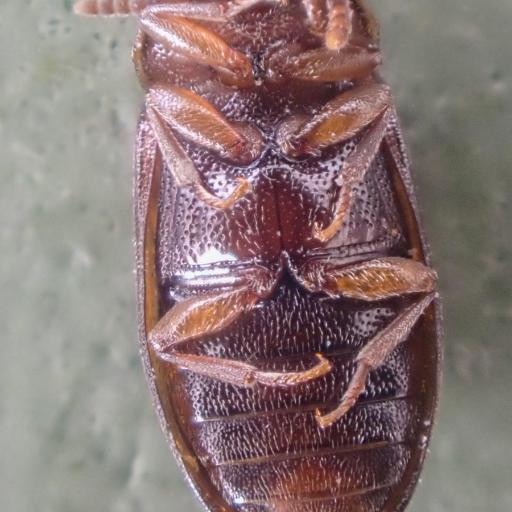
- 🐞 The Shape: They typically have an elongated, oval body that is smooth and shiny, making them look like a tiny, polished bead scurrying across a log.
- 📡 Clubbed Antennae: If you look closely at their "feelers," the last few segments are noticeably thicker, forming a distinct club shape that helps them sniff out their favorite fungal snacks.
- 🎨 Flashy Patterns: Many species sport a striking contrast, often featuring bold orange or reddish spots on a dark black or metallic blue background, though some can be a solid, tawny brown.
🌲 Habitat & Ecology
- 🍄 Fungal Feast: These insects are strict "fungivores." You will almost always find them on shelf fungi or polypores growing on decaying hardwood trees, where they dine on the tough, leathery flesh of the mushroom.
- 🪵 The Nursery: They aren't just visitors; they often spend their entire life cycle—from egg to adult—within the same cluster of fungi. The larvae tunnel through the mushroom, protected from predators while they eat.
- 🍂 Forest Recyclers: By eating and boring into fungi, they help speed up the decomposition process, returning essential nutrients to the soil.
⚠️ Safety & Toxicity
- ✅ Completely Harmless: Tetratoma beetles are "friends." They have no stinger and no interest in biting humans. They are far more afraid of you than you are of them!
- 🐾 Non-Toxic: They do not possess any chemical defenses or toxins. If a curious pet or child finds one in the garden, it poses no threat to their health or safety.
✨ Fun Fact
Because Tetratoma beetles are extremely picky eaters, scientists often use them as "bio-indicators." Seeing a specific type of Tetratoma can tell a researcher exactly what kind of rare or healthy fungi are growing in that forest without them even seeing the mushroom itself!
More Details








