Info
Often referred to as the "Marching Menace" of the oak forests, the Oak Processionary Moth (Thaumetopoea processionea) is a creature of remarkable social behavior and significant caution. While the adult moths are quite plain, their larval (caterpillar) stage is famous for traveling in long, nose-to-tail "conga lines" that can stretch for several meters. Though they are a fascinating example of collective animal behavior, they are considered a major pest and a health hazard in many parts of Europe and the UK.
🔍 How to Identify
- 🐛 The Procession: Look for caterpillars moving in a distinct single-file line or a wedge-shaped "parade" across tree trunks or the ground.
- 🕸️ Silken Tents: They build thick, white, webbing nests (similar to a dense spider web or a hammock) on the trunks and branches of oak trees, rather than among the leaves.
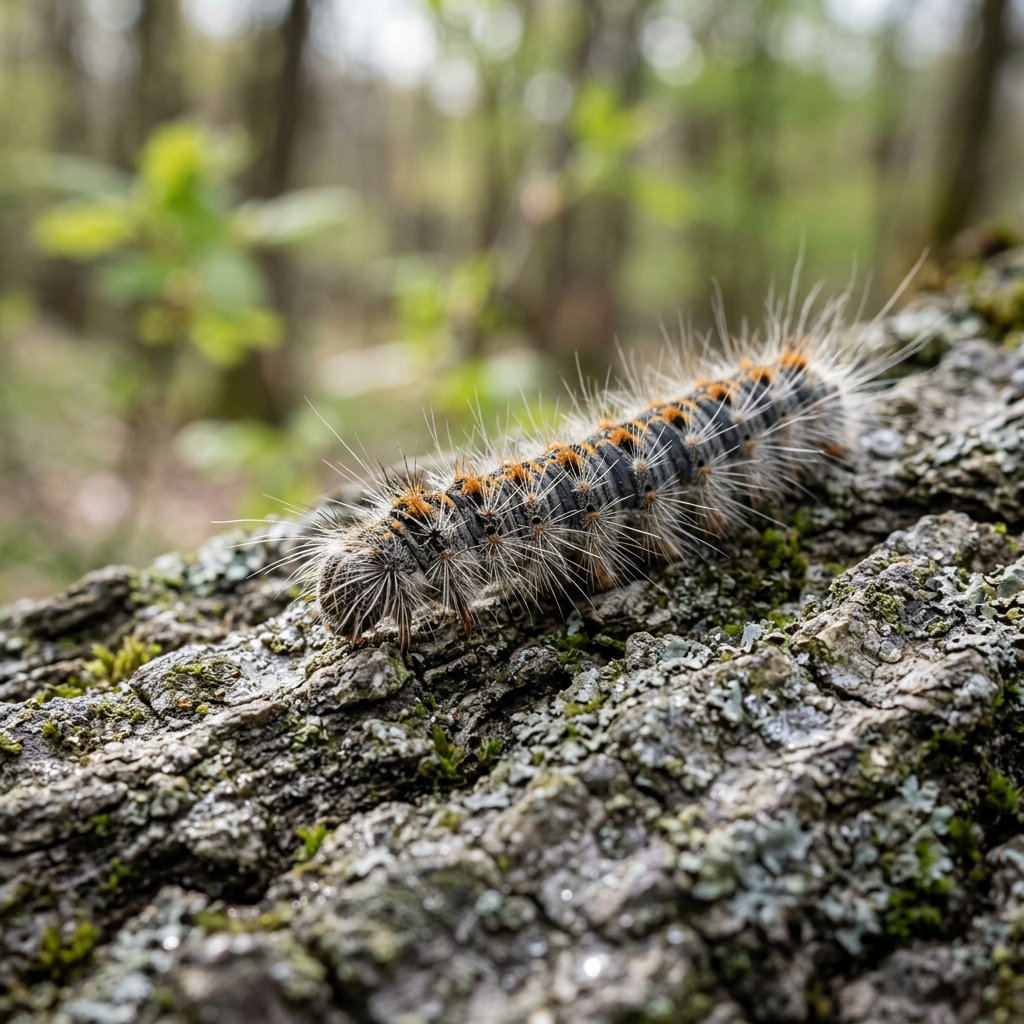
- 💇 Hirsute Appearance: The caterpillars are covered in thousands of long, silvery-white hairs that give them a fuzzy look, set against a dark grey body with a black head.
🌲 Habitat & Ecology
- 🌳 Oak Specialists: As the name suggests, these insects are almost exclusively found on Oak trees (Quercus). They feed on the foliage, and a large colony can significantly "thin out" the canopy of a mature tree.
- 🏘️ Social Nesting: During the day, the caterpillars retreat into their silken nests to stay protected from predators and temperature swings, emerging at night in their characteristic processions to feed.
⚠️ Safety & Toxicity
- 🚫 DANGER: Do not touch or approach these caterpillars. They are covered in nearly 60,000 defensive "urticating" hairs containing a protein called thaumetopoein.
- 🤒 Health Risks: These microscopic hairs can become airborne. Contact with skin causes painful, itchy rashes (dermatitis), while inhalation can lead to sore throats, asthma attacks, or severe eye irritation.
- 🐶 Pet Warning: Keep dogs away from infested trees; if a dog licks a caterpillar or a nest, it can suffer severe swelling of the tongue and mouth, requiring immediate vet attention. Old, abandoned nests remain toxic for several years.
✨ Fun Fact
The caterpillars don't just follow each other by sight; they lay down a chemical pheromone trail like a highway. This ensures that even if the "line" is broken, the stragglers can find their way back to the safety of the communal nest!
More Details








