Info
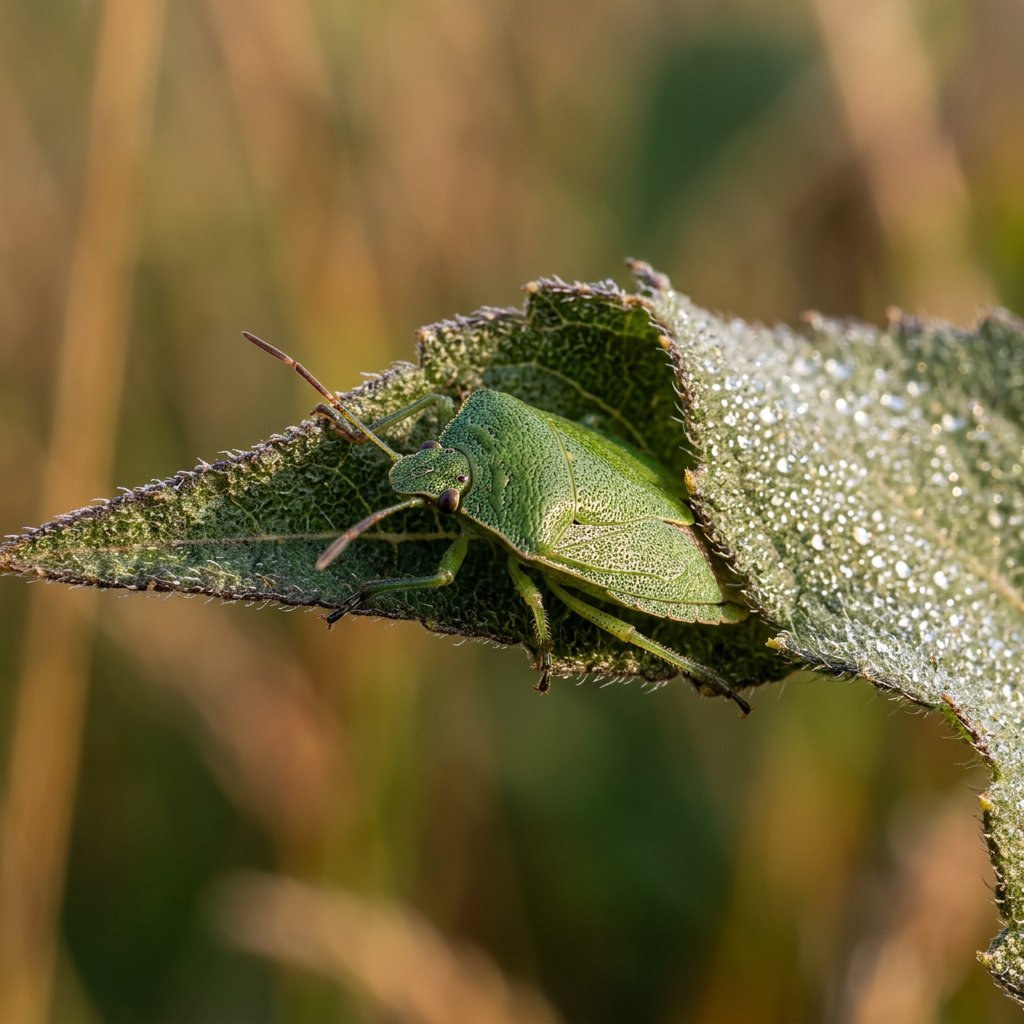
Often called the Red-shouldered Stink Bug, members of the Thyanta genus are the tiny, armored tanks of the insect world. These shield-shaped bugs are common sights in fields and gardens across the Americas, known for their ability to blend perfectly into foliage—until they release their famous chemical defense. While they are often viewed as minor garden pests, their geometric beauty and seasonal color changes make them a fascinating study for nature lovers.
🔍 How to Identify
- 🛡️ The Shield Shape: Like all stink bugs, they possess a broad, flat, five-sided body that looks remarkably like a medieval knight's shield.
- 🎨 Red Shoulders: While primarily leaf-green, many species feature a distinct, narrow stripe of pink, red, or orange running horizontally across the "shoulders" (the pronotum).
- 📡 Segmented Antennae: They have slender, five-segmented antennae, which are often tipped with reddish or darker hues to match their shoulder markings.
🌲 Habitat & Ecology
- 🍽️ Plant Juice Drinkers: Thyanta are generalist herbivores. They use their needle-like mouthparts to pierce seeds, fruits, and stems to suck out nutrients, particularly favoring sunflowers, legumes, and cereal crops.
- 🍂 Seasonal Camouflage: Interestingly, these insects are masters of disguise. Depending on the temperature and length of the day, their color can shift from a vibrant summer green to a duller bronze or brown in the autumn to match the dying vegetation.
⚠️ Safety & Toxicity
- 👃 The Stink Defense: They are completely harmless to humans and do not bite or sting. However, if handled roughly or crushed, they live up to their name by releasing a pungent, foul-smelling liquid from glands on their sides.
- 🐶 Pet Interactions: While not toxic, the defensive chemical tastes extremely bitter. A curious dog or cat that tries to "taste" one will likely experience some drooling or pawing at the mouth, but no long-term harm.
✨ Fun Fact
The "stink" of a stink bug actually contains chemicals also found in cilantro! This is why some people think the bugs smell like the herb, while others find the scent completely repulsive—it's all down to your individual genetics.
More Details








