Info
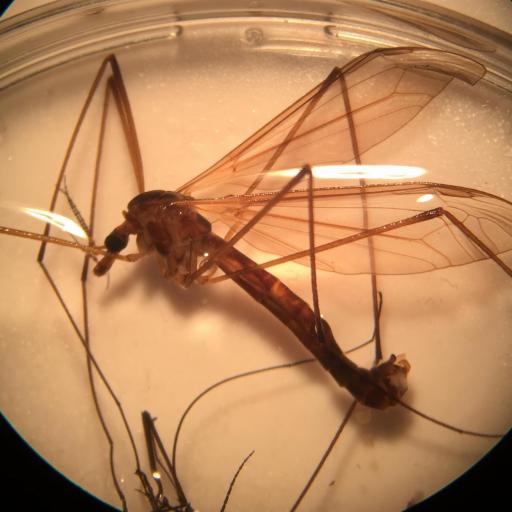
Commonly known as the Marsh Crane Fly, this gangly guest is often the cause of unnecessary panic when it bobbles into a living room. Though they look like mosquitoes that have been put through a stretching rack, they are gentle giants of the insect world. In folklore, they are sometimes called "Gollywhoppers" or "Daddy Longlegs," and they spend most of their lives as subterranean larvae before emerging for a brief, clumsy dance in the air.
🔍 How to Identify
- 🦟 The Silhouette: They possess incredibly long, spindly legs that are extremely fragile and a slender, elongated body that can reach up to 25mm in length.
- ✈️ Wing Details: Unlike many other flies, they have a single pair of wings with a distinct smoky-grey tint and a dark line along the front edge. Look for the "halteres"—tiny, knob-like structures behind the wings that act as gyroscopes.
- 🎭 The Face: They have a long "snout" (rostrum), but don't let it fool you; they lack the piercing mouthparts of their mosquito cousins and are incapable of biting.
🌲 Habitat & Ecology
- 🌱 The "Leatherjacket" Phase: Most of this insect's life is spent underground as a grey, tough-skinned larva known as a leatherjacket. They feast on the roots of grasses and seedlings, which can sometimes make them a nuisance for lawn enthusiasts.
- 💧 Damp Preferences: As the name oleracea suggests, they thrive in moist soils, marshes, and well-watered garden lawns. They usually emerge in two waves: one in late spring and a much larger one in late summer or early autumn.
- 🦉 Nature’s Snack: They are a vital food source for birds like starlings and bats. Their clumsy flight makes them an easy "fast-food" option for predators looking to fuel up before winter.
⚠️ Safety & Toxicity
- 🛡️ Completely Harmless: Despite their intimidating size and "stinger-like" abdomen (which is actually just an ovipositor for laying eggs), they cannot sting, bite, or transmit diseases.
- 🏠 Indoor Nuisance: Their only "danger" is their tendency to fly into lights or get tangled in hair, which is more startling than harmful. They are sensitive to touch and may drop a leg to escape—a process called autotomy—so handle them gently if you are moving them outside.
✨ Fun Fact
Crane flies are notoriously bad at flying. Because their legs are so long and their wings are relatively small, they spend most of their time "bobbing" against walls or grass. Scientists believe their long legs actually act as "bumpers" to protect their delicate bodies during their frequent crash landings!
More Details








