Info
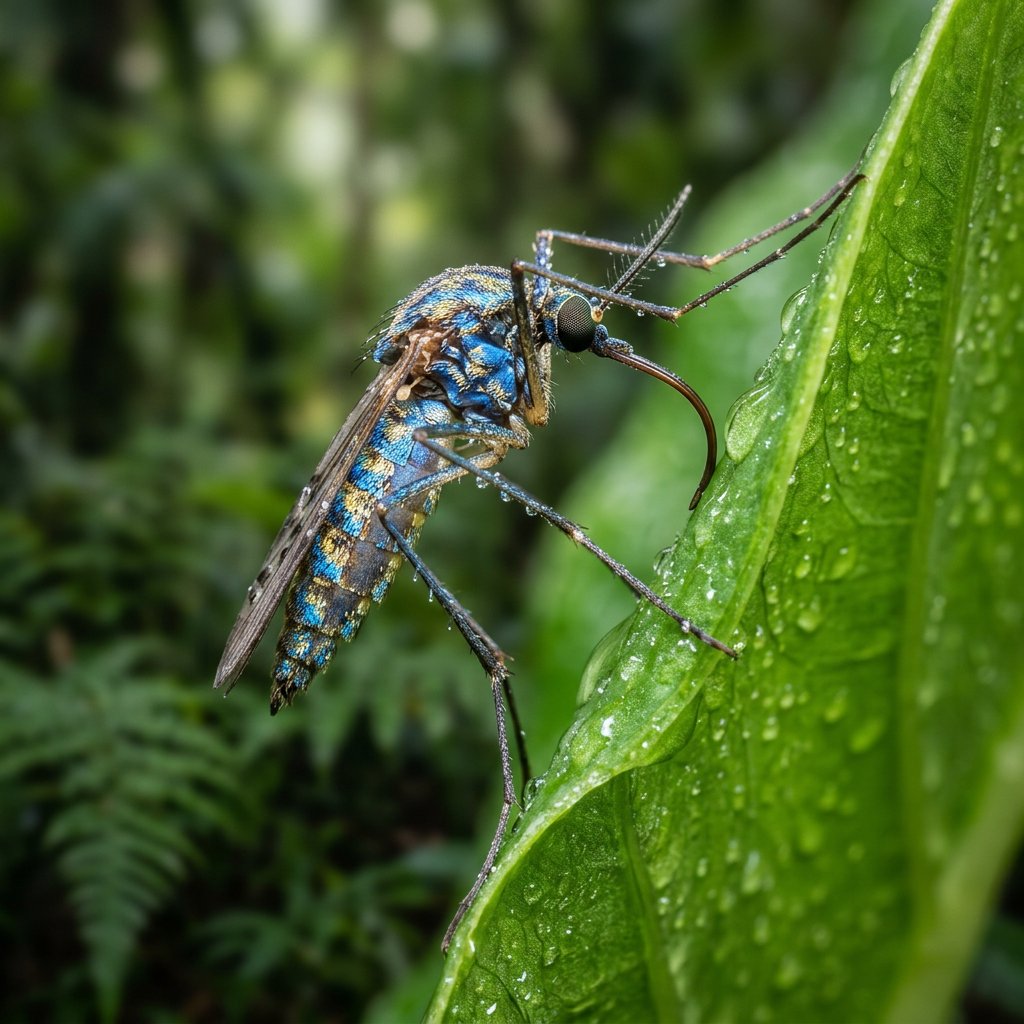
Meet the gentle giant of the mosquito world. While most mosquitoes evoke an immediate swatting reflex, Toxorhynchites speciosus—commonly known as the Australian Elephant Mosquito—is a friend you definitely want in your backyard. Draped in shimmering, metallic "armor," this insect is a biological hero that spends its life hunting the very pests we despise.
🔍 How to Identify
- 🐘 The Hooked Trunk: Its namesake "elephant" feature is a large proboscis (mouthpart) that is distinctively curved downwards in a permanent hook shape, unlike the needle-straight straw of biting mosquitoes.
- 💎 Jeweled Scales: The body is covered in iridescent, metallic scales that flash brilliant shades of sapphire blue, emerald green, and gold when caught in the light.
- 📏 Massive Stature: This is one of the largest mosquito species in existence. Its sheer size can be intimidating, often appearing twice as large as a common house mosquito.
🌲 Habitat & Ecology
- ⚔️ The Larval Assassin: While the adults are peaceful, their young are fierce warriors. The larvae live in stagnant water—like tree hollows or discarded garden pots—where they voraciously hunt and eat the larvae of other, disease-carrying mosquitoes.
- feeding A Sweet Tooth: Once they reach adulthood, these mosquitoes lose their taste for "meat." They are strictly nectar-feeders, visiting flowers to drink sugary fluids, which makes them minor pollinators.
- 🏡 Container Lovers: You will often find them hovering around birdbaths, old tires, or bromeliads, looking for a place to lay their eggs where other mosquito larvae might be hiding.
⚠️ Safety & Toxicity
- ✅ Completely Harmless: Despite their size and "scary" mosquito silhouette, they are 100% incapable of biting humans or animals. They do not possess the mouthparts required to pierce skin or suck blood.
- 🛡️ Disease-Free: Because they do not feed on blood, they cannot transmit viruses like Dengue, Zika, or Malaria. They are considered "beneficial insects" and should never be killed.
✨ Fun Fact
Because of their appetite for "bad" mosquitoes, Toxorhynchites have been nicknamed "Mosquito-Eaters." Some regions have even attempted to "hire" them for pest control, intentionally releasing them into urban areas to act as a chemical-free, biological weapon against biting mosquito populations!
More Details








