Info
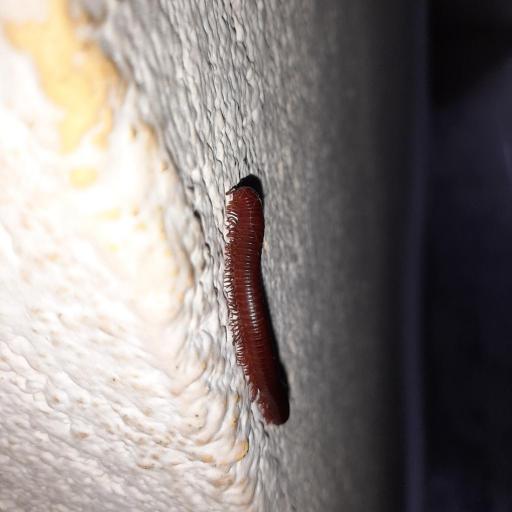
Known as the Rusty Millipede or Scarlet Millipede, this vibrant traveler has made its way from Southeast Asia to tropical gardens and greenhouses worldwide. Often mistaken for a centipede, it is actually a peaceful "recycler" that turns dead leaves into nutrient-rich soil. Its striking red color serves as a bold warning to predators that it might not be a very tasty snack!
🔍 How to Identify
- 🎨 Segmented Armor: It features a cylindrical, glossy body divided into numerous rings, typically displaying a rich brick-red, burnt orange, or deep crimson hue.
- 👣 Leg Logic: Look closely at the legs; as a millipede, it has two pairs of short legs on almost every body segment, which move in a rhythmic, wave-like motion.
- 🌀 The Defensive Coil: When startled or touched, it immediately curls its body into a tight, flat spiral to protect its soft underbelly and head.
🌲 Habitat & Ecology
- 🍂 Nature’s Janitor: These millipedes are detritivores, meaning they spend their lives under mulch, rotting logs, or damp leaf litter feasting on decaying organic matter.
- 💧 Moisture Seeker: Because they breathe through tiny pores that can’t close, they are highly prone to drying out. You’ll usually see them "marching" across paths at night or after a heavy tropical rain.
⚠️ Safety & Toxicity
- 🛡️ Docile Nature: Rusty Millipedes are completely non-aggressive; they do not have stingers and their mouthparts are too weak to bite humans.
- 🧪 Chemical Defense: If handled roughly, they may secrete a pungent, yellowish fluid (quinones). This liquid can leave a temporary brownish stain on your skin and may cause mild irritation to the eyes or mouth. It is best to observe them without picking them up, or wash your hands immediately after a "visit."
✨ Fun Fact
🚢 The Global Hitchhiker: Despite having tiny legs and no wings, this species has successfully colonized almost every tropical region on Earth by "hitchhiking" in the soil of potted plants and international cargo ships!
More Details








