Info
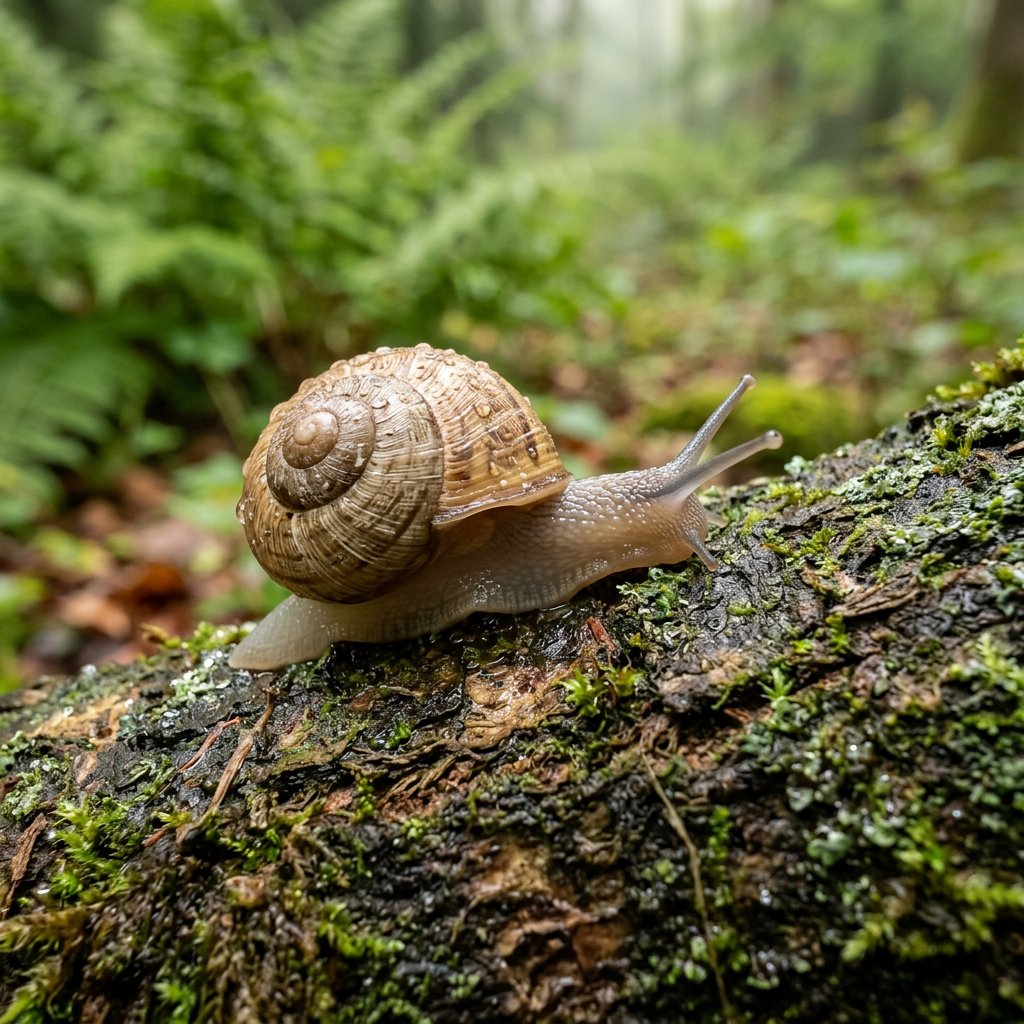
Meet the Strawberry Snail! Although often mistaken for a bug or insect because of its busy life in the leaf litter, Trochulus striolatus is actually a resilient land snail. It earned its sweet nickname not from its flavor or color, but from its habit of popping up in strawberry patches and damp garden beds. Known for its distinctively flattened shell, this little gastropod is a common sight across Europe and North America.
🔍 How to Identify
- 🐌 The Shell: Look for a slightly flattened, disc-like shell with about 5 to 6 whorls. It lacks the tall "beehive" shape of some other garden snails.
- 🎨 Streaks and Striations: The shell is typically a dull grey-brown or reddish-brown, often marked with a pale band around the outer edge and fine, "striated" growth lines.
- 🧶 Juvenile Fuzz: In a charming twist, young Strawberry Snails are often covered in tiny, fine hairs. As they age and crawl through rough terrain, these hairs usually rub off, leaving the adult shell smooth.
🌲 Habitat & Ecology
- 🍂 Master of Dampness: This snail is a fan of high humidity. You will find them hiding under logs, within compost heaps, or tucked deep inside thick groundcover like ivy and strawberry plants.
- 🍴 The Cleanup Crew: They are primarily "detritivores," meaning they eat decaying plant matter. However, they aren't purely helpful; they are known to nibble on tender seedlings and soft fruits if the opportunity arises.
- 🌧️ Rainy Day Explorers: Unlike insects that hide from the rain, the Strawberry Snail thrives in it. They use the moisture to produce the mucus needed to glide across your garden paths.
⚠️ Safety & Toxicity
- 🟢 Human Safety: They are completely non-toxic and do not bite or sting. They are safe to observe closely, making them great for curious kids.
- 🐾 Pet Warning: Like many land snails, they can act as intermediate hosts for Lungworm (Angiostrongylus vasorum). To keep your dogs safe, ensure they don't ingest these snails while playing in the garden, and keep water bowls fresh and elevated.
- 🧼 Hygiene: Always wash your hands after handling snails, as their slime can carry garden bacteria or parasites common to the soil.
✨ Fun Fact
Scientists believe the tiny hairs on the shells of young Strawberry Snails aren't just for show—they likely help the snails "stick" to wet leaves more effectively, preventing them from being washed away during heavy rainstorms!
More Details








