Info
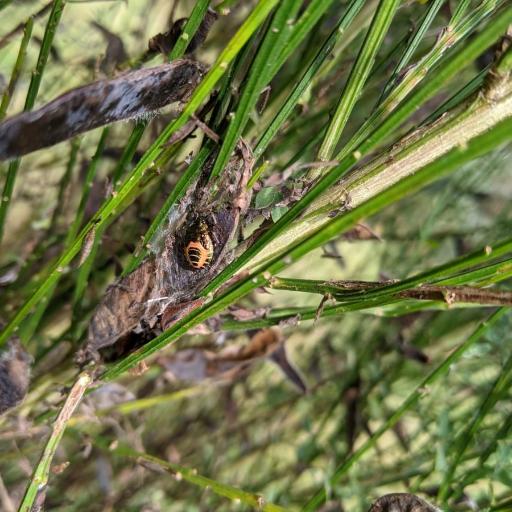
Known as the Bronze Shieldbug, Troilus luridus is a silent hunter of the woodlands. While many shieldbugs are known for munching on plants, this species is a predatory "hero" in the garden, stalking through the leaves in search of pesky caterpillars. Its metallic, weathered-copper appearance makes it a master of camouflage against tree bark and autumn leaves.
🔍 How to Identify
- 🪲 Antennal Band: The most reliable giveaway is a pale orange or yellow band on the fourth segment of its dark antennae.
- 🛡️ Metallic Sheen: Its body is a deep bronzy-brown, often covered in tiny dark punctures that give it a textured, "hammered metal" look.
- 📏 Rounded Shoulders: Unlike some of its "pointed" cousins, the Bronze Shieldbug has slightly rounded "shoulders" (pronotum) that curve gently outward.
🌲 Habitat & Ecology
- 🌳 The Arboreal Hunter: This bug is almost exclusively found on trees and shrubs, particularly Oak, Birch, Hazel, and sometimes conifers. It rarely hangs out on low-lying weeds.
- 🍴 A Beneficial Predator: It is a major "friend" to the forest. It uses its sturdy beak to impale soft-bodied insects like caterpillars and beetle larvae, effectively acting as a natural pest controller.
- 🍂 Life Cycle: They are one of the few shieldbugs that overwinter as adults, hiding deep in leaf litter or behind loose bark to survive the frost.
⚠️ Safety & Toxicity
- ✅ Harmless: This insect is completely safe for humans and pets. It does not have a stinger and will not bite humans.
- 👃 Stink Defense: If handled roughly, it may release a pungent-smelling liquid from its scent glands to discourage predators, but this is harmless and can be washed off with soap.
- 🐶 Pet Safety: If a curious dog tries to eat one, the bitter taste and smell are usually enough to make them lose interest immediately.
✨ Fun Fact
The Bronze Shieldbug is a "liquid diner." To eat, it swings its rostrum (a straw-like beak) forward, pierces its prey, and injects a paralyzing fluid that dissolves the caterpillar's insides into a nutritious "soup," which it then drinks through its beak!
More Details








