Info
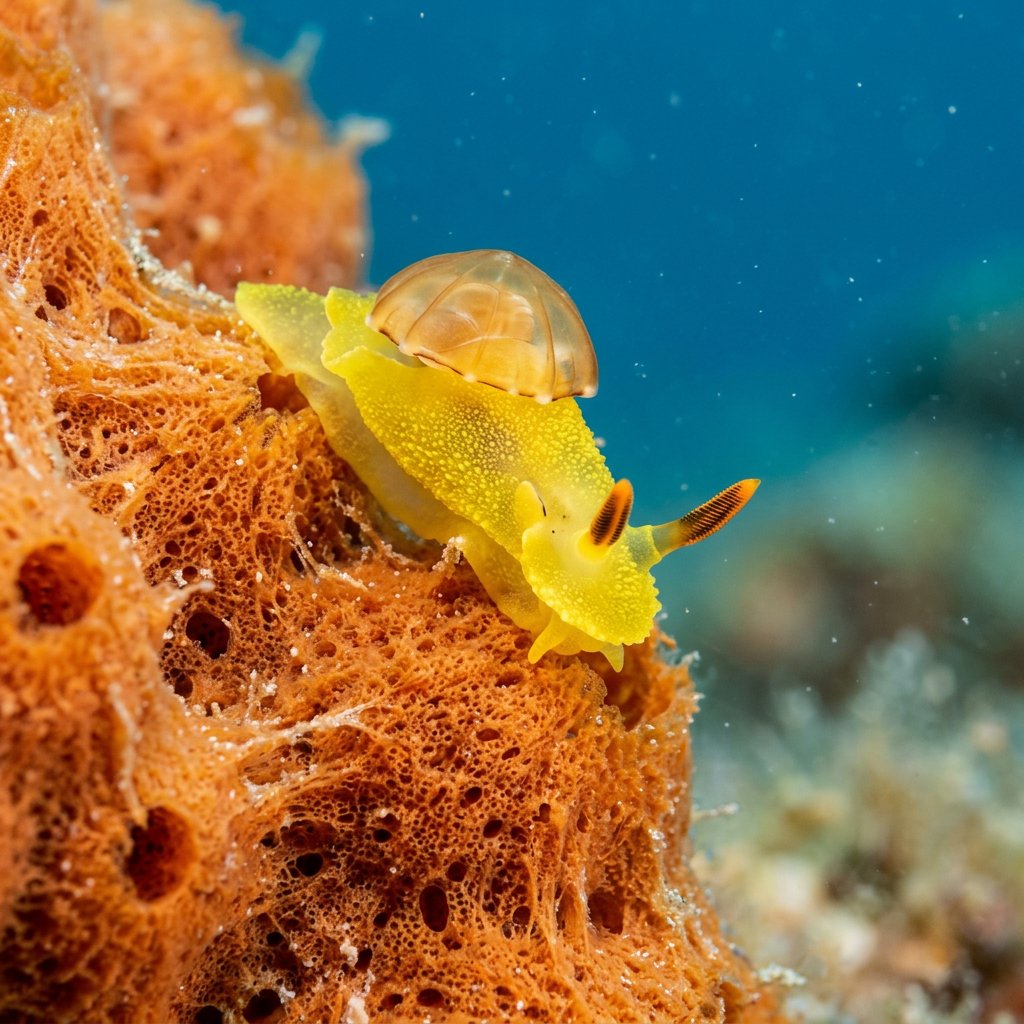
Commonly known as the Yellow Umbrella Slug, Tylodina fungina is not actually an insect, but a fascinating marine gastropod (a sea slug). Resembling a tiny, vibrant splash of sunshine against the ocean floor, this creature is famous for its "umbrella"—a small, flat, limpet-like shell that sits atop its soft body. It is a master of camouflage, living its entire life in a bright yellow world of sponges.
🔍 How to Identify
- 🍋 The Shell: A distinctive, flattened, cap-like shell that sits on its back, usually covered in a thin layer of tissue or algae.
- 🟡 Vibrant Color: The entire body is a uniform, brilliant sulfur-yellow, which perfectly matches the sponges it calls home.
- 🐰 Head Features: It possesses two long, ear-like sensory organs called rhinophores, which it uses to "smell" its way toward its next meal.
🌊 Habitat & Ecology
- 🧽 The Sponge Diet: This slug is a specialized carnivore; it eats almost nothing but the yellow sulfur sponge (Aplysina fistularis). Because it eats the sponge, it actually takes on the sponge’s yellow pigments for camouflage!
- 🪨 Coastal Resident: You can find them in the rocky intertidal and subtidal zones along the Pacific Coast, particularly from Central California down to Mexico, where they cling to reefs.
🤝 Interaction & Safety
- ✅ Harmless: These slugs are completely harmless to humans. They do not bite, sting, or possess venom that can hurt a diver or tide-pooler.
- 🛡️ Chemical Defense: While safe for humans to touch, they are "toxic" to fish. By eating sponges, they accumulate chemical compounds that make them taste terrible to any predator looking for a yellow snack.
✨ Fun Fact
The Yellow Umbrella Slug is so dedicated to its diet that it doesn't just look like its food—it lives inside it. They often graze so deeply into their host sponges that they create little yellow pits or "caves" where they hide during the day!
More Details








