Info
Named after the vibrant red mineral "cinnabar," the Cinnabar Moth is a rebel in the insect world. Unlike most moths that hide in the shadows of the night, this species flutters boldly in the sunlight, wearing a high-contrast "uniform" that warns predators to stay away. It is widely celebrated by farmers and gardeners as a specialized "weed-warrior."
🔍 How to Identify
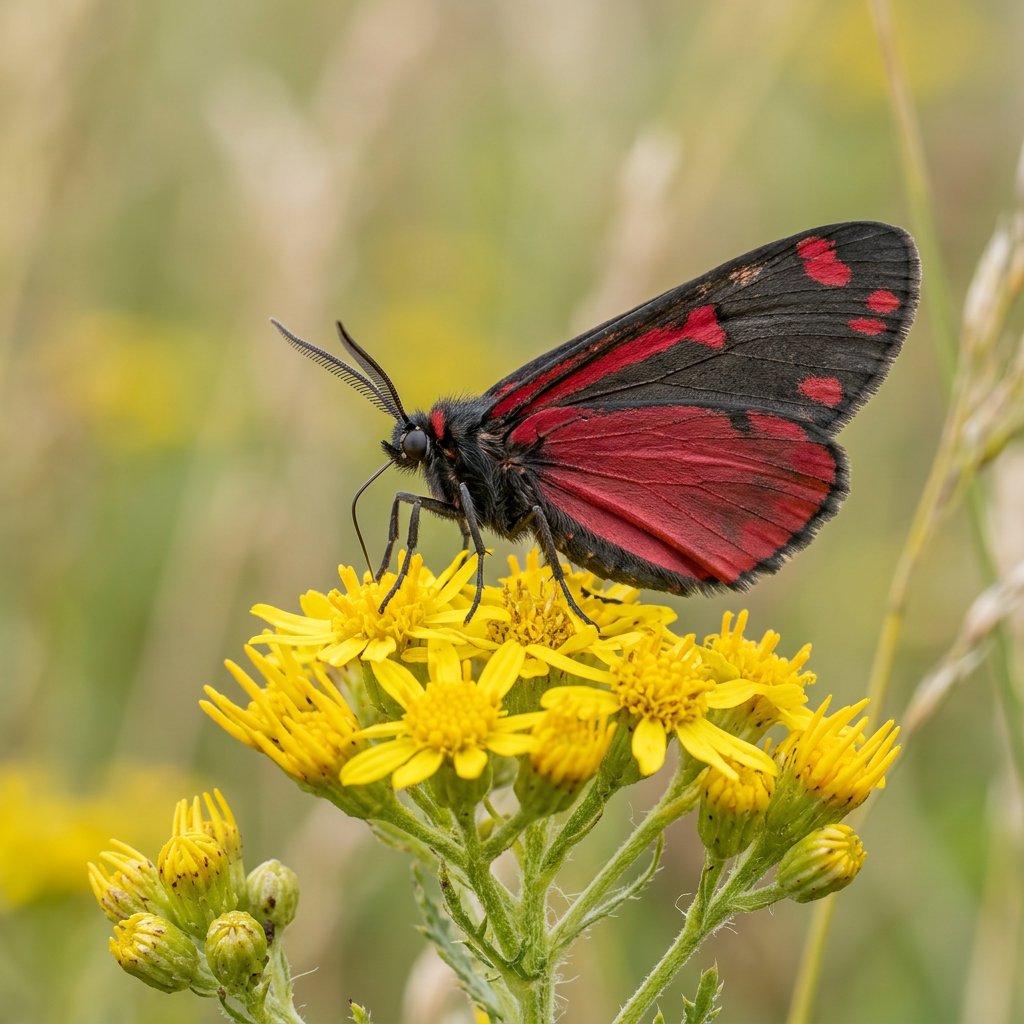
- 🎨 The Wings: The forewings are a deep charcoal-black, marked by a long red streak on the outer edge and two distinct red spots. The hindwings are a startling, solid crimson.
- 🐛 The "Tiger" Larvae: The caterpillars are even easier to spot than the adults, featuring bold, alternating rings of bright "caution" yellow and jet black.
- 📏 Resting Posture: When at rest, they fold their wings in a steep roof-like shape, appearing much narrower than they do in flight.
🌲 Habitat & Ecology
- 🍴 The Ragwort Specialist: This moth has a very specific diet. It lives almost exclusively on Ragwort (Senecio jacobaea). Because Ragwort is toxic to livestock, the Cinnabar Moth is often introduced to pastures to keep the weed from spreading.
- 🛡️ Aposematism: Their bright colors are a biological "No Entry" sign. By consuming toxic plants, the moth sequesters poisons in its body, making it incredibly bitter and dangerous for birds or small mammals to eat.
⚠️ Safety & Toxicity
- 🧪 Toxic if Ingested: The Cinnabar Moth is not aggressive and cannot sting or bite. However, both the moth and the caterpillar are poisonous if eaten due to the alkaloids they store from their diet.
- 🖐️ Skin Irritation: While generally safe to observe, the tiny hairs on the caterpillars can cause mild skin irritation or "urticaria" in sensitive individuals. It is best to admire their "tiger stripes" without picking them up.
✨ Fun Fact
The Cinnabar Moth was the very first insect ever used in the United States as a successful "biocontrol" agent! It was imported in the 1960s to help save cattle by naturally eating away the invasive and deadly Ragwort plants in the Pacific Northwest.
More Details








