Info
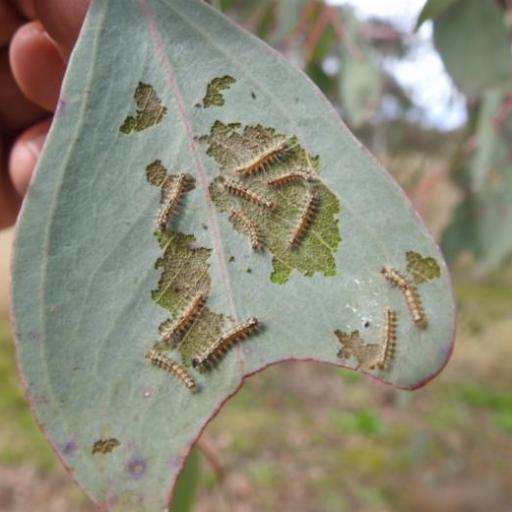
Meet the "Mad Hatter" of the insect world. Primarily found across Australia and New Zealand, Uraba lugens is a small moth famous for its bizarre larval fashion choice: wearing its own discarded heads like a macabre, stacked tower. While it looks like a creature plucked from a dark fairytale, it is a significant (and sometimes prickly) resident of Eucalyptus forests.
🔍 How to Identify
- 🎩 The "Hat" Stack: Its most iconic feature is a vertical tower of 3–5 empty head capsules from previous molts, kept stacked on top of its current head.
- 🐛 Spiky Body: The caterpillar is covered in dense, yellowish-brown stinging hairs and bristles that give it a "fuzzy" but dangerous appearance.
- 🎨 Coloring: Usually a mix of pale green, yellow, and grey with dark markings, allowing it to blend into the shadows of gum leaves.
🌲 Habitat & Ecology
- 🍃 Dietary Habits: As the name "Gum Leaf Skeletoniser" suggests, these larvae eat the soft green tissue of Eucalyptus leaves, leaving behind only the tough veins, which creates a brown, lacy "skeleton" effect on the tree.
- 🤝 Social Living: When young, these caterpillars are highly social and feed in large groups. As they mature and their "hats" grow taller, they become more solitary and independent.
- 🦋 The Moth Phase: After the dramatic caterpillar stage, they pupate into relatively small, dull grey-brown moths that are experts at camouflaging against tree bark.
⚠️ Safety & Toxicity
- 🌵 Stinging Hairs: The "Mad Hatterpillar" is not a friend to bare skin. Its bristles are urticating, meaning they can break off and inject a mild toxin.
- 🩹 Skin Irritation: Contact typically results in a painful sting, followed by an itchy red rash or localized swelling. It is best to admire their strange headgear from a distance and keep pets away from low-hanging infested branches.
✨ Fun Fact
Scientists have discovered that the "hat" isn't just a fashion statement—it’s a life-saving decoy! When a predator like a jumping spider attacks, it often strikes the empty, hollow head capsules at the top of the stack, giving the caterpillar a chance to counter-attack or drop to safety.
More Details








