Info
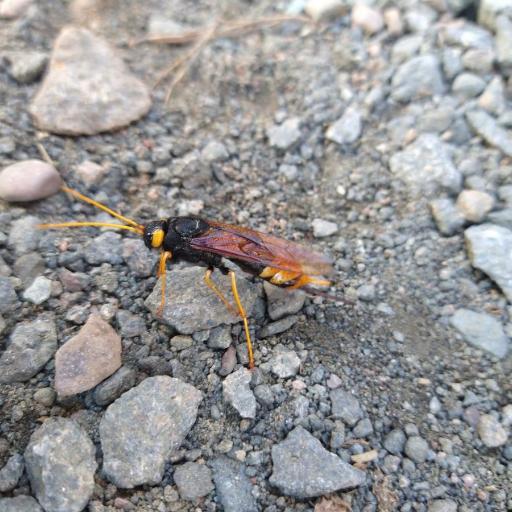
Often mistaken for a massive hornet from a nightmare, the Giant Woodwasp (or Greater Horntail) is actually a harmless "phantom of the forest." Despite its fierce yellow-and-black war paint and a long, needle-like spike at its rear, it is a non-aggressive wood-borer. This insect is a master of mimicry, using its scary appearance to trick predators into thinking it packs a venomous punch when it is actually quite defenseless.
🔍 How to Identify
- 🐝 Size and Color: They are among the largest insects in their range, growing up to 4cm long. Their bodies are cylindrical and brightly banded with black and yellow, mimicking the warning colors of a hornet.
- 📍 The "Tail": Females possess a long, stiff, needle-like projection at the end of their abdomen. While it looks like a deadly stinger, it is actually an ovipositor used strictly for drilling into wood to lay eggs.
- ✈️ Wings and Flight: They have two pairs of translucent, brownish-yellow wings. In flight, they produce a low, intimidating hum that often startles hikers and gardeners.
🌲 Habitat & Ecology
- 🪵 The Conifer Specialist: You will most likely spot them near pine, spruce, or fir forests. They are particularly attracted to weakened, dying, or recently felled trees where the females can easily drill into the bark.
- 🍄 Fungal Partnership: When the female lays her eggs deep inside a tree, she also injects a specific type of fungus. This fungus softens the wood, making it easier for her larvae to eat and digest the tough cellulose once they hatch.
⚠️ Safety & Toxicity
- 🛡️ Harmless Giant: The Giant Woodwasp is completely safe. It does not possess a venomous sting, and its mandibles are designed for wood, not biting humans or pets.
- 🧘 Keep Calm: If one flies near you, there is no need to panic. It is likely just searching for a suitable log or patrolling its territory. It has no interest in human food or bothering people.
✨ Fun Fact
⚙️ Bio-Inspired Tech: The unique mechanism of the woodwasp’s "stinger"—which uses two interlocking valves that slide against each other to "saw" into wood—has been studied by scientists to develop new types of self-moving surgical probes and neurosurgery tools!
More Details








