Info
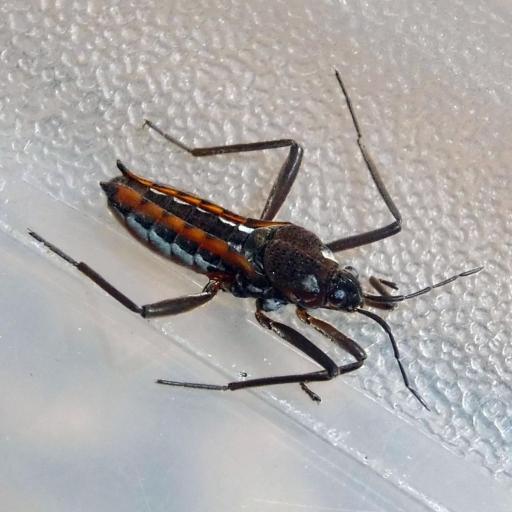
Meet the Water Cricket, a sturdy little athlete that spends its life skating across the surface of cool, shaded streams. Unlike its slender cousins (the common Water Striders), Velia caprai is built like a tiny tank, sporting a robust, dark body often accented with fiery orange markings. They are the "marathon runners" of the insect world, often found rowing tirelessly against the current in search of their next meal.
🔍 How to Identify
- 🦟 Robust Frame: Much shorter and stockier than typical pond skaters, with a distinct "waist" and a broader, more rounded abdomen.
- 🎨 Flashy Accents: Their base color is a deep, velvety black or dark brown, but they feature two striking rows of orange or reddish-silver spots along the sides of their belly.
- 🦵 The Rowing Oars: They use their middle pair of legs as powerful oars to "row" across the water surface, while their front legs are held ready to grab prey.
🌲 Habitat & Ecology
- 🌊 Running Water: While many water bugs love stagnant ponds, the Water Cricket is a specialist of moving water. You’ll most likely find them near the margins of slow-moving streams, shady brooks, and woodland trickles.
- 🍗 Social Hunters: These insects are gregarious and are often found in loose groups under overhanging banks or tree roots. They are fierce predators, detecting the tiny vibrations of drowning land insects that fall onto the water's surface.
⚠️ Safety & Toxicity
- 🛡️ Status: Completely harmless to humans. They do not carry diseases and are excellent bio-indicators of a healthy, oxygen-rich aquatic environment.
- 🤏 Gentle Handling: Like all "true bugs," they possess a needle-like beak (rostrum). While they are not aggressive, they might give a tiny, startling nip if handled roughly or squeezed in a hand.
✨ Fun Fact
The Water Cricket has a secret "turbo boost" mode! If it needs to escape a predator in a hurry, it spits a special surfactant (a detergent-like chemical) onto the water. This lowers the surface tension behind it, creating a physical force that shoots the insect forward—a move scientists call "expansion skating."
More Details