Info
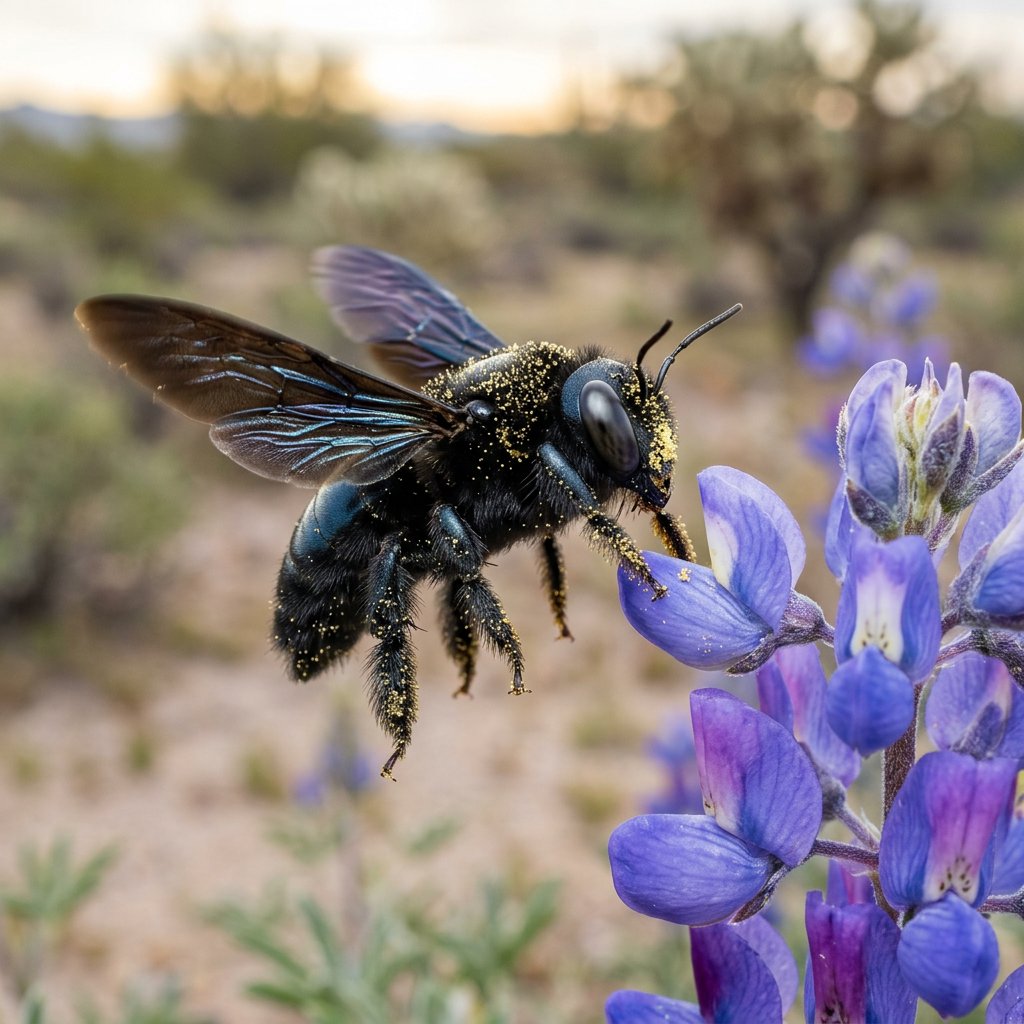
The Sonoran Carpenter Bee (also known as the Valley Carpenter Bee) is the gentle giant of the desert and valley landscapes. Often called "Teddy Bear Bees" because of the fuzzy, golden appearance of the males, these are among the largest bees you will encounter in Western North America. While their loud, low-pitched hum can be startling, they are peaceful neighbors and some of nature’s most efficient "buzz pollinators."
🔍 How to Identify
- 🐝 Sexual Dimorphism: This species is famous for its "gold and black" split; females are a sleek, shimmering solid black with metallic blue-purple wings, while males are entirely covered in dense, golden-orange fuzz.
- ✨ Polished Abdomen: Unlike the fuzzy "butt" of a bumblebee, the Sonoran Carpenter Bee has a smooth, hairless, and shiny abdomen that glints in the sun.
- 🚁 Hovering Flight: They are heavy-bodied and fly with a distinct hovering motion, often pausing in mid-air to guard a territory or inspect a flower before moving on.
🌲 Habitat & Ecology
- 🏠 Solitary Woodworkers: Unlike honeybees, they don’t live in hives. Females use their powerful mandibles to vibrate and chew perfectly circular tunnels into softwoods (like redwood, cedar, or agave stalks) to create "apartments" for their larvae.
- 🌺 Vibration Specialists: These bees use "buzz pollination." They grab onto a flower and vibrate their entire body at a specific frequency to shake pollen loose from plants that other bees can't trigger, making them vital for tomatoes, peppers, and eggplants.
⚠️ Safety & Toxicity
- 🛡️ The Stingless Male: The golden, fuzzy males are the ones most likely to "buzz" your face to defend their territory, but they actually lack a stinger entirely. They are all bark and no bite!
- 🐝 Docile Females: Females do have a stinger, but they are incredibly reluctant to use it. A sting usually only occurs if the bee is squeezed or stepped on.
- 🐾 Garden Safety: They are safe for pets and children. In fact, they are often considered "pet bees" by gardeners because of their calm demeanor and habit of returning to the same nesting spot year after year.
✨ Fun Fact
🌟 The Rose Scent: To attract a mate, the golden "Teddy Bear" males don't just look cute—they release a pheromone that smells remarkably like roses to lure females toward their hovering spots.
More Details








