Info
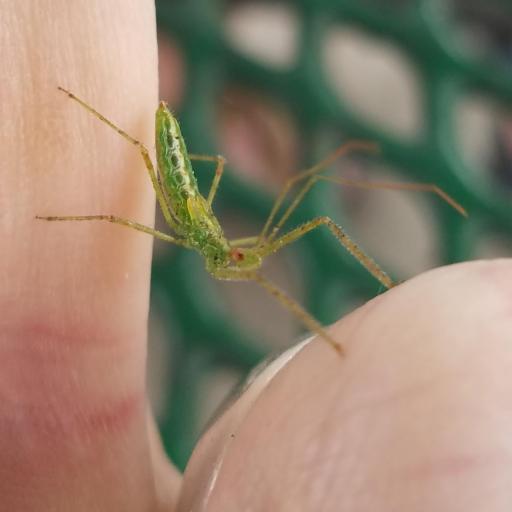
Often called the Pale Green Assassin Bug, this master of camouflage is a silent guardian of your garden. While its name sounds intimidating, it is a highly beneficial predator that spends its days stalking leaves for pests like caterpillars and beetles. With its vibrant lime-green body and long, spindly legs, it looks almost like a neon-colored twig come to life.
🔍 How to Identify
- 🟢 Vibrant Coloration: Most adults and nymphs are a striking pale lime green, which allows them to disappear perfectly against fresh foliage and stems.
- 🛡️ Slender Shield Shape: They possess an elongated, narrow body with a small, highly mobile head and a distinct, curved "beak" (rostrum) tucked underneath.
- 🦵 Sticky Forelegs: Their front legs are usually held forward in a prayer-like position; they are covered in microscopic, sticky hairs used to snag unsuspecting prey.
🌲 Habitat & Ecology
- 🍃 Canopy Stalker: Unlike many ground-dwelling bugs, Zelus luridus prefers the leafy heights of deciduous trees and shrubs, where it can easily find its favorite meals.
- 🦟 The Garden’s Mercenary: They are generalist predators, meaning they aren't picky eaters. They play a vital role in natural pest control by eating everything from aphids and beetles to invasive fruit flies.
⚠️ Safety & Toxicity
- 🥊 Defensive Biter: This insect is not a "foe" to humans, but it will defend itself. If it is squeezed or trapped against the skin, it can deliver a very sharp, painful "stab" with its rostrum.
- 🩹 Enzymatic Sting: The bite injects digestive enzymes that cause a localized burning sensation and temporary swelling. While not medically dangerous to humans or pets, it is significantly more painful than a mosquito bite—so it’s best to observe without touching.
✨ Fun Fact
- 🍯 Living Flypaper: To increase their hunting success, these bugs secrete a sticky, resinous substance from glands on their legs. They essentially coat themselves in "natural glue" to ensure that once they touch a fly, it can never wiggle away!
More Details








