Info
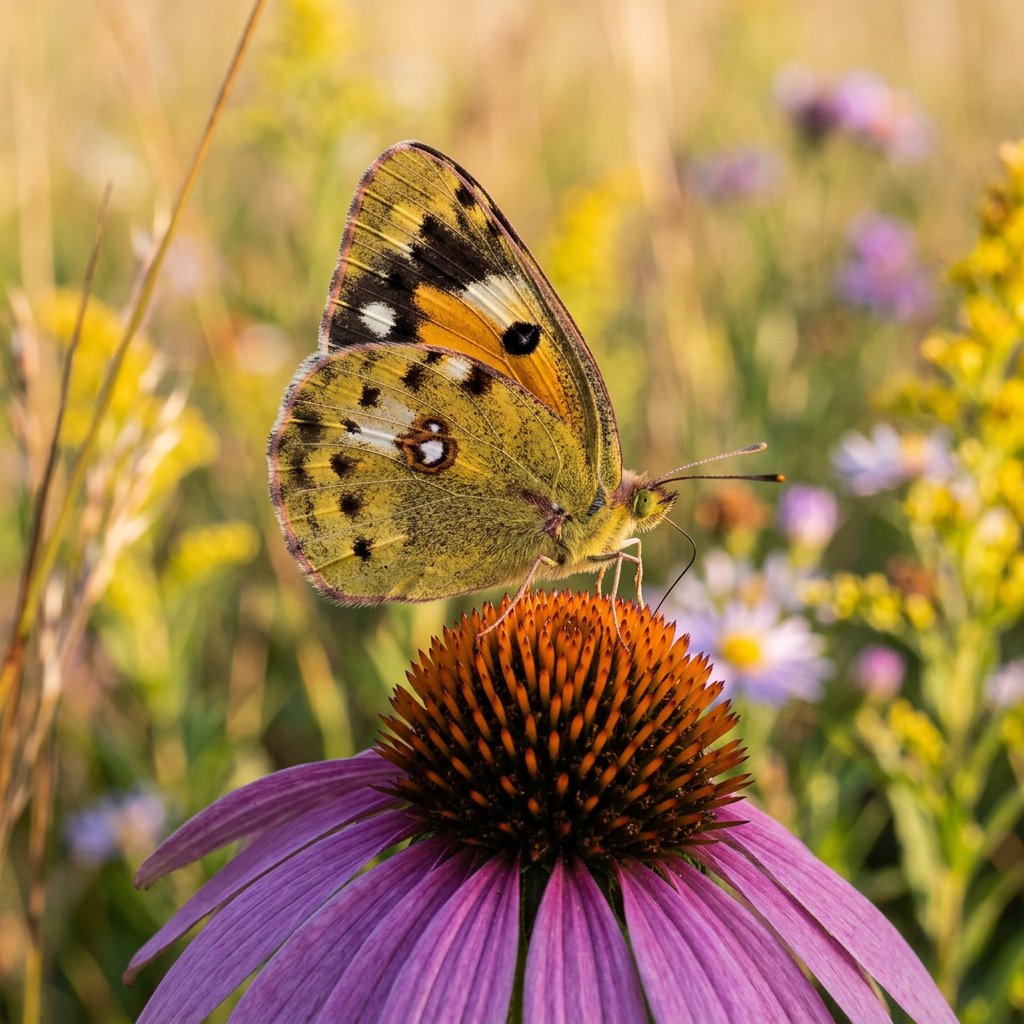
Known affectionately as the Southern Dogface, this butterfly is a master of character and camouflage. It gets its whimsical name from a peculiar pattern on its forewings that, when viewed from the side, looks exactly like a silhouette of a poodle or a dog’s profile. This sun-loving insect is a "friend" to any garden, acting as a tireless pollinator and a bright burst of color in open meadows.
🔍 How to Identify
- 🐶 The "Dog" Pattern: The most famous feature is the dark black border on the upper forewings that outlines a yellow "dog head" profile, complete with a dark spot for an "eye."
- 📐 Pointed Wing Tips: Unlike many other yellow butterflies, the Southern Dogface has distinctly pointed or "falcate" tips on its front wings.
- 🍋 Vibrant Color: The wings are primarily a bright, sulfur-yellow, though individuals born in late autumn may develop a rosy or pinkish tint on their undersides to match drying foliage.
🌲 Habitat & Ecology
- ☘️ Host Plants: This butterfly is picky about where it lays its eggs, specifically seeking out plants in the legume family, such as Leadplant (Amorpha), false indigo, and various types of clover.
- ⚡ High-Speed Flight: If you try to follow one, keep your eyes peeled! They are exceptionally fast and erratic flyers, often staying low to the ground and rarely resting with their wings open, making that "dog face" a rare treat to see.
- 🌻 Nectar Preference: Adults are frequent visitors to purple and blue flowers, particularly alfalfa, verbena, and coreopsis, where they refuel on sugar-rich nectar.
⚠️ Safety & Toxicity
- ✅ Harmless: The Southern Dogface is completely safe for humans and pets. It does not bite, sting, or possess any chemical irritants.
- 🦋 Fragile Wings: Like all butterflies, their wings are covered in tiny scales that can be easily damaged by human touch. It is best to observe their beauty from a distance or through a camera lens.
✨ Fun Fact
The "dog head" on their wings isn't just for show; some scientists believe the high-contrast yellow and black pattern helps break up the butterfly's outline, confusing predators like birds while the insect is in mid-flight!
More Details








