Info
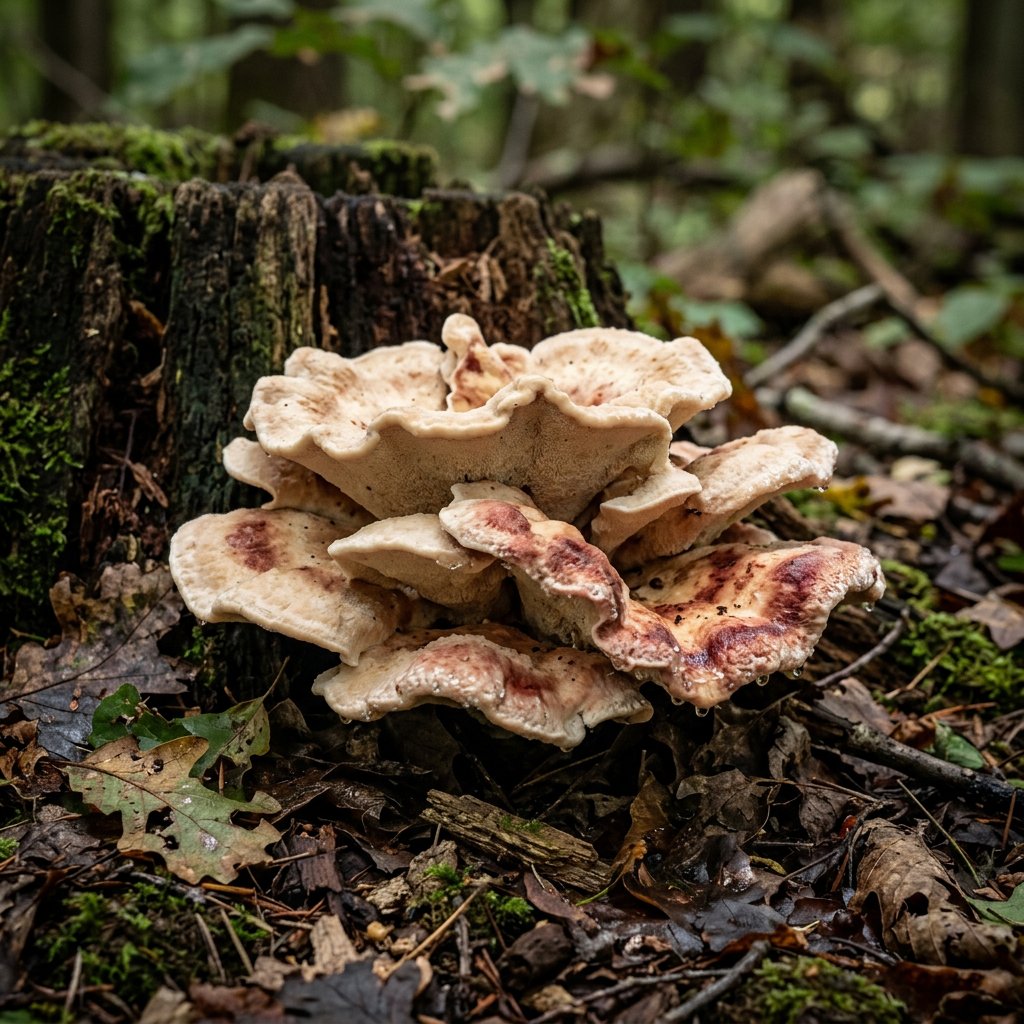
Known as the Blushing Rosette, this mushroom is a master of disguise that often looks more like a strange sea sponge or a cluster of coral than a traditional fungus. It gets its name from the way its pale surface "blushes" a reddish-pink hue when bruised or handled. While it lacks the fame of woodland mushrooms like the Chanterelle, its ability to morph into bizarre, "aborted" shapes makes it a fascinating find for any nature trekker.
🔍 How to Identify
- 🌸 The Rosette Shape: When fully formed, it grows in overlapping, fan-shaped brackets that create a rosette pattern. The edges are often wavy, fuzzy, and white to pale tan.
- 🩸 The "Blush" and Guttation: Young, active specimens often exude striking reddish droplets (guttation) from their surface, looking as if the mushroom is "bleeding" or weeping.
- 🕳️ Irregular Pores: The underside features a labyrinth of pores rather than gills. These pores are large, angular, and run slightly down the short, often off-center stem.
🌲 Habitat & Ecology
- 🌳 The Hidden Wood-Eater: While it often appears to be growing straight out of the soil, it is actually attached to buried wood or the roots of broadleaf trees, particularly Oak and Beech.
- 🍂 White Rot Role: It plays a vital role in the forest ecosystem as a "white-rot" fungus. It breaks down the tough lignin in dead wood, recycling nutrients back into the forest floor to support new growth.
⚠️ Safety & Toxicity
- 🛑 WARNING: Inedible. While not documented as a deadly species, the Blushing Rosette is considered inedible due to its tough, corky, and leathery texture.
- 🤢 Digestive Risk: Attempting to consume this mushroom can lead to significant gastrointestinal distress. Because it can look similar to other "bleeding" fungi, it is best enjoyed through a camera lens rather than on a plate.
✨ Fun Fact
The genus name Abortiporus literally means "aborted pores." This refers to the mushroom's habit of frequently growing in "aborted" forms—lumpy, shapeless masses that never develop the classic fan shape, making it look like a piece of spilled expanding foam on the forest floor!
More Details