Info
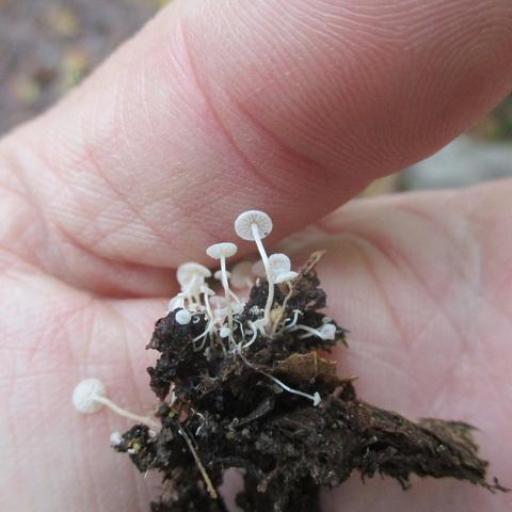
Known as "Cooke’s Toughshank," this tiny, porcelain-white fungus is a master of recycling. Often overlooked due to its diminutive size, it tells a secret story of the forest floor—rising from a hidden, seed-like "vault" called a sclerotium. It is named after the famed British mycologist Mordecai Cubitt Cooke and is a fascinating example of a mushroom that prefers to grow where others have fallen.
🔍 How to Identify
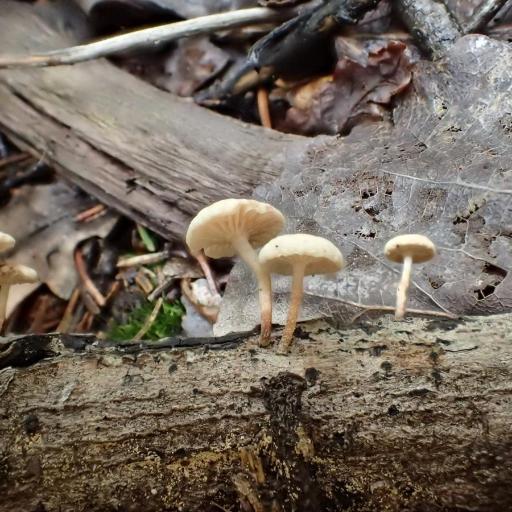
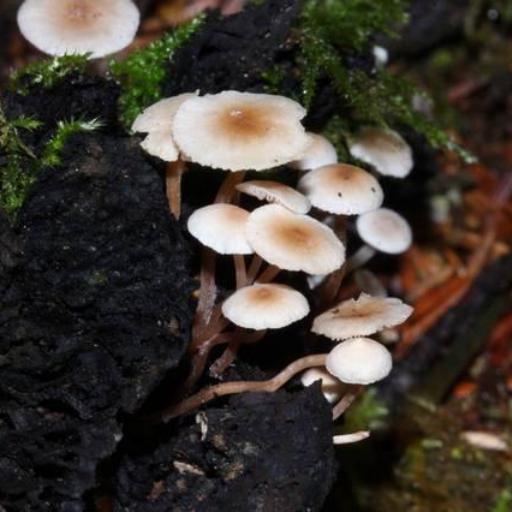
- 🍄 The Cap: Small (only 2-15mm), initially convex but flattening with age. It is typically a clean, creamy white with a slightly darker, yellowish center.
- 📜 The Gills: Very thin, crowded, and white. They are "adnate," meaning they are attached directly to the stem.
- 🧶 The Stem: A slender, hollow stalk that is quite tough for its size. It often looks slightly fuzzy or hairy at the base.
- 🟡 The Sclerotium: The "smoking gun" for identification. If you gently dig up the base, you will find a small, yellowish-orange or ochre "bean" (sclerotium) from which the mushroom grows.
🌲 Habitat & Ecology
- 🍂 The Recycler: This fungus is saprobic, meaning it feeds on decaying organic matter. It specifically loves the blackened, rotted remains of other large mushrooms, particularly old Russula or Lactarius species.
- 🌲 Woodland Floor: Look for it in damp deciduous or coniferous forests during late summer and autumn. It often hides among moss or leaf litter where the previous "host" mushroom has dissolved into the soil.
⚠️ Safety & Toxicity
- 🚫 Status: WARNING. While not definitively listed as deadly, Collybia cookei is considered inedible.
- 🤚 General Rule: Its tiny size makes it worthless for the table, and many small white mushrooms contain dangerous toxins. Never consume any wild mushroom unless you are an expert, as many "Little Brown Mushrooms" (LBMs) or "Little White Mushrooms" can cause severe gastric distress or worse.
✨ Fun Fact
The sclerotium at the base acts like a biological "panic room." It is a hardened mass of mycelium that stores food and energy, allowing the fungus to survive through harsh winters or droughts until the conditions are perfect to sprout again!
More Details
| Hymenium Type | Lamella |
| Stipe Character | Bare Stipe |
| Spore Print Color | White |
| Hymenium Attachment | Adnate Hymenium Attachment |
| Mushroom Ecological Type | Saprobiont |