Info
Known as the "California Agaricus," this mushroom is a deceptive resident of suburban lawns and coastal parks across the West Coast. It is a master of disguise, bearing a striking resemblance to the common button mushrooms found in grocery stores or the prized Meadow Mushroom. Often appearing in "fairy rings" after the first autumn rains, it is a frequent source of "forager’s regret" due to its hidden chemical properties.
🔍 How to Identify
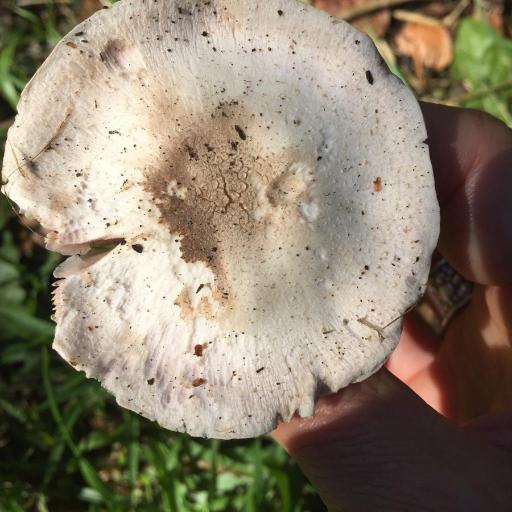
- 🍄 The Cap: Usually 5–11 cm wide, starting as a rounded dome and flattening with age. It is typically white but often develops a brownish, "blocky" or square-ish center.
- 💗 The Gills: When young, the gills are a delicate pinkish-gray, but they eventually mature into a deep, dark chocolate brown. Crucially, they are "free," meaning they do not touch the stem.
- 💍 The Stem & Ring: Features a sturdy, white stem with a thin, skirt-like ring. If you bruise the base of the stem or the edge of the cap, it may slowly stain a faint, dull yellow.
- 🧪 The Scent Test: This is the most important ID feature. When crushed or cooked, it emits a distinct chemical odor similar to phenol, ink, or "library paste," rather than the pleasant nutty smell of edible mushrooms.
🌲 Habitat & Ecology
- 🏡 Suburban Resident: Unlike many wild mushrooms that hide in deep forests, this species thrives in man-made landscapes. You will most often find it in lawns, garden beds, and under cypress or eucalyptus trees.
- 🍂 The Recycler: It is saprobic, meaning it plays a vital role in the ecosystem by breaking down dead organic matter in the soil and turning it into nutrients for the surrounding grass and plants.
⚠️ Safety & Toxicity
- 🚫 WARNING: Inedible and Toxic. While not usually life-threatening, Agaricus californicus causes significant gastrointestinal distress.
- 🤢 Symptoms: Consumption leads to severe nausea, stomach cramps, and vomiting. The "phenol" chemicals that cause the bad smell are the same ones that irritate the digestive lining.
- 🐕 Pet Safety: Keep a close eye on dogs in the backyard during the rainy season; curious pets are often attracted to the earthy scent and may suffer from upset stomachs if they ingest them.
✨ Fun Fact
The "Phenol Test" is a forager's secret weapon: if you are unsure if you’ve found a California Agaricus or an edible Meadow Mushroom, you can microwave a small piece for 30 seconds. The heat will amplify the chemical ink-like smell of the toxic California Agaricus, making it unmistakable!
More Details
| Hymenium Type | Lamella |
| Stipe Character | Ring Stipe |
| Spore Print Color | Brown |
| Mushroom Cap Shape | Convex Mushroom Cap |
| Hymenium Attachment | Free Hymenium Attachment |







