Info
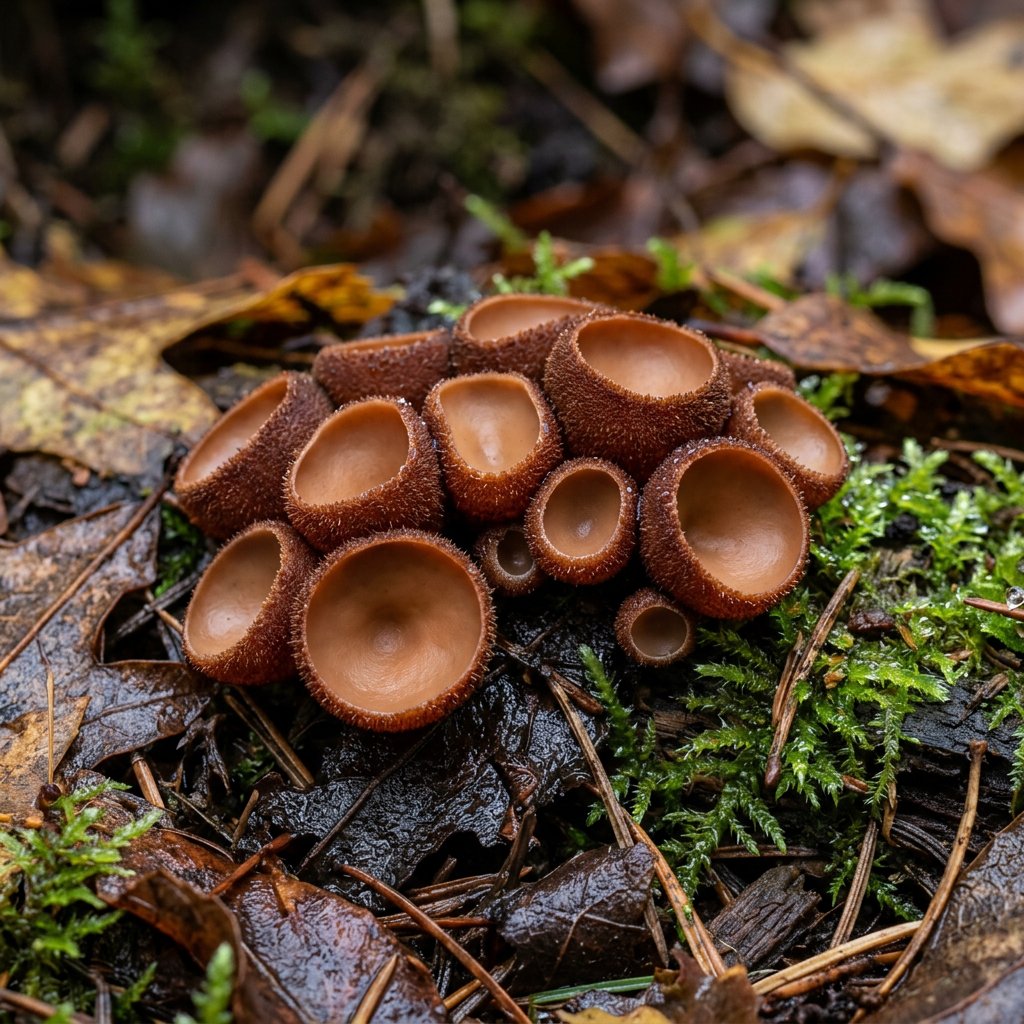
Known as the "Rusty Cup," Aleurina ferruginea is a hidden gem of the damp forest floor. These tiny, goblet-shaped fungi look like miniature vessels crafted from copper or rusted iron, often appearing as if they were dropped by forest sprites during a woodland feast. While they lack the classic "cap and stem" look of a typical mushroom, their vibrant earthy tones make them a favorite find for macro-photographers.
🔍 How to Identify
- ☕ The Shape: It takes the form of a shallow cup or saucer, technically called an "apothecium," which lacks a traditional stem and sits directly on its substrate.
- 🎨 The Color: The inner surface (where the spores are produced) is a rich, rusty orange or ochre, while the outer surface is usually a darker, duller brown.
- 🧶 The Texture: If you look closely, the exterior is often covered in fine, scurfy hairs or scales, giving it a slightly "fuzzy" or textured appearance compared to the smooth interior.
🌲 Habitat & Ecology
- 🪵 Substrate: This fungus is a specialized decomposer, usually found growing on very well-decayed wood or soil that is heavily enriched with woody debris.
- 🌿 Mossy Companions: It thrives in high-humidity environments and is frequently found nestled among lush green mosses, which provide the consistent moisture the "cup" needs to stay hydrated.
- 🍂 Seasonal Timing: You are most likely to spot these rusty treasures during the late summer and autumn months after heavy rainfall.
⚠️ Safety & Toxicity
- 🛑 Status: WARNING! Aleurina ferruginea is considered inedible.
- 🧪 Unknown Risks: There is very little documented research on the chemical makeup of this specific species. Because many cup fungi contain unknown toxins or can cause gastrointestinal distress, they should never be consumed.
- 🐾 Pets & Kids: Due to its small size and bright color, it might attract curious pets or toddlers. It is best to admire this mushroom from a distance and ensure it is not ingested.
✨ Fun Fact
The genus name Aleurina is derived from the Greek word for "flour," a reference to the mealy or powdery texture found on the outer surface of many species in this family!
More Details