Info
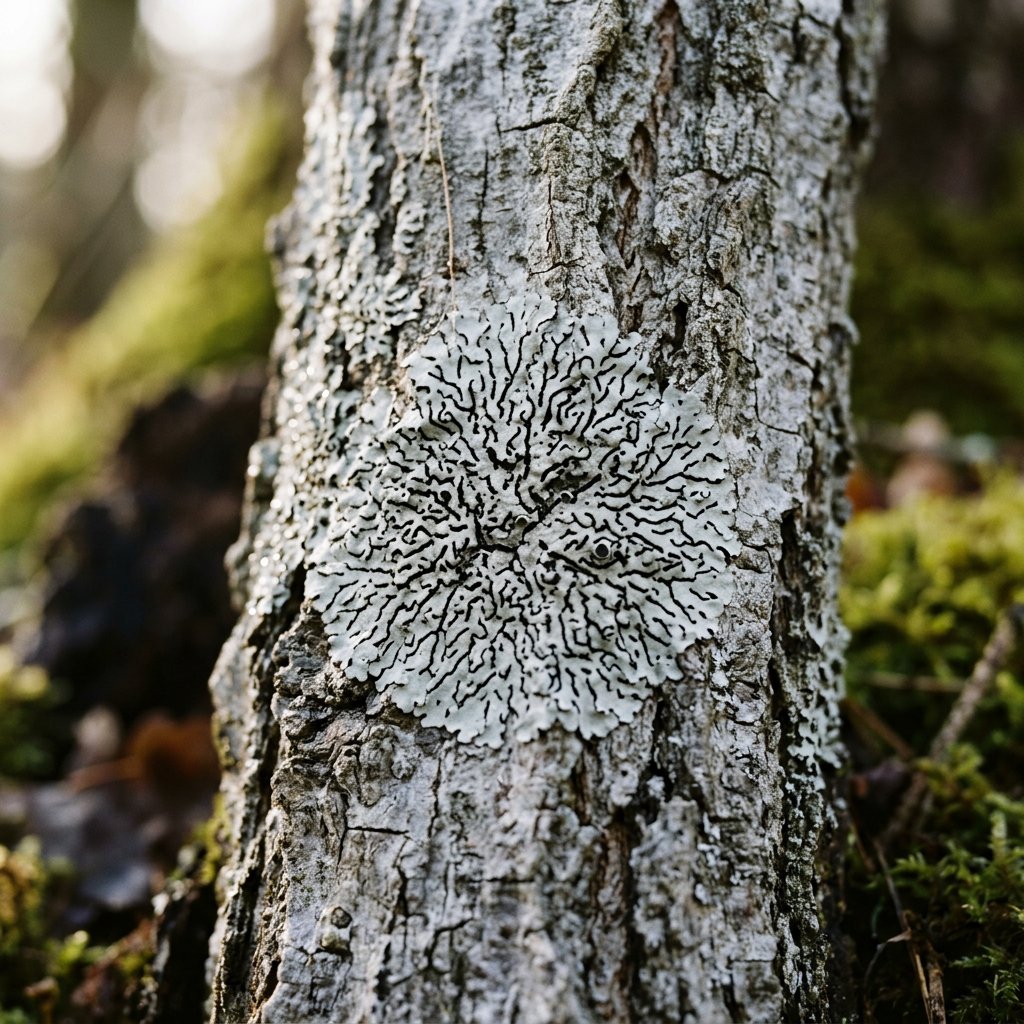
Commonly known as a type of "Script Lichen," Alyxoria demutata is nature’s very own secret diary. Often overlooked by those searching for large, colorful mushrooms, this fascinating organism looks like tiny, black ink strokes or ancient runes written across the pale parchment of tree bark. It isn’t a typical mushroom with a cap and stem, but a specialized fungus that lives in a beautiful partnership with algae.
🔍 How to Identify
- 🖋️ The "Script" (Lirellae): The most striking feature is the fruiting bodies, which look like tiny, elongated black dashes or squiggles. These "lirellae" can be straight, curved, or slightly branched, resembling shorthand writing.
- 🌫️ The Thallus: The main body of the lichen forms a thin, crust-like layer (crustose) on the bark. It is usually a dull grayish-white or pale cream color, often blending in perfectly with the tree.
- 📏 Micro-Scale: You’ll need to look closely—the individual black "marks" are usually only 1–2 millimeters long, creating a delicate pattern that covers small patches of the trunk.
🌲 Habitat & Ecology
- 🌳 The Bark Connection: This species is primarily found on the smooth bark of older deciduous trees, such as Ash, Oak, or Beech. It prefers the humid, shaded environment of ancient woodlands where the air remains moist.
- 🌬️ Air Quality Sentinel: Like many of its lichen cousins, Alyxoria demutata is a bioindicator. It is sensitive to air pollution; finding it in your local woods is a great sign that the air you are breathing is clean and relatively free of sulfur dioxide.
⚠️ Safety & Toxicity
- 🟢 Status: Non-toxic and generally harmless.
- 🐾 Details: While it poses no threat to hikers, pets, or children, it has no culinary value. Its "body" is mostly composed of tough fungal filaments and algae, making it essentially inedible and tasteless.
✨ Fun Fact
The name "Script Lichen" (referring to the broader family Alyxoria belongs to) comes from the resemblance of their fruiting bodies to "Oghams" or ancient secret codes. In the past, some folklore suggested that these patterns were messages left by forest spirits for those clever enough to decode them!
More Details







