Info
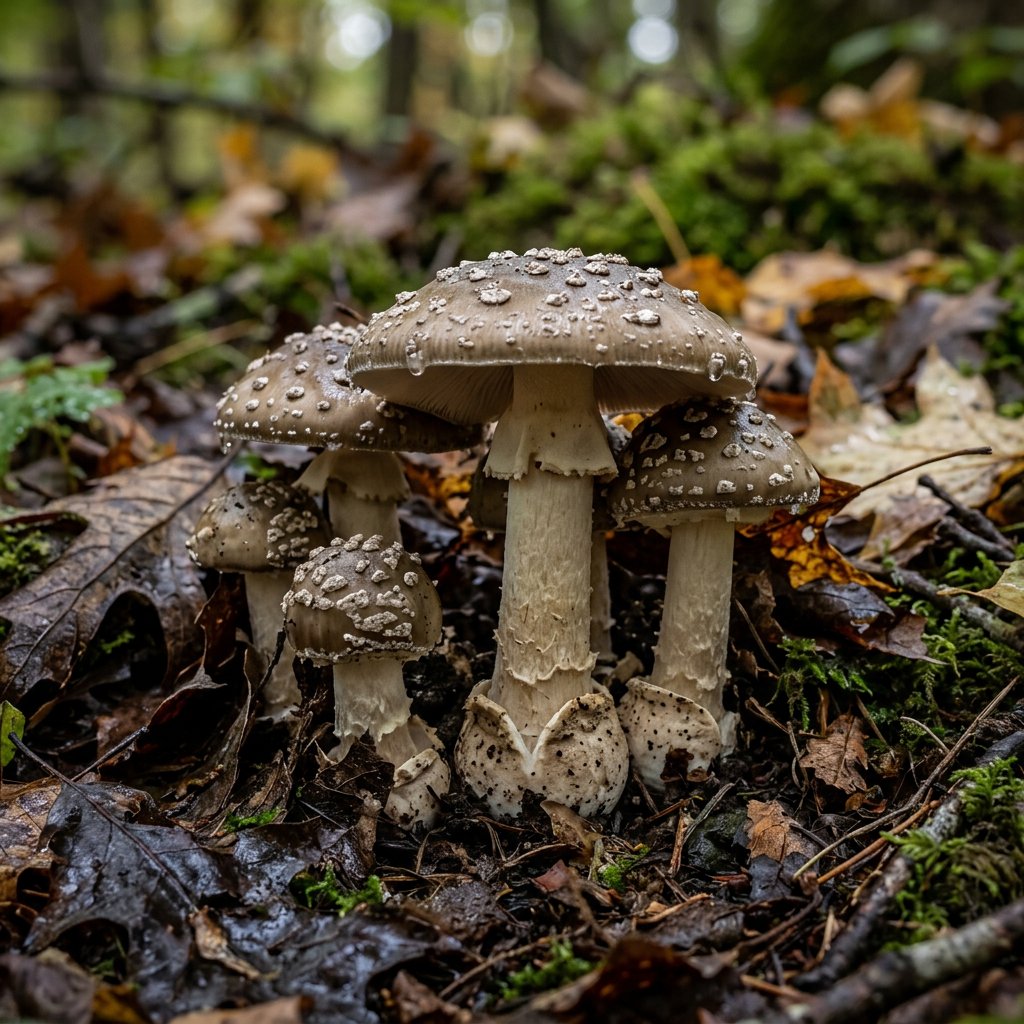
Meet the "Cleft-foot Amanita," a mushroom that wears a bronze-brown hat and hides in the dappled shade of oak forests. While it looks like it belongs in a woodland fairytale, this North American native is a master of disguise, frequently mistaken for both edible agarics and its more lethal "Death Cap" relatives.
🔍 How to Identify
- 🍄 The Cap: Usually 2 to 6 inches wide, varying from pale bronze to chocolate brown. It is often sticky to the touch when wet and may have tiny, tan wart-like patches left over from its "universal veil."
- 🤍 The Gills: Underneath, you’ll find crowded white gills that are "free" (not attached) to the stem. These remain white even as the mushroom ages.
- 🦶 The Cleft Foot: The stem features a prominent, abrupt bulb at the base that is almost always "cleft" or vertically split—this is the most critical field mark for identification.
- 🍎 The Bruising: A unique feature of this species is its "blushing" reaction; if you bruise the stem or the base, the white flesh will slowly turn a distinct reddish-brown.
🌲 Habitat & Ecology
- 🌳 Forest Partners: This mushroom is mycorrhizal, meaning it lives in a complex symbiotic relationship with tree roots. You’ll most likely find it growing solo or in small groups near Oaks and Beeches in Eastern North America.
- 🌧️ Seasonal Appearance: It is a lover of humidity, typically fruiting from mid-summer through early autumn, especially after heavy seasonal rains have soaked the forest floor.
⚠️ Safety & Toxicity
- 🛑 WARNING: STRICTLY NON-EDIBLE. Amanita brunnescens is considered toxic and should never be consumed.
- ☣️ The Danger: It contains low levels of amatoxins—the same compounds found in the "Destroying Angel." While it may not always be fatal, ingestion causes severe gastrointestinal distress and potential organ damage.
- 🐾 Foragers Beware: Because it lacks the "death cup" (volva) of some other Amanitas and has a brownish cap, it is dangerously easy to confuse with edible "Blusher" mushrooms or certain field mushrooms.
✨ Fun Fact
The specific name brunnescens literally translates to "becoming brown," which refers to the mushroom’s unique habit of "tanning" or staining rusty-brown whenever it is touched or wounded!
More Details
| Hymenium Type | Lamella |
| Stipe Character | Ring And Volva Stipe |
| Spore Print Color | White |
| Mushroom Cap Shape | Convex Mushroom Cap |
| Hymenium Attachment | Free Hymenium Attachment |
| Mushroom Ecological Type | Mycorrhiza |







