Info
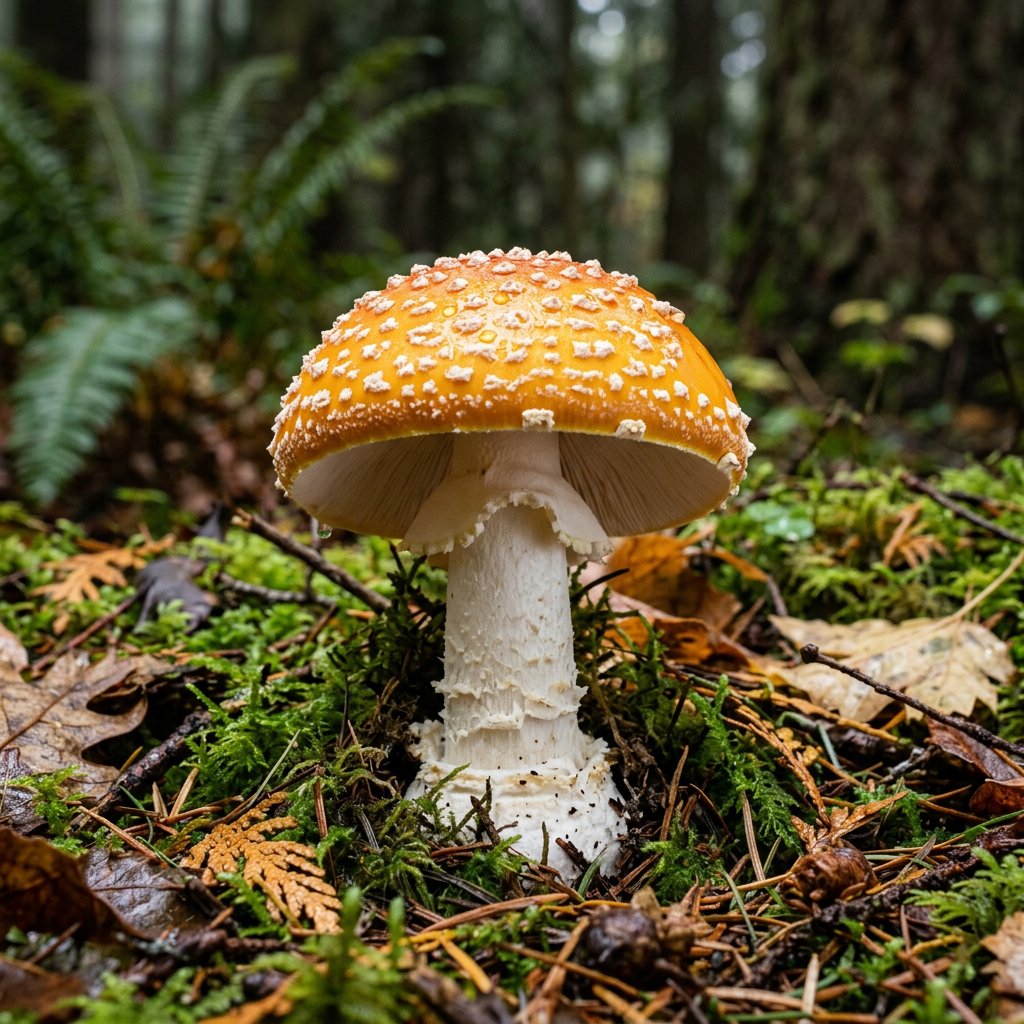
The Amanita vernicoccora, affectionately known as the "Spring Cocora," is a majestic and robust mushroom that signals the end of the rainy season in Western North America. Shimmering with pale gold or buttery cream hues, it often emerges from the earth like a buried treasure, pushing through the leaf litter with impressive strength. While it is a celebrated find for seasoned foragers, it belongs to a family that includes some of the world's most dangerous organisms, making it a "pro-level" specimen of the forest.
🔍 How to Identify
- 🎓 The Cap: Large and fleshy, ranging from creamy white to a distinct pale yellow. It typically starts as a rounded dome and flattens out with age, often sporting a large, white, felt-like patch in the center.
- 🦴 The Volva: At the base of the stem sits a thick, white, sac-like structure. This "cup" is a remnant of the universal veil and makes the mushroom look as if it is growing out of a tattered eggshell.
- 📏 The Gills & Margin: The gills are white, crowded, and free from the stem. A key detail is the "striate margin"—fine, vertical ridges running along the very edge of the cap.
🌲 Habitat & Ecology
- 🌳 The Oak Symbiosis: This mushroom is mycorrhizal, meaning it lives in a complex, beneficial relationship with tree roots. In its native range, it is most frequently found huddled near Coast Live Oaks or nestled under mixed conifer canopies.
- 🌦️ The Spring Sentinel: While most mushrooms wait for the autumn chill, the Spring Cocora earns its name by appearing between late winter and late spring. It relies on the "last gasp" of seasonal rains to fuel its rapid growth.
⚠️ Safety & Toxicity
- 🛑 WARNING: While Amanita vernicoccora is considered edible by some experts, it is extremely dangerous for beginners. It bears a terrifying resemblance to the "Death Cap" (Amanita phalloides), which contains lethal amatoxins.
- 🧬 The Risk: One simple mistake in identification can be fatal. The pale yellow cap can sometimes fade to white, making it nearly indistinguishable from deadly white Amanitas to the untrained eye. Consumption is not recommended unless you are an expert mycologist.
✨ Fun Fact
For decades, this mushroom was considered just a "spring version" of its winter cousin, the Calavera. It wasn't until modern DNA sequencing that scientists realized it was a completely unique species, proving that even in the world of fungi, looks can be very deceiving!
More Details







