Info
Known as the "Admirable Bolete," this mushroom is a true gem of the Pacific Northwest. With its deep maroon, velvety cap and striking stature, it looks as though it was hand-painted to decorate the floors of ancient evergreen forests. Unlike many of its cousins that hide in the soil, this "admirable" fungus often perches itself atop rotting logs like a forest king on a mossy throne.
🔍 How to Identify
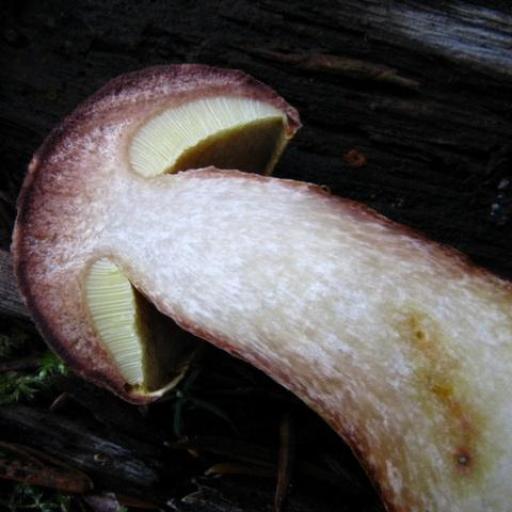
- 🍄 The Cap: A rich, dark reddish-brown to chocolate-maroon. The surface is famously velvety or even slightly "shaggy" when young, feeling like fine suede to the touch.
- 🧽 The Pores: Instead of gills, the underside features a sponge-like layer of bright lemon-yellow pores. As the mushroom ages, these pores turn a darker mustard or greenish-yellow.
- Column The Stem: Thick and bulbous at the base, the stem usually matches the cap's reddish tones and is covered in a beautiful, raised "netted" pattern (reticulation).
🌲 Habitat & Ecology
- 🌲 The Wood-Dweller: While most boletes form relationships only with tree roots in the soil, Aureoboletus mirabilis is unique. It is frequently found growing directly out of decaying logs or stumps, particularly Hemlock and Fir.
- 🌧️ Coastal Resident: It thrives in the damp, misty coastal forests of North America, stretching from Northern California up to Alaska, appearing most frequently in late summer and autumn.
⚠️ Safety & Toxicity
- 🚨 WARNING: Edible but requires expert identification. While the Admirable Bolete is considered a "choice edible" by many foragers, beginners can easily mistake it for other boletes.
- 🍳 Preparation: Always cook this mushroom thoroughly. Some individuals may experience mild digestive upset if it is eaten raw or in large quantities for the first time.
- 🐾 Pet Safety: As with most wild fungi, keep them away from pets, as their digestive systems are much more sensitive to wild forest compounds.
✨ Fun Fact
Most boletes have a nutty, earthy flavor, but the Admirable Bolete is famous among chefs for its surprising lemony tang. When sautéed, it releases a distinct citrusy aroma that makes it a favorite for pairing with seafood or light pasta dishes!
More Details
| Hymenium Type | Pores |
| Stipe Character | Bare Stipe |
| Spore Print Color | Olive Brown |
| Mushroom Cap Shape | Convex Mushroom Cap |
| Hymenium Attachment | Adnate Hymenium Attachment |
| Mushroom Ecological Type | Mycorrhiza |