Info
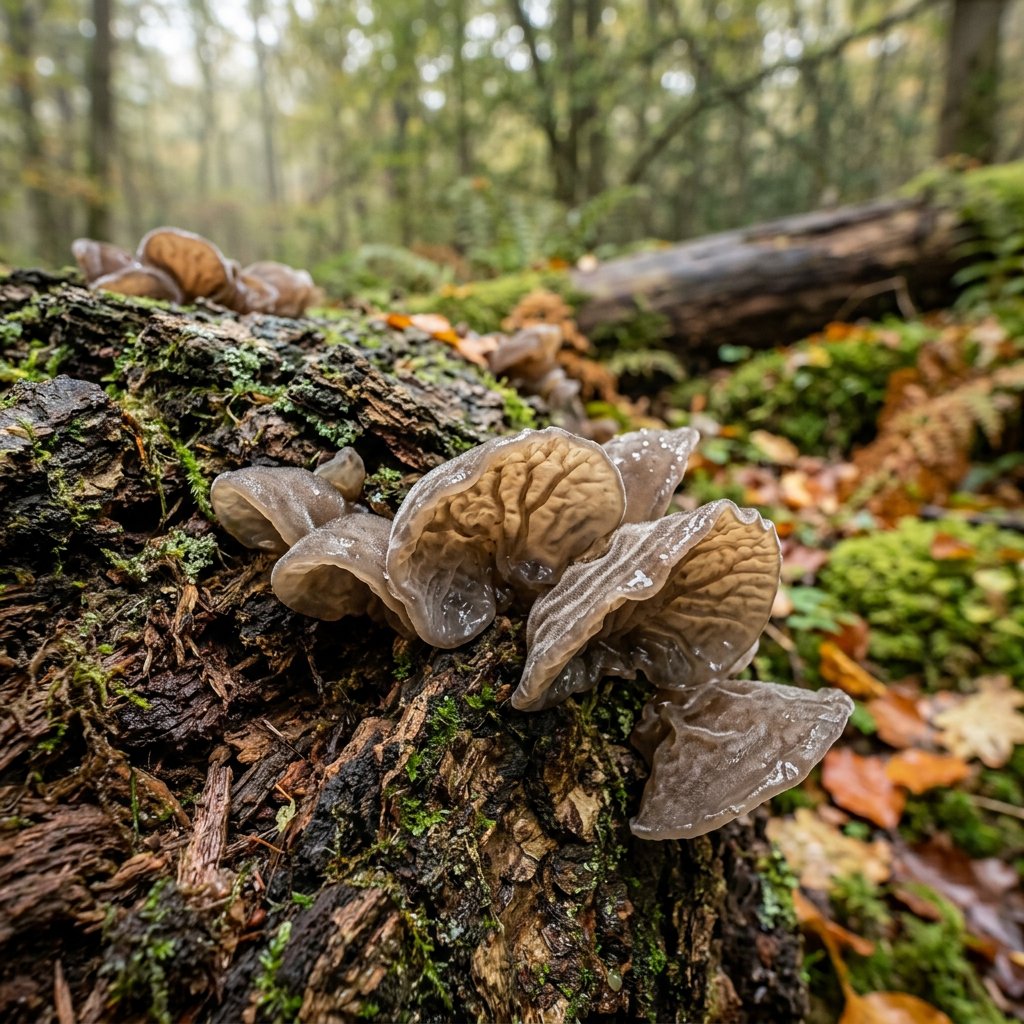
Commonly known as the Tripe Fungus, this resilient mushroom looks like a collection of rubbery, velvet-covered ears clinging to old logs. Its name comes from the wrinkled, vein-like underside that resembles the lining of an animal's stomach (tripe). While it lacks the delicate beauty of a flower, its strange, undulating forms add a touch of gothic mystery to the forest floor.
🔍 How to Identify
- 🔘 The Upper Surface: Coarsely hairy and velvety to the touch. It features distinct concentric zones (rings) of grey, brown, and cream colors, often turning green as algae colonize the hairs.
- 🧠 The Underside: Unlike the hairy top, the bottom is smooth, rubbery, and gelatinous. It is typically a purple-brown or greyish-lilac color and covered in a network of folds and ridges.
- 💧 The Texture: This fungus is a "resurrection" specialist. When dry, it becomes hard, brittle, and shriveled. After a rainstorm, it absorbs water, swelling back into a flexible, rubbery mass.
🌲 Habitat & Ecology
- 🪵 The Wood Specialist: You will almost exclusively find it growing on dead or decaying deciduous wood, particularly Ash, Elm, and Beech. It plays a vital role as a "white rot" fungus, breaking down lignin to recycle nutrients back into the soil.
- 🌳 Growth Pattern: It usually grows in tiered, overlapping brackets that can fuse together, sometimes coating the entire side of a fallen log in a thick, "tripey" carpet.
⚠️ Safety & Toxicity
- 🚫 WARNING: Do not consume. While it is a close relative of the edible Wood Ear mushroom used in Asian cuisine, Auricularia mesenterica is generally considered inedible.
- 🤢 The Risk: Its texture is incredibly tough and rubbery, making it unpalatable. Furthermore, because it often hosts various types of algae and bacteria on its hairy surface, attempting to eat it can lead to gastrointestinal distress. Keep it away from curious pets and children.
✨ Fun Fact
The species name mesenterica is derived from the Greek word mesenterion, which refers to the "middle of the intestines." Looking at the wrinkled, purplish underside of the mushroom, it's easy to see why early mycologists thought it looked exactly like human anatomy!
More Details







