Info
Known the world over as the "King Bolete," Boletus edulis is the crown jewel of the fungal kingdom. Whether you call it Porcini, Ceps, or Steinpilz, this mushroom is a gastronomic treasure deeply rooted in European folklore and fine dining. Often found hiding under a blanket of pine needles, its sturdy, bread-bun appearance has made it a symbol of the forest’s hidden bounty for centuries.
🔍 How to Identify
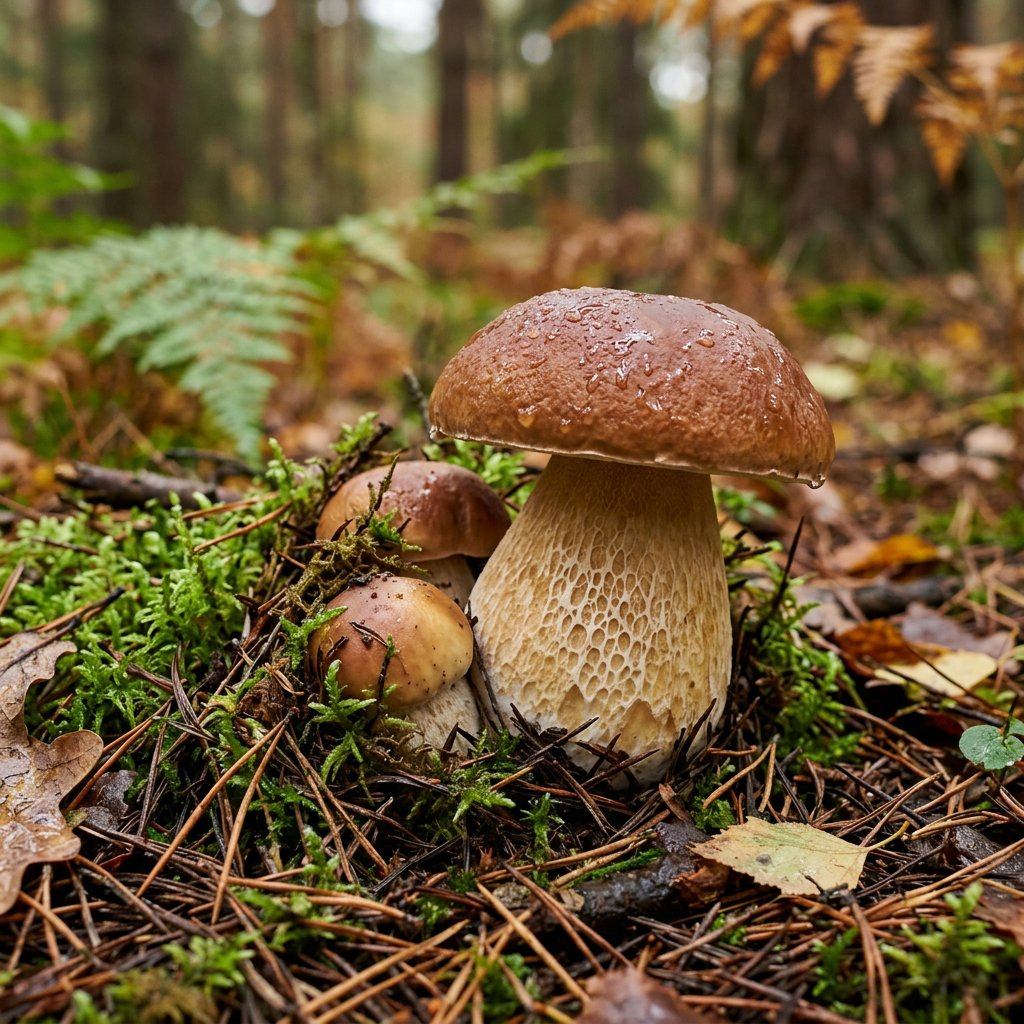
- 🍄 The Cap: Broad and smooth, usually ranging from light tan to a rich chestnut brown. It often looks remarkably like a perfectly toasted sourdough roll and can become slightly sticky when it rains.
- 🧽 The Pores: Unlike many common mushrooms, Porcini have no gills. Instead, the underside of the cap is a sponge-like layer of pores. These start out firm and white when young, turning a yellowish-green as the mushroom matures.
- 🍗 The Stem: Thick, club-shaped, and incredibly sturdy. A key identifying feature is the "reticulation"—a fine, white, net-like pattern that covers the upper portion of the stem, resembling a delicate lace.
🌲 Habitat & Ecology
- 🤝 Tree Partners: This mushroom is mycorrhizal, meaning it lives in a symbiotic "handshake" with the roots of specific trees. Look for it near Spruce, Pine, Beech, and Oak trees, where it helps the tree absorb nutrients in exchange for sugars.
- ⛰️ The Sweet Spot: They favor well-drained soil in old-growth forests and often reappear in the same secret spots year after year, usually popping up after a heavy summer or autumn rain.
⚠️ Safety & Toxicity
- 🚨 WARNING: Never consume a wild mushroom unless you are 100% certain of its identity. While Boletus edulis is a "choice" edible, beginners may confuse it with the Bitter Bolete (Tylopilus felleus), which looks similar but tastes incredibly foul, or more dangerously, certain red-pored boletes that can cause severe gastric distress.
- 🐌 Unwanted Guests: Because they are so delicious, they are often infested with fungus gnat larvae. Always slice the stem to check for small tunnels or "hitchhikers" before considering it for the kitchen.
✨ Fun Fact
The Italian name "Porcini" literally translates to "piglets." This is because ancient Romans believed the mushrooms looked like fat little pigs scampering across the forest floor, or perhaps because pigs are just as fond of eating them as humans are!
More Details
| Hymenium Type | Pores |
| Stipe Character | Bare Stipe |
| Spore Print Color | Brown |
| Mushroom Cap Shape | Convex Mushroom Cap |
| Hymenium Attachment | Adnate Hymenium Attachment |
| Mushroom Ecological Type | Mycorrhiza |







