Info
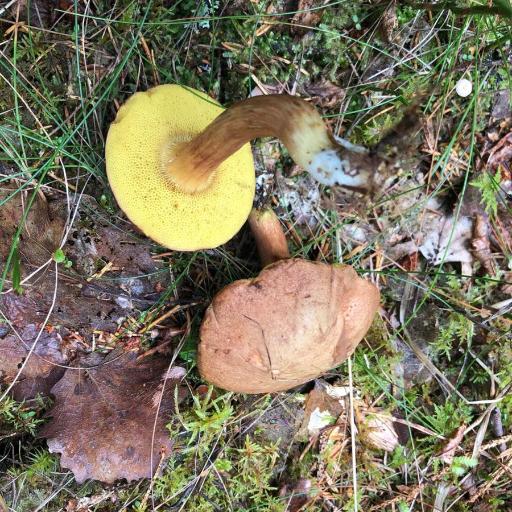
Often called the Rusty Bolete, this mushroom is a master of camouflage, blending perfectly into the copper-colored leaf litter of autumn forests. With its velvety, earth-toned cap and striking yellow pores, it looks like a weathered antique hidden amongst the roots. While it doesn't have the "celebrity" status of the King Bolete, it is a fascinating find for any forest trekker.
🔍 How to Identify
- 🍄 The Cap: Usually 4–10 cm wide, the surface is dry and velvety. It ranges from a rusty brown to an olive-ochre color, often cracking slightly as it ages to reveal pale flesh underneath.
- 🧽 The Pores: Instead of gills, it has a sponge-like layer of bright yellow pores. If you press your thumb against them, they will slowly bruise a soft blue-green or brownish color.
- 🦵 The Stem: The stalk is typically slender and firm. It is pale yellow at the top but transitions into a "rusty" reddish-brown toward the base, often featuring subtle vertical ridges.
🌲 Habitat & Ecology
- 🌲 Tree Partners: This mushroom is mycorrhizal, meaning it lives in a symbiotic "handshake" with trees. It is most commonly found under conifers like Spruce and Pine, but it occasionally pops up near Oak and Beech.
- 🍂 Season & Soil: It prefers well-drained, slightly acidic soils. You’ll likely spot them from mid-summer through late autumn, often hiding under a thin layer of moss or pine needles.
⚠️ Safety & Toxicity
- 🛑 WARNING: Never consume any wild mushroom unless you have confirmed the ID with a local expert. While Boletus ferrugineus is generally considered edible, it is easily confused with less savory "bitter" boletes that can ruin a meal or cause stomach upset.
- 🐾 Pet Safety: While not known to be deadly toxic to dogs, wild mushrooms can cause significant gastric distress or allergic reactions in pets. It is best to keep them away.
- 🐛 Internal Guests: This species is a favorite of fungus gnats. Older specimens are almost always "honeycombed" with tiny tunnels from larvae, making them unsuitable for the kitchen.
✨ Fun Fact
The name Xerocomus (the genus this mushroom is often placed in) translates from Greek to mean "dry hair." This refers to the signature velvety, non-sticky texture of the cap that feels like fine suede to the touch!
More Details







