Info
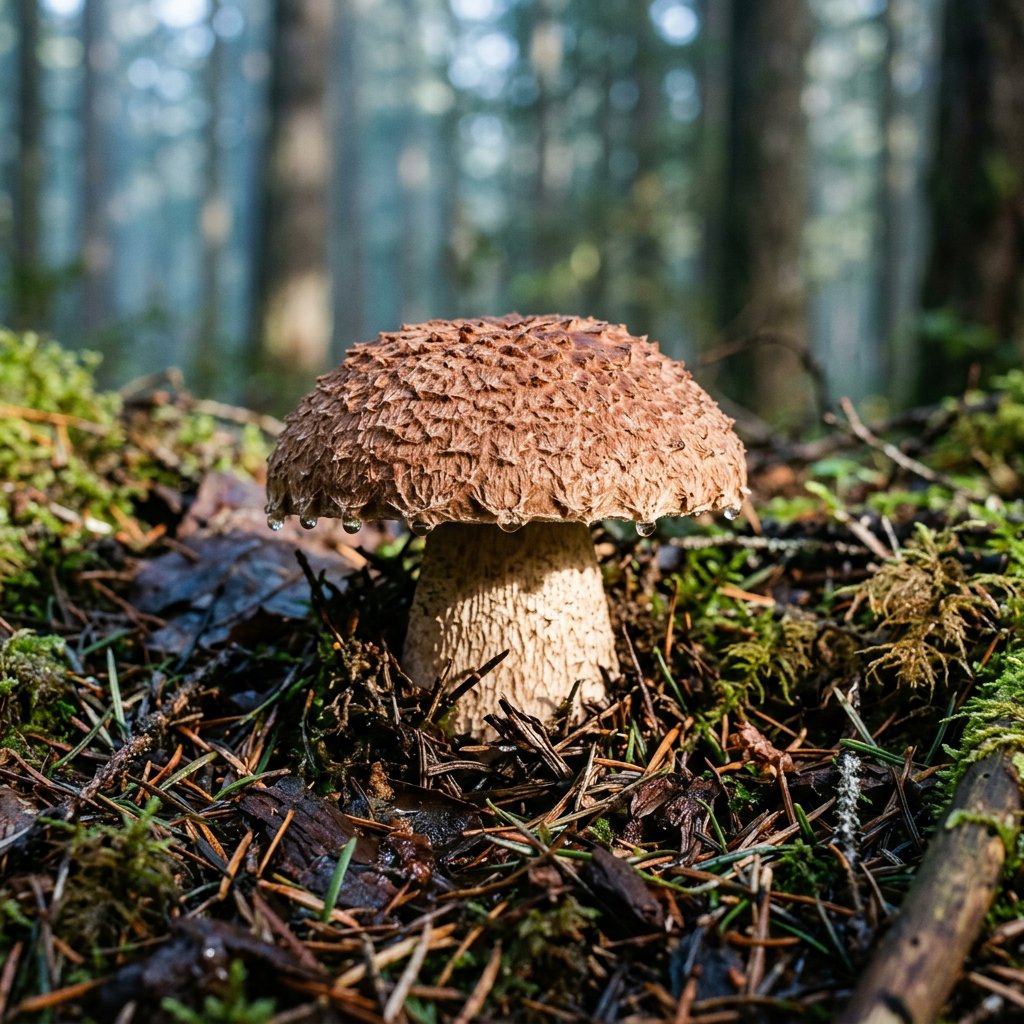
Often called the Fibrous King Bolete, this mushroom is a rugged, west-coast cousin of the world-famous Porcini. While its more famous relatives often have smooth, suede-like tops, this forest dweller looks like it has been weathered by the misty winds of the Pacific Northwest. It is highly prized by foragers for its deep, nutty flavor and a meaty texture that holds up beautifully in the kitchen.
🔍 How to Identify
- 🍄 The Cap: Deep brown to cocoa-colored, the surface is uniquely wrinkled, "fibrous," or pitted. It often looks like crumpled leather or a dried prune when mature.
- 🧽 The Pores: Instead of gills, the underside features a sponge-like layer of pores. These start as a creamy white and transition to a dingy yellow or olive-brown as the mushroom ages.
- 🦵 The Stem: Thick and bulbous, often looking "fat" at the base. It features a fine, lace-like texture (reticulation) near the top and does not typically bruise blue when handled.
🌲 Habitat & Ecology
- 🌲 Conifer Companion: This species is mycorrhizal, meaning it lives in a symbiotic "handshake" with tree roots. It is most commonly found huddled near Douglas firs and occasionally hemlocks.
- 🗺️ Coastal Resident: You are most likely to find it along the Pacific Coast of North America, from California up through British Columbia, typically emerging after the first heavy autumn rains.
⚠️ Safety & Toxicity
- 🛑 WARNING: Boletus fibrillosus is considered a "choice edible," but you must be 100% certain of your identification before consuming. Many mushrooms have lookalikes that can cause severe gastrointestinal distress.
- 👅 The Bitter Lookalikes: Some non-toxic but "inedible" boletes (like those in the Tylopilus genus) look similar but taste incredibly bitter. One bitter mushroom can ruin an entire dish.
- 🐾 Pet Safety: While safe for humans when properly cooked, raw wild mushrooms are difficult for pets to digest and may cause vomiting or lethargy if snapped up in the woods.
✨ Fun Fact
The species name fibrillosus is Latin for "composed of small fibers." This refers to the tiny, hair-like fibers that give the cap its signature shaggy, textured appearance, making it look much "tougher" than the smooth Boletus edulis.
More Details
| Hymenium Type | Pores |
| Stipe Character | Bare Stipe |
| Spore Print Color | Olive Brown |
| Hymenium Attachment | Adnexed Hymenium Attachment |
| Mushroom Ecological Type | Mycorrhiza |







