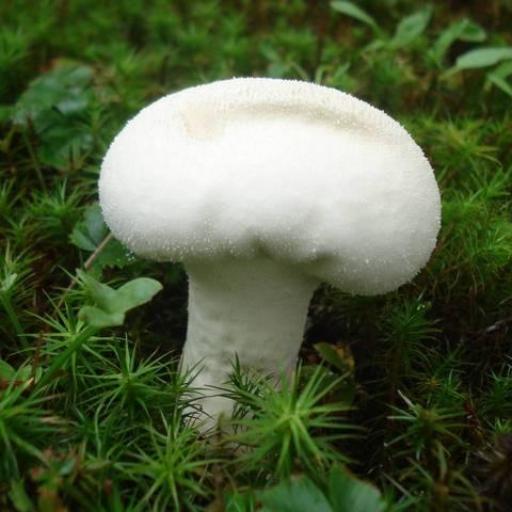
Info
Often called the Mosaic Puffball, this fungus looks like a weathered piece of ancient pottery or a cracked golf ball sitting in a grassy field. Unlike many of its cousins that prefer the shade of deep forests, this mushroom is a lover of open air and sunlight. It is best known for its "mosaic" skin that breaks into beautiful, geometric patterns as it grows.
🔍 How to Identify
- 🎨 Surface Texture: The outer skin is the giveaway; it develops distinct, hexagonal scales or "tiles" that look like they’ve been etched by an artist.
- 🍐 Shape & Form: It typically grows in a squat, pear-like shape, often reaching the size of a large orange or even a small melon.
- ☁️ The Interior: When young, the inside (the gleba) is firm and pure white, resembling the texture of a marshmallow or fresh mozzarella.
🌲 Habitat & Ecology
- ⛳ Sun Seekers: You’ll most likely spot these in nutrient-poor grasslands, pastures, and coastal heaths. They play a vital role in breaking down organic matter in the soil.
- 🏆 The Persistent Cup: One of its most unique traits is that the top half disintegrates to release spores, but the bottom half—a sterile, bowl-shaped base—remains rooted in the ground for months, looking like a discarded brown cup.
⚠️ Safety & Toxicity
- 🛑 WARNING: This mushroom is considered edible only when the interior is solid and pure white. If there is any hint of yellow, olive, or brown, it has begun producing spores and will cause severe stomach distress.
- 🥚 The "Egg" Trap: Always slice puffballs vertically before considering them for the kitchen. If you see the silhouette of a tiny, developing mushroom inside, you have found a deadly Amanita "egg" and must discard it immediately.
✨ Fun Fact
- 💨 The Spore Cannon: A single mature Mosaic Puffball can contain billions of spores. When a raindrop hits the papery surface of a ripe specimen, the impact acts like a bellows, shooting a tiny "puff" of brown spores into the air to be carried by the wind!
More Details
| Hymenium Type | Gleba |
| Spore Print Color | Brown |
| Mushroom Cap Shape | No Mushroom Cap |
| Mushroom Ecological Type | Saprobiont |







