Info
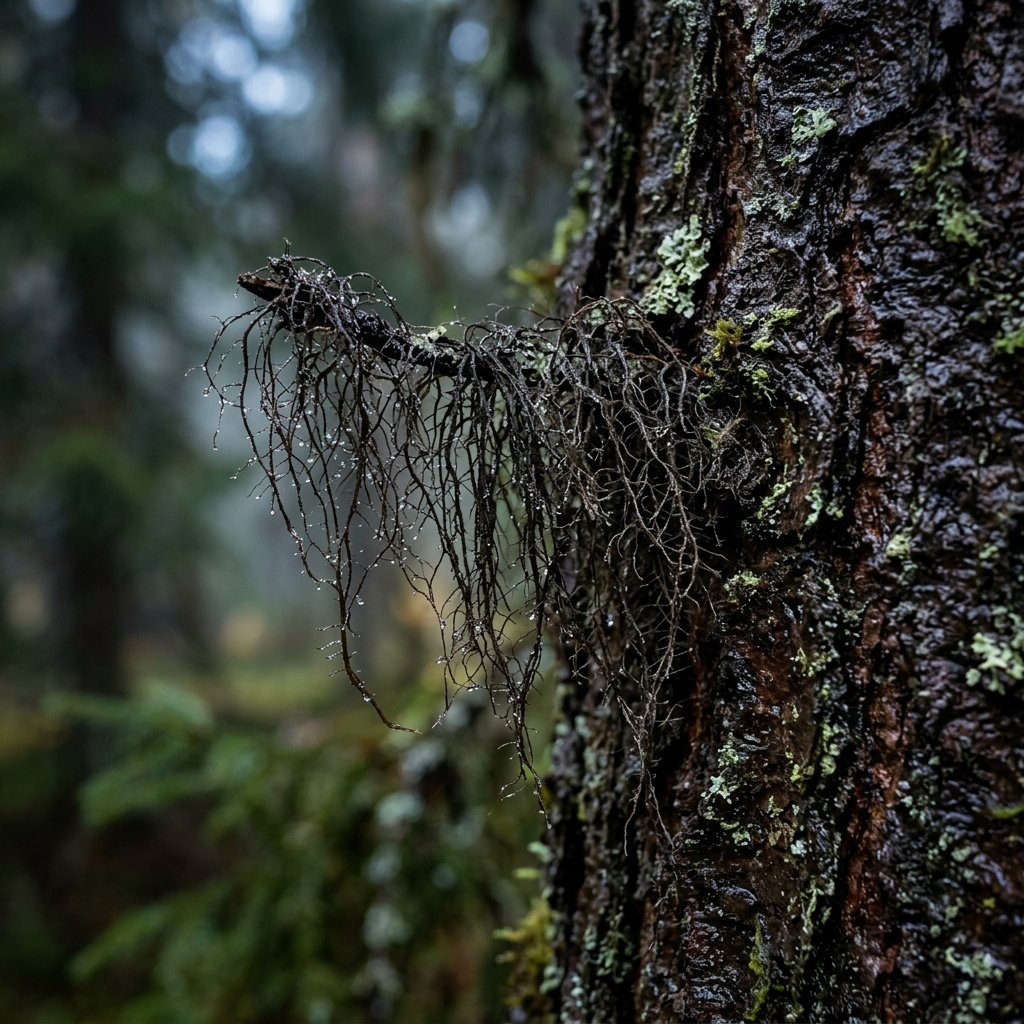
Affectionately known as Nadvornik’s Horsehair Lichen, this species looks like the tangled, dark tresses of a forest spirit draped over evergreen branches. While technically a lichen—a symbiotic partnership between a fungus and an alga—it is a prized find for nature lovers because it only thrives where the air is exceptionally pure. Its presence is a "green flag" for the health of an entire ecosystem.
🔍 How to Identify
- 🧶 The Thallus: This lichen forms a "fruticose" (shrubby) body that consists of very fine, hair-like filaments. It looks like a clump of dark, wiry thread or horsehair hanging from tree bark.
- 🎨 Color Palette: The strands are typically a dark olive-brown to almost black, though they can sometimes appear slightly paler or grayish at the tips depending on moisture levels.
- 🕵️ Spinules and Spots: If you look closely (sometimes requiring a hand lens), you’ll notice tiny, thorn-like side branches called "spinules" and small, pale, elongated pores on the surface known as pseudocyphellae.
🌲 Habitat & Ecology
- 🏔️ Old-Growth Specialist: You won’t find this hair-like beauty in a polluted city park. It is strictly tied to old-growth coniferous forests, particularly favoring the bark of spruce and fir trees in humid, cool climates.
- 💨 Living Air Sensor: Because it absorbs all its nutrients directly from the atmosphere, it is incredibly sensitive to sulfur dioxide and other pollutants. If Nadvornik’s Horsehair Lichen disappears from an area, it’s often the first sign of declining air quality.
- 🐿️ Forest Bedding: In the wild, these "hairs" serve a vital purpose; many species of birds and even flying squirrels use them as soft, insulating material for their nests.
⚠️ Safety & Toxicity
- 🛑 WARNING: While Bryoria species are not generally considered deadly like some mushrooms, they are not edible. Many lichens contain complex acids that can cause severe digestive upset or allergic reactions if handled excessively or ingested.
- 🐾 Pet Safety: Keep curious dogs or cats away. While it isn't a common "snack" for pets, the coarse fibers and acidic compounds can irritate the mouth and stomach.
- 🧤 Skin Sensitivity: Some people may experience "Lichen Planus" or mild skin irritation when handling certain forest lichens with bare hands.
✨ Fun Fact
In the dead of winter, when food is scarce, Northern Flying Squirrels rely on Bryoria lichens as a primary food source. They have even been known to "farm" the lichen by accidentally spreading fragments to new trees as they glide through the forest!
More Details