Info
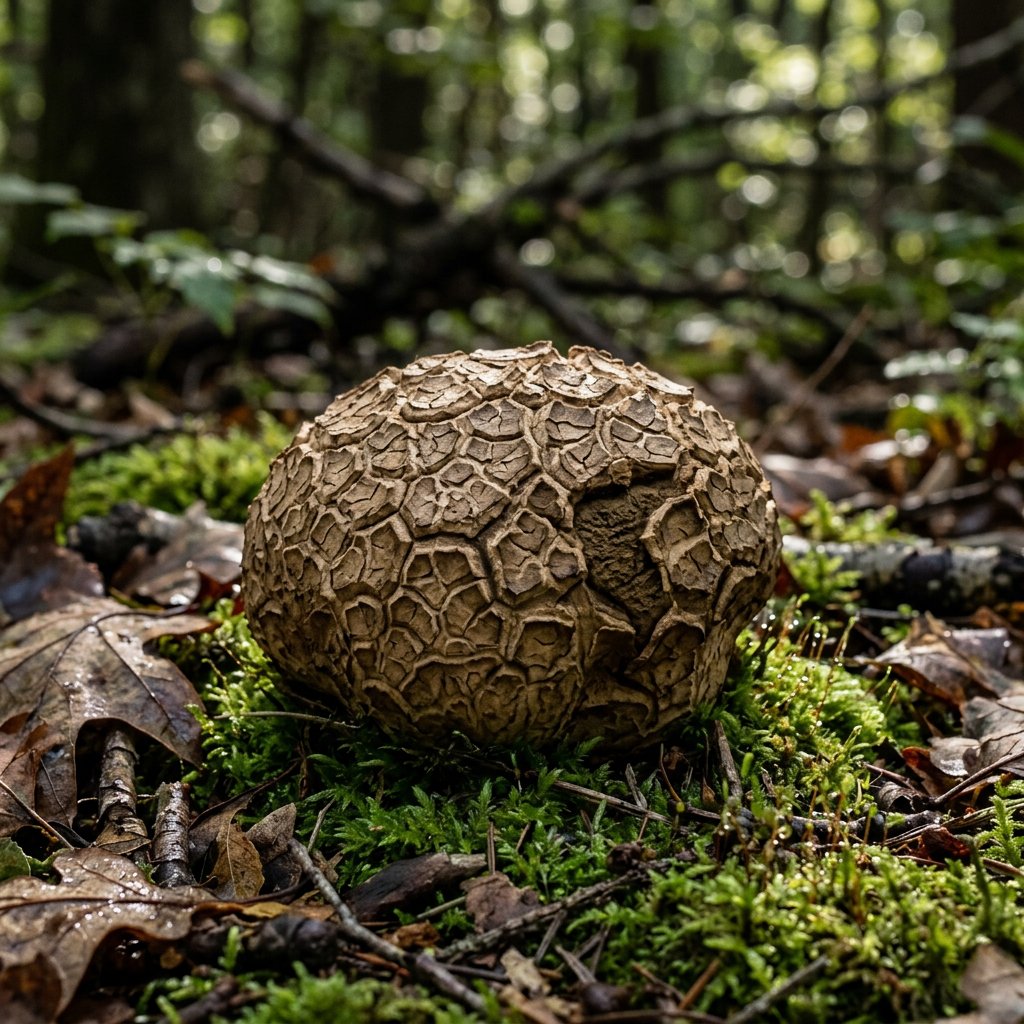
Known as the Skull-shaped Puffball, this mushroom is a bizarre yet fascinating resident of the late summer and autumn landscape. Its wrinkled, rounded top often peeks out from tall grass like a forgotten brain or a weathered skull, giving it a slightly eerie but captivating presence. While it looks like a prop from a spooky movie, it is a vital decomposer that plays a quiet, essential role in your local ecosystem.
🔍 How to Identify
- 🧠 The Shape: It resembles a large, inverted pear or a human brain, often with a distinct, thick, and pinched "stem" at the base.
- ☁️ The Gleba (Interior): When sliced vertically, the inside of a young specimen is solid, uniform, and pure white, with a texture similar to a marshmallow or cream cheese.
- 🍂 Surface Texture: The outer skin is initially smooth and off-white but matures into a tan or brownish-purple color, developing a "cracked" or wrinkled appearance as it prepares to release spores.
🌲 Habitat & Ecology
- 🌳 The Great Decomposer: This fungus is saprobic, meaning it feeds on decaying organic matter in the soil. You will most likely find it in open woods, grassy fields, or even well-manicured lawns and cemeteries.
- ❄️ Winter Relic: Unlike many mushrooms that vanish in a few days, the dried, papery "skull" of this puffball is quite sturdy. It can persist on the ground long after the spores have blown away, sometimes surviving entire winters as a hollow shell.
⚠️ Safety & Toxicity
- 🚨 WARNING: This mushroom is considered edible only when the interior is solid white. If there is any hint of yellow, olive, or brown, the spores have begun to mature, and eating it can cause severe stomach upset.
- 🛑 The Lookalike Rule: Always slice a puffball in half from top to bottom before considering it safe. If you see the silhouette of a "baby mushroom" (gills and cap) inside, you have found a deadly Amanita in its "egg" stage, which is extremely toxic. Puffballs must be solid like a loaf of bread inside.
✨ Fun Fact
A single mature Skull-shaped Puffball can contain trillions of spores! In historical folk medicine, these dry, dusty spores were sometimes used as a "styptic" to help clot blood and treat small wounds on the battlefield or farm.
More Details







