Info
Imagine walking through a meadow and stumbling upon what looks like a misplaced volleyball or a giant, leathery egg. The Giant Puffball (Calvatia gigantea) is one of nature’s most unmistakable wonders, often growing large enough to be seen from a moving car. In folklore, these massive fungi were sometimes called "Wolf's Farts" or "Devil's Snuff-boxes" due to the clouds of brown spores they release when they finally dry out and burst.
🔍 How to Identify
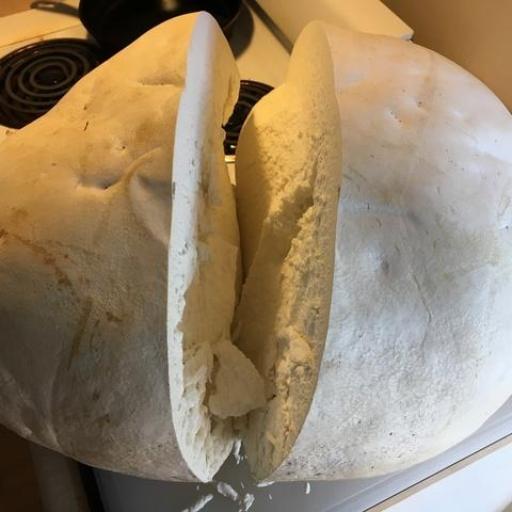
- ⚪ The Body: Unlike typical mushrooms, it has no cap, gills, or stem. It is a large, smooth, white orb that can range from the size of a grapefruit to a prize-winning pumpkin.
- ☁️ The Interior: When sliced open, the inside (the gleba) must be solid, pure white, and have the texture of dense marshmallow or cream cheese.
- 🌱 The Base: It is attached to the ground by a very small, cord-like root, making it look as though it is simply resting on top of the grass.
🌲 Habitat & Ecology
- 🚜 Location: These giants prefer nutrient-rich soil. You will most often find them in grassy fields, old orchards, meadows, and occasionally along the edges of deciduous forests.
- 🍂 Seasonality: They are "late bloomers," typically appearing in late summer and throughout autumn, especially after a period of heavy rain and humid weather.
⚠️ Safety & Toxicity
- 🚨 WARNING: Only specimens that are pure, solid white throughout the entire center are considered edible. If there is any yellow, brown, or purple tint inside, the mushroom is maturing into spores and can cause severe digestive upset.
- 🍄 The Look-Alike Test: Always slice a puffball vertically before considering it safe. If you see the faint outline of a "baby mushroom" (cap and gills) inside the white flesh, it is not a puffball—it is a young Amanita, which contains some of the world's most deadly toxins.
- 🐕 Pet Safety: While generally safe for humans when young, the dry spores of mature puffballs can cause "lycoperdonosis" (respiratory distress) if a dog sniffs or bites into a dry mushroom and inhales the dust.
✨ Fun Fact
A single, average-sized Giant Puffball can contain over 7 trillion spores. If every spore from one mushroom grew into a new puffball, the resulting fungi would circle the Earth several times!
More Details
| Hymenium Type | Gleba |
| Spore Print Color | Brown |
| Mushroom Cap Shape | No Mushroom Cap |
| Mushroom Ecological Type | Mycorrhiza |







