Info
Commonly known as the Ashen Chanterelle or the Gray Chanterelle, this mushroom is like the sophisticated, moody cousin of the famous Golden Chanterelle. While it lacks the vibrant sunshine hue of its relatives, it is highly prized by chefs for its delicate texture and surprisingly fruity aroma. Often blending perfectly into the shadows of the forest floor, finding a patch of these is like discovering a hidden cache of forest jewels.
🔍 How to Identify
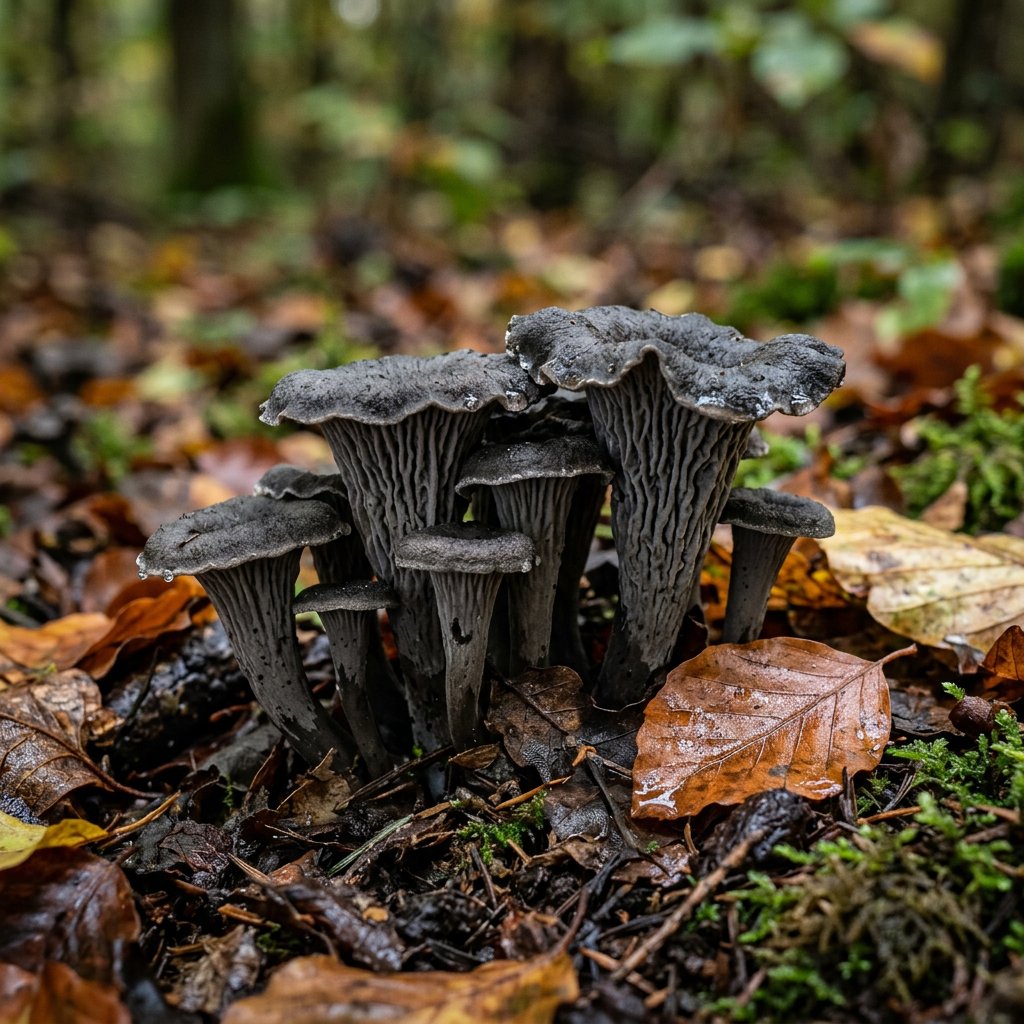
- 🍄 The Cap: Deeply funnel-shaped or trumpet-like, the cap is usually a dark charcoal to ashen gray. The edges are often wavy and irregular, giving it an elegant, ruffled appearance.
- 🌊 The "False" Gills: Unlike true gills, the underside features shallow, vein-like ridges that are blunt and branch out toward the edge. These ridges are typically a lighter gray or even slightly lilac-toned compared to the cap.
- 🪵 The Stem: The stem is hollow and tapers downward, sharing the same smoky gray color as the rest of the body. It feels flexible rather than brittle.
🌲 Habitat & Ecology
- 🍂 Broadleaf Besties: This mushroom is mycorrhizal, meaning it lives in a symbiotic partnership with trees. It is most commonly found nestled in the leaf litter of deciduous forests, particularly near Beech and Oak.
- 👻 Master of Disguise: Because of its somber color, the Ashen Chanterelle is incredibly difficult to spot against dark soil and rotting leaves. Foragers often say that once you see one, your "eyes adjust," and dozens more suddenly appear out of the gloom.
⚠️ Safety & Toxicity
- 🚨 WARNING: Never consume any wild mushroom unless you are 100% certain of its identification. While Cantharellus cinereus is a choice edible, it can be confused with other dark mushrooms by an untrained eye.
- ✅ The Good News: It is non-toxic and delicious. Its most common lookalike is the Craterellus cornucopioides (Black Trumpet), which is also edible and lacks the distinct vein-like ridges on the underside.
- 🐾 Pet Safety: While not specifically noted as a high-risk toxin for pets, wild mushrooms generally cause digestive upset in dogs and cats. It is best to keep them out of reach.
✨ Fun Fact
Despite its dark and somewhat "gloomy" appearance, the Ashen Chanterelle has a hidden secret: if you sniff a fresh specimen, it often smells distinctly of sweet apricots or plums, just like its bright yellow cousins!
More Details