Info
The Pink Porecrust (Ceriporia excelsa) is like a hidden watercolor painting on the forest floor. Unlike the classic "umbrella" mushrooms found in fairy tales, this fungus grows as a delicate, velvety crust clinging tightly to fallen logs. Often missed by the casual hiker, its soft pastel hues range from pale lilac to a warm sunset pink, making it a favorite find for sharp-eyed foragers and nature photographers.
🔍 How to Identify
- 🌸 Growth Habit: It is "resupinate," meaning it grows entirely flat against the wood surface without a stem or a protruding cap. It looks more like a splash of spilled paint than a traditional mushroom.
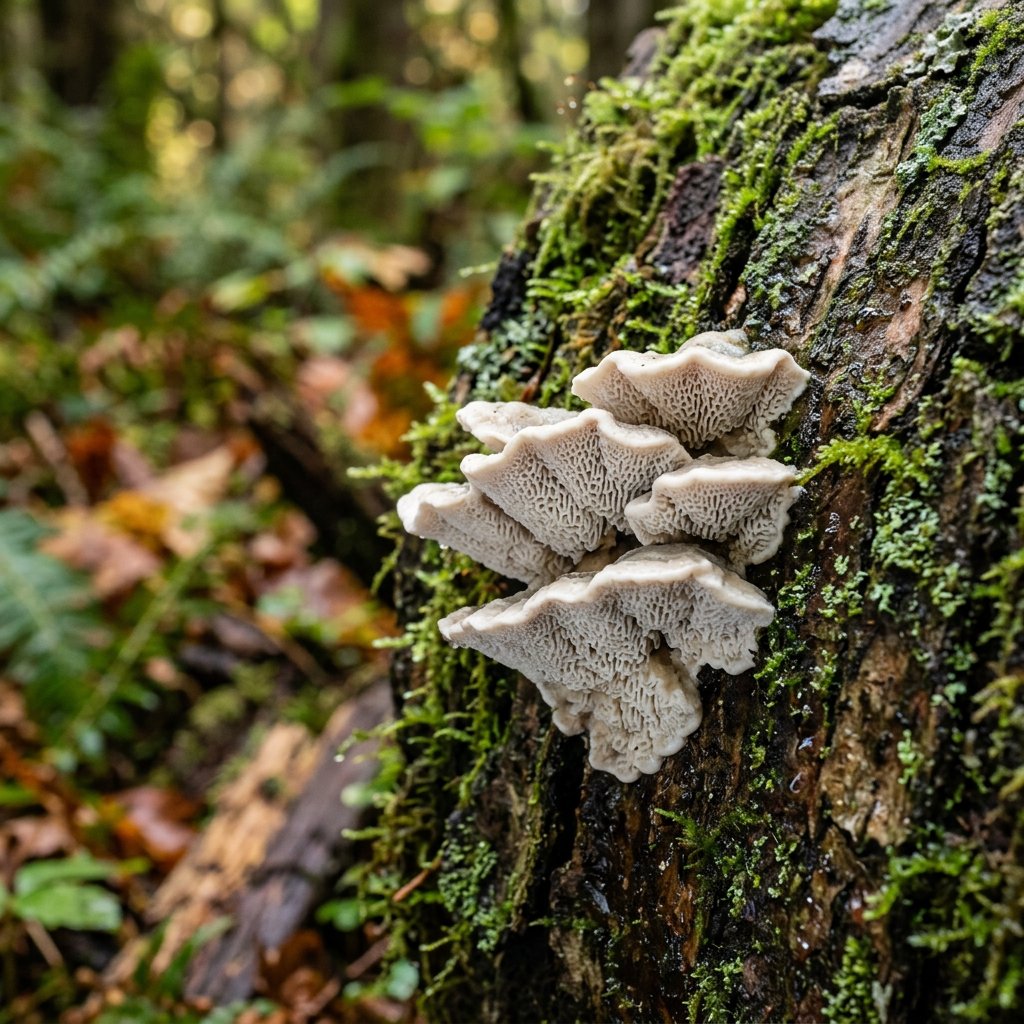
- 🕳️ Pore Surface: Instead of gills, the surface is covered in tiny, delicate pores. These pores are where the mushroom releases its spores into the air.
- ⚪ The Margin: The edges of the crust are often lighter than the center—sometimes even pure white—and look slightly fuzzy or fringed, creating a beautiful gradient effect.
🌲 Habitat & Ecology
- 🌳 The Clean-Up Crew: You’ll typically find it on the decaying wood of deciduous trees like Oak, Beech, or Ash. It is a "saprobic" fungus, meaning it plays a vital role in the ecosystem by breaking down dead wood and recycling nutrients back into the soil.
- 🍂 Seasonal Sight: It thrives in damp, shaded environments. Look for it in late summer through autumn, especially after heavy rains have thoroughly soaked the forest debris.
⚠️ Safety & Toxicity
- 🚫 WARNING: Do not attempt to eat this mushroom. While it is not widely categorized as "deadly" in the way some Amanitas are, it is strictly classified as inedible.
- 👅 Palatability: It has a tough, waxy, or leathery texture that is impossible to chew. There is no recorded culinary tradition for this species, and it should be treated as a "look, don't taste" find.
✨ Fun Fact
[🎨] The Nature Architect: While it looks soft, Ceriporia excelsa is a powerhouse of chemistry! Some species in the Ceriporia genus are currently being studied for their ability to break down complex industrial pollutants and synthetic dyes, making them potential future heroes in environmental cleanup.
More Details