Info
Often called the Peppery Bolete, this fiery little fungus is the forest’s natural spice cabinet. Unlike its mild-mannered relatives in the porcini family, it hides a sharp, peppery sting within its cinnamon-colored cap. It is a favorite find for woodland wanderers who enjoy the "scavenger hunt" of identifying mushrooms that look like common boletes but behave like spices.
🔍 How to Identify
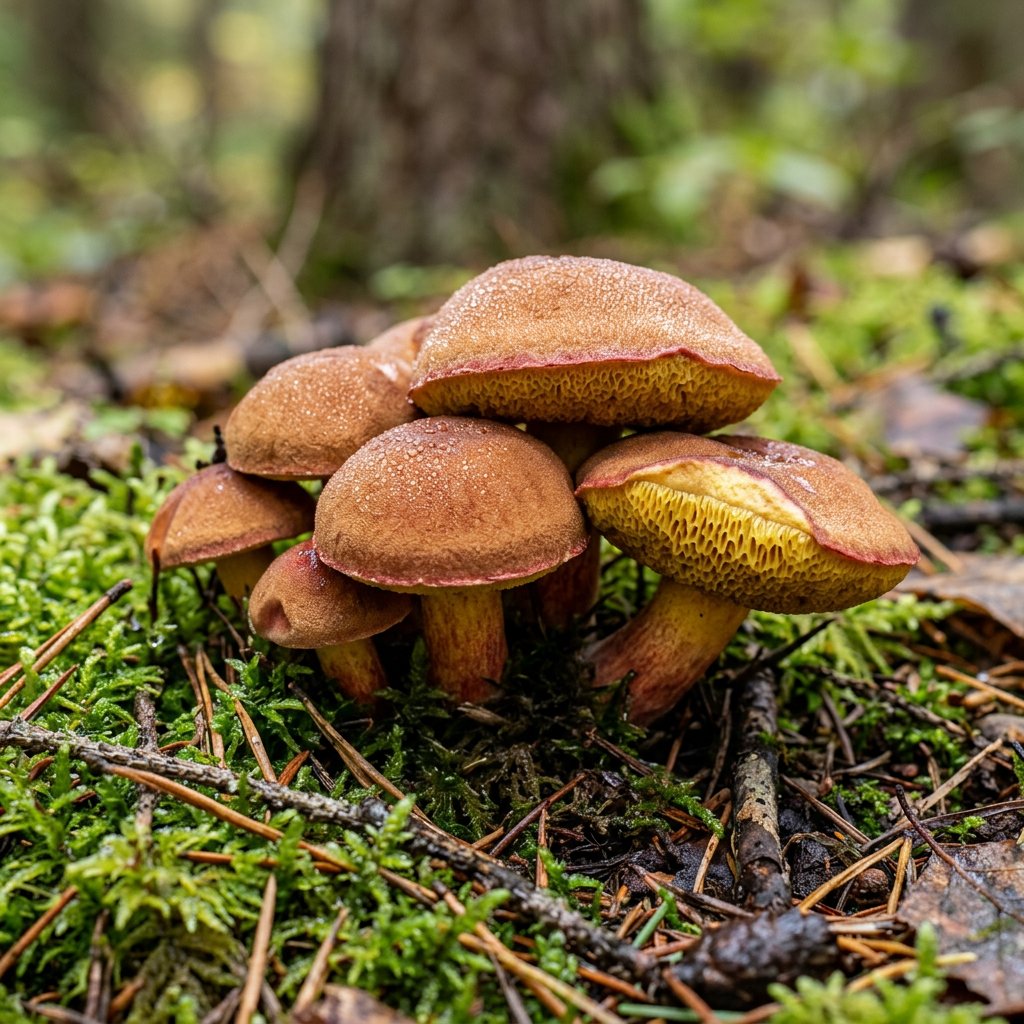
- 🍄 The Cap: Usually small (2–8 cm), ranging from cinnamon to tawny-brown. The surface is smooth and can feel slightly tacky or sticky when the weather is damp.
- 🧽 The Pores: Look underneath—you won’t find gills. Instead, it has distinct, large, angular pores that are a deep reddish-brown or "brick" color, never yellow like many other boletes.
- 🟡 The Vivid Base: The very bottom of the stem (the "foot") is a vibrant, chrome-yellow. If you slice the mushroom open, the flesh at the base is also bright yellow, while the rest is pale pinkish-buff.
🌲 Habitat & Ecology
- 🤝 The Secret Parasite: While most boletes help trees grow, the Peppery Bolete is a bit of a rebel. It is often found growing right next to the iconic red-and-white Fly Agaric (Amanita muscaria), as it is believed to be a parasite on the Fly Agaric's underground root system.
- 🍂 Woodland Preferences: It prefers acidic soils and is most commonly found in late summer and autumn near coniferous trees like Pine and Spruce, though it occasionally visits Birch forests.
⚠️ Safety & Toxicity
- 🚨 WARNING: Never consume any wild mushroom unless you are 100% certain of its identity. While Chalciporus piperatus is not considered "poisonous" in the traditional sense, it is too pungent to be eaten like a regular mushroom.
- 👅 Culinary Use: It is classified as "edible as a condiment." If you were to cook a whole plate of them, the intense heat would likely cause stomach upset.
- 🐾 Pets & Kids: Due to its high concentration of "peppery" compounds, it can cause significant oral irritation or mild digestive distress if nibbled on by curious pets or toddlers.
✨ Fun Fact
- 🌶️ Nature's Peppercorn: In various European cultures, particularly during times of spice shortages, foragers would dry these mushrooms and grind them into a fine powder. This "fungal pepper" was used as a direct, free substitute for expensive black peppercorns!
More Details