Info
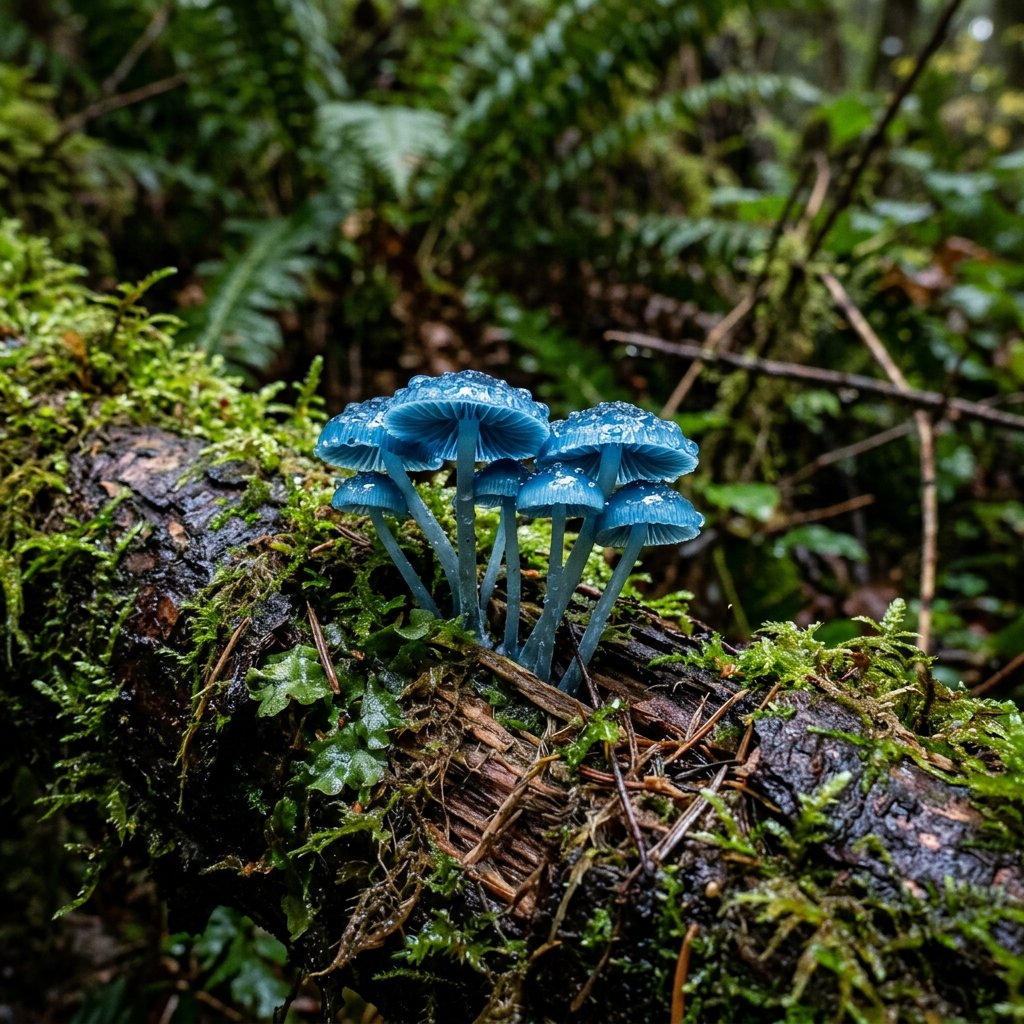
Often called the Lilac-gilled Chromosera, this tiny forest gem looks like it belongs in a neon-lit fairy tale. Its striking contrast between a golden-tan cap and vibrant purple gills makes it one of the most photogenic species found on rotting logs. While it is small and easily overlooked, its "glow" makes it a prized find for mushroom hunters and macro photographers alike.
🔍 How to Identify
- 🍄 The Cap: Measuring only 1–3 cm across, the cap starts convex and flattens with age. It is typically a waxy yellow, tan, or honey color, often appearing slightly "greasy" or translucent when damp.
- 💜 The Gills: This is the mushroom's most breathtaking trait. The gills are a stunning, deep lilac or violet color and run down the stem (decurrent), creating a beautiful starburst effect when viewed from below.
- 📍 The Stem: Slender, fragile, and hollow, the stem usually shares the same ethereal purple hue as the gills, though it may fade to a pale lavender or white near the base.
🌲 Habitat & Ecology
- 🪵 Woodland Preference: This species is "lignicolous," meaning it grows exclusively on decaying wood. It has a particular fondness for well-rotted coniferous logs, specifically pine and spruce, where it helps break down tough lignin.
- 🌧️ Trooping Growth: You will rarely find just one. These mushrooms usually grow in small, enchanting clusters or "troops," appearing most frequently during the wet humidity of late summer and autumn.
⚠️ Safety & Toxicity
- 🛑 WARNING: Strictly inedible. Chromosera cyanophylla is not a culinary mushroom and should never be consumed.
- 🧪 Unknown Risks: Due to its small size and lack of historical use as food, its chemical profile is poorly understood. Many small, brightly colored wood-decaying fungi contain compounds that can cause severe gastrointestinal upset.
✨ Fun Fact
The genus name Chromosera is derived from the Greek words for "color" and "wax." This perfectly describes the mushroom's two most distinct features: its vibrant purple pigments and its waxy, almost succulent-like texture.
More Details







