Info
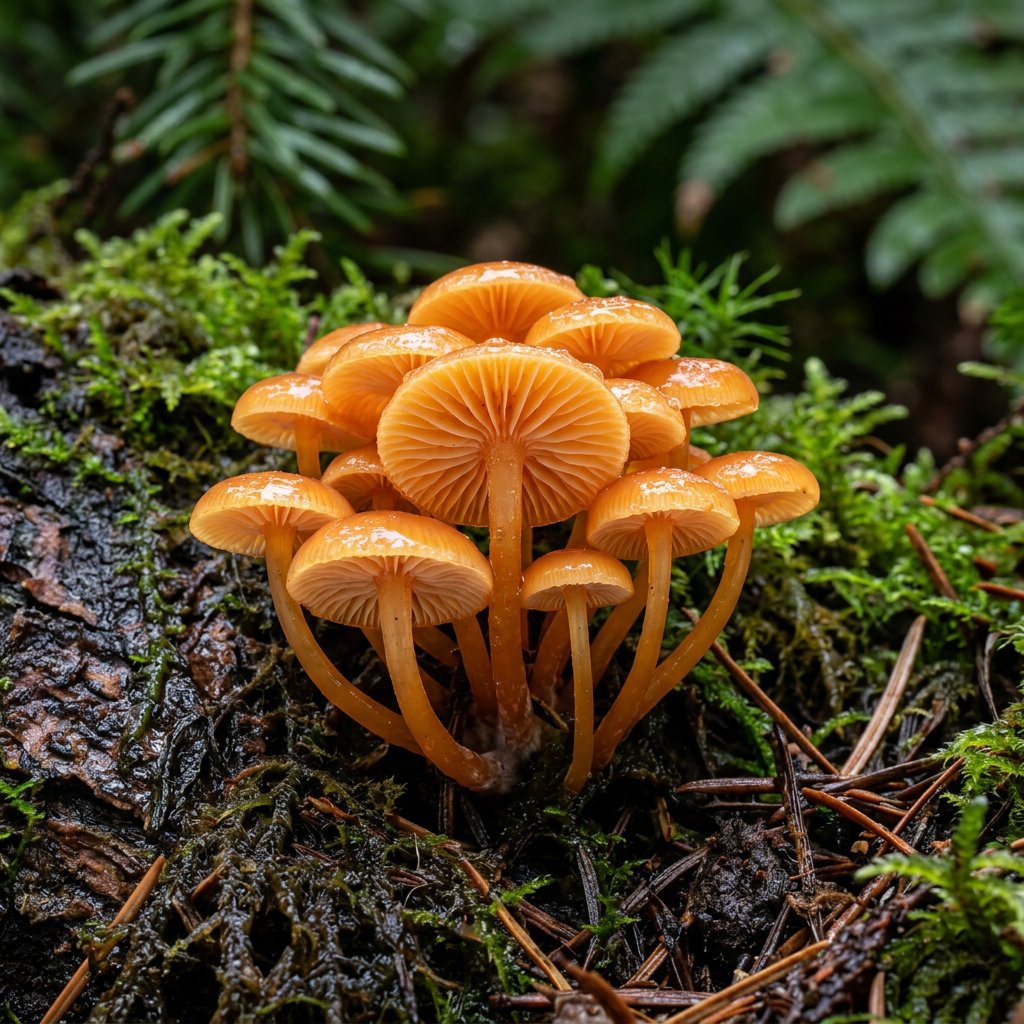
Known as the Yellow Navel, this tiny, glowing gem of the forest floor looks like it belongs in a neon-lit fairy tale. Its striking chartreuse or lime-green hue makes it pop vividly against the dark, rotting logs it calls home. While it may look like a delicate tropical arrival, it is a hardy decomposer found in temperate woodlands across the globe.
🔍 How to Identify
- 🎨 Neon Palette: The entire mushroom is a vivid greenish-yellow or "electric" lime color, which remains remarkably bright even as the specimen ages.
- 🌀 The "Navel": True to its name, the cap features a distinct central depression (umbilicate), making the mushroom look like a tiny, colorful belly button.
- 📏 Translucent Lines: The cap is often thin and "striate," meaning you can see radial lines running from the center to the edge, revealing the structure of the gills beneath.
- 📉 Descending Gills: The gills are relatively thick, widely spaced, and "decurrent," meaning they travel significantly down the length of the stem.
🌲 Habitat & Ecology
- 🪵 Woodland Scavenger: This species is a saprobic specialist. Instead of growing from the soil, it emerges directly from well-decayed coniferous wood, such as old pine or fir stumps.
- 🌿 Mossy Companions: It is almost always found nestled within thick, damp carpets of moss. It plays a vital role in the ecosystem by breaking down tough wood fibers and returning nutrients to the forest floor.
⚠️ Safety & Toxicity
- 🛑 WARNING: Do not consume this mushroom. Proper identification of small yellow fungi requires expert knowledge.
- 🚫 Status: Chrysomphalina grossula is considered inedible. Because of its small size and thin flesh, it has no culinary value, and its chemical makeup is not thoroughly studied for safety.
- 🐾 Pet Safety: While not known to be deadly, many small wood-rotting fungi can cause severe gastrointestinal upset in dogs or cats if ingested.
✨ Fun Fact
If you head into the woods at night with a UV flashlight, you might catch a show! This mushroom is known to be biofluorescent, meaning it glows with an eerie, supernatural intensity under ultraviolet light.
More Details