Info
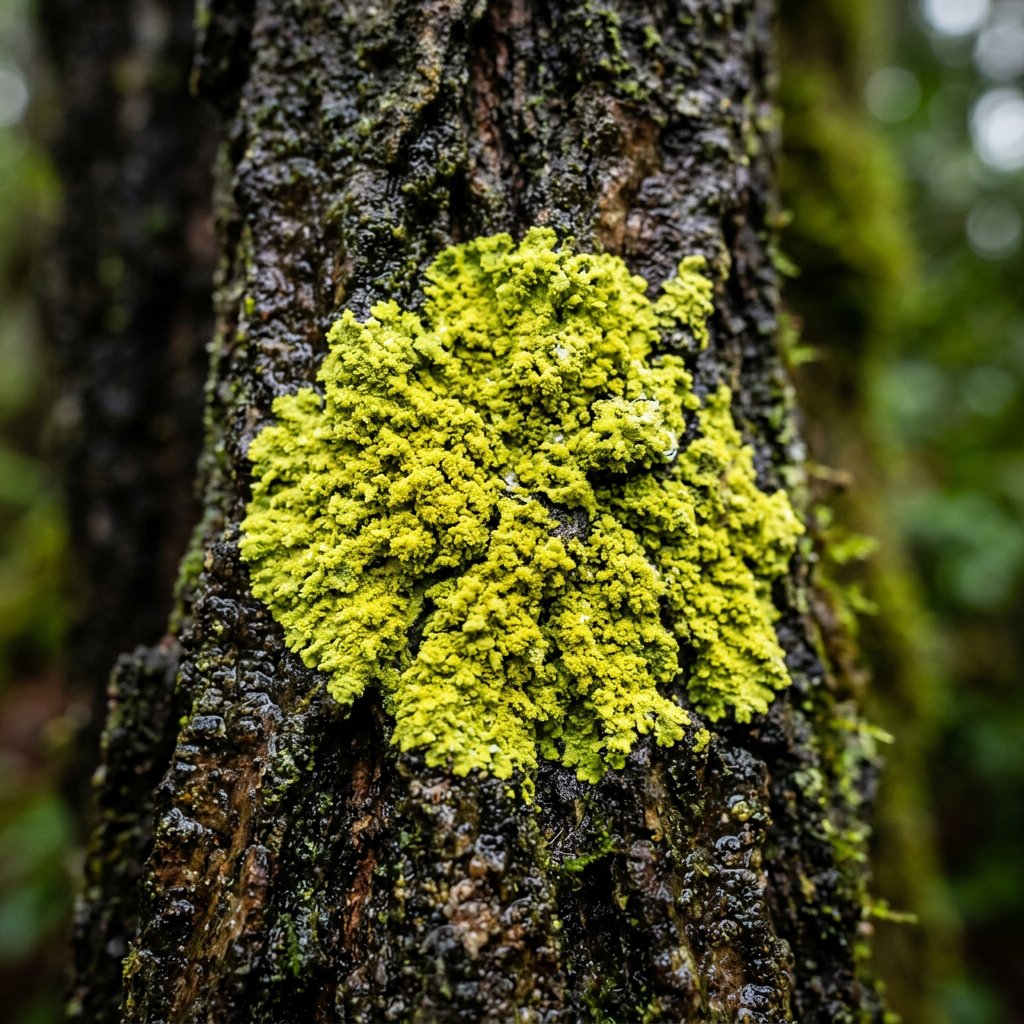
Often called "Sulfur Dust Lichen" or "Gold Dust Lichen," this striking organism looks less like a traditional mushroom and more like a vibrant spill of neon yellow paint across the landscape. In European folklore, these bright "powdery" growths were sometimes associated with hidden treasures or "gold dust" left behind by forest spirits. While it belongs to the fungal kingdom, it lives as a lichen, forming a brilliant, crusty partnership with algae to survive in shaded woodlands.
🔍 How to Identify
- ✨ Appearance: It forms a "leprose" crust, meaning it looks entirely like a layer of tiny, loose granules or coarse powder rather than having a solid body.
- 🎨 Color: Its most striking feature is its intense, electric sulfur-yellow or chartreuse-green hue, which remains vivid even in low light.
- 🧽 Texture: It lacks a distinct border or "skin," appearing as a soft, velvety coating that can easily be rubbed off if touched.
🌲 Habitat & Ecology
- 🌑 Shaded Sanctuaries: You won't find this sunbathing; it prefers the deep shade of vertical rock faces (especially acidic rocks) or the rugged bark of ancient coniferous and deciduous trees.
- 💧 Moisture Seeker: It thrives in humid, damp forests where it can absorb moisture directly from the air, often growing on the undersides of overhanging rocks to stay protected from direct rain.
- 🧪 Chemical Defense: It produces vulpinic acid, a bright yellow pigment that protects the organism from being eaten by slugs and snails.
⚠️ Safety & Toxicity
- 🚫 WARNING: Do not ingest. While it is not a "death cap" mushroom, it contains toxic compounds meant to deter predators.
- 🐺 Historical Danger: The vulpinic acid found in this species was historically mixed with bait to poison wolves and foxes. While touching it generally causes no harm, it should be kept away from children and pets, and hands should be washed after handling.
✨ Fun Fact
The name Chrysothrix is derived from the Greek words for "golden hair," referring to the delicate, thread-like appearance of some related species, though Chlorina is most famous for looking like a sprinkle of neon fairy dust!
More Details







