Info
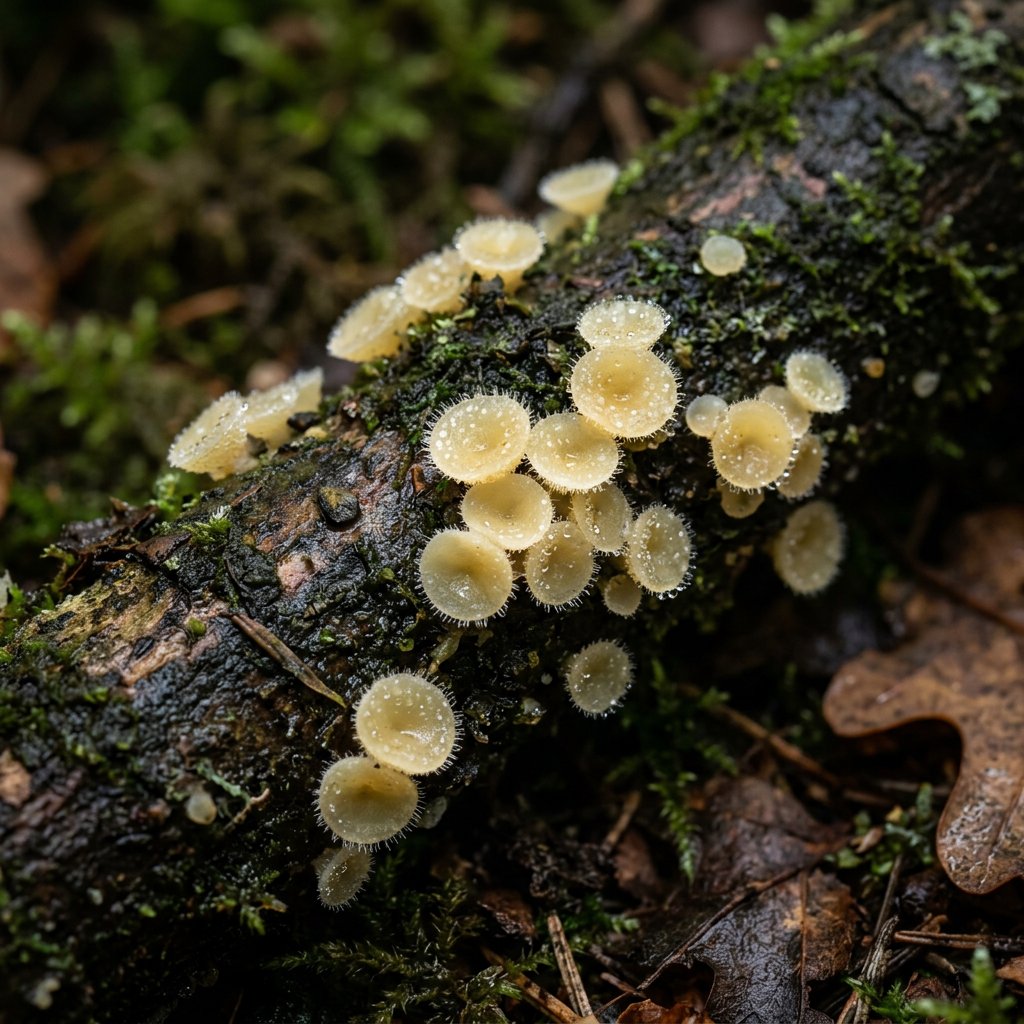
Often called "fairy cups," members of the Cistella genus are the hidden gems of the fungal world. These minute, disc-shaped mushrooms are so small they are frequently mistaken for specks of dust or tiny bits of mold on a log. To the patient observer with a hand lens, they reveal themselves as intricate, fuzzy bowls that look like they belong in a dollhouse kitchen.
🔍 How to Identify
- 🥣 Tiny Apothecia: They don't have traditional caps and gills; instead, they form "cups" (apothecia) that are usually less than 1 or 2 millimeters wide.
- ☁️ Velvety Texture: The outside of the cup and the rim are covered in fine, microscopic hairs, giving them a soft, frosted, or "hairy" appearance.
- 🎨 Pale Palette: Most species are translucent white, cream, or pale yellow, making them pop against the dark, damp wood they grow on.
🌲 Habitat & Ecology
- 🪵 The Recyclers: These are saprobic fungi, meaning they are the forest's clean-up crew. They spend their lives breaking down dead organic matter like rotting wood, fallen twigs, and old plant stems.
- 💧 Micro-Climates: Because they are so small, they dry out easily. You will almost always find them in very damp, shaded areas, often tucked into the crevices of bark where moisture lingers after a rain.
⚠️ Safety & Toxicity
- 🛑 WARNING: While Cistella mushrooms are not known to be "deadly" in the way some large mushrooms are, they are not edible.
- 🚫 Size and Uncertainty: Their microscopic size makes them impossible to harvest for food, and because there are hundreds of similar-looking tiny white fungi, some of which contain unknown toxins, they should never be consumed. They pose little risk to pets or kids unless ingested in large quantities.
✨ Fun Fact
Under a microscope, the tiny hairs on the edge of a Cistella cup often have "granulated" tips that look like they’ve been rolled in sugar. Mycologists use the specific shape and texture of these microscopic "sugar crystals" to tell different species apart!
More Details







