Info
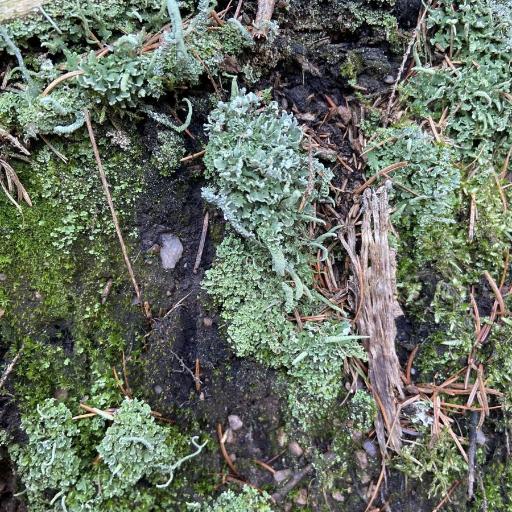
Known as the "Common Powderhorn," this tiny, pale green lichen looks like a miniature collection of wizard hats or dragon horns scattered across a mossy log. While often mistaken for a moss or a tiny mushroom, it is actually a fascinating partnership between fungi and algae, quietly thriving in damp woodlands. It is one of the most common "pixie cup" style lichens you’ll encounter on a forest stroll.
🔍 How to Identify
- 🍦 The Texture: The slender upright stalks (called podetia) are covered in a fine, flour-like dust known as soredia. This "powder" is actually how the lichen clones itself to spread.
- 🦄 The Shape: Most individuals look like simple, unbranched spikes or "horns" that taper to a point, though they occasionally form very narrow, shallow cups at the tips.
- 🎨 The Color: They display a soft, grayish-green or "seafoam" hue. When they are wet from rain, they turn a more vibrant green; when bone-dry, they fade to a ghostly ash-white.
🌲 Habitat & Ecology
- 🪵 The Foundation: You will almost always find them colonizing heavily decayed logs, rotting tree stumps, or the very base of living trees with acidic bark, such as Oaks and Pines.
- 🍄 The Roommate: It is frequently seen growing alongside lush green mosses. Together, they create a micro-habitat that helps retain moisture on the forest floor, acting as a tiny sponge for the ecosystem.
⚠️ Safety & Toxicity
- 🛡️ Safe to Touch: Cladonia coniocraea is not toxic to the touch and is safe for hikers or curious children to observe closely.
- 🚫 Not Edible: While not considered "poisonous" in the same way as a Death Cap mushroom, it is entirely inedible for humans. It is tough, bitter, and provides no nutritional value, so it should be left on its log to be enjoyed visually.
✨ Fun Fact
Lichens like the Powderhorn are biological "pioneers." Because they can survive on bare wood or nutrient-poor surfaces, they are often the first organisms to move in and begin the process of turning rotting wood back into rich soil for the rest of the forest to use.
More Details







