Info
Often called the Leafy Cup Lichen, Cladonia foliacea is a miniature masterpiece of the forest floor and coastal dunes. While it is technically a lichen—a symbiotic partnership between a fungus and an alga—it belongs to the fungal kingdom and is often sought out by "macro-hunters" for its intricate, lettuce-like appearance. In folklore, these tiny, curled structures were sometimes imagined as the plates or scales of woodland spirits, carpeting the ground in a mosaic of pale green.
🔍 How to Identify
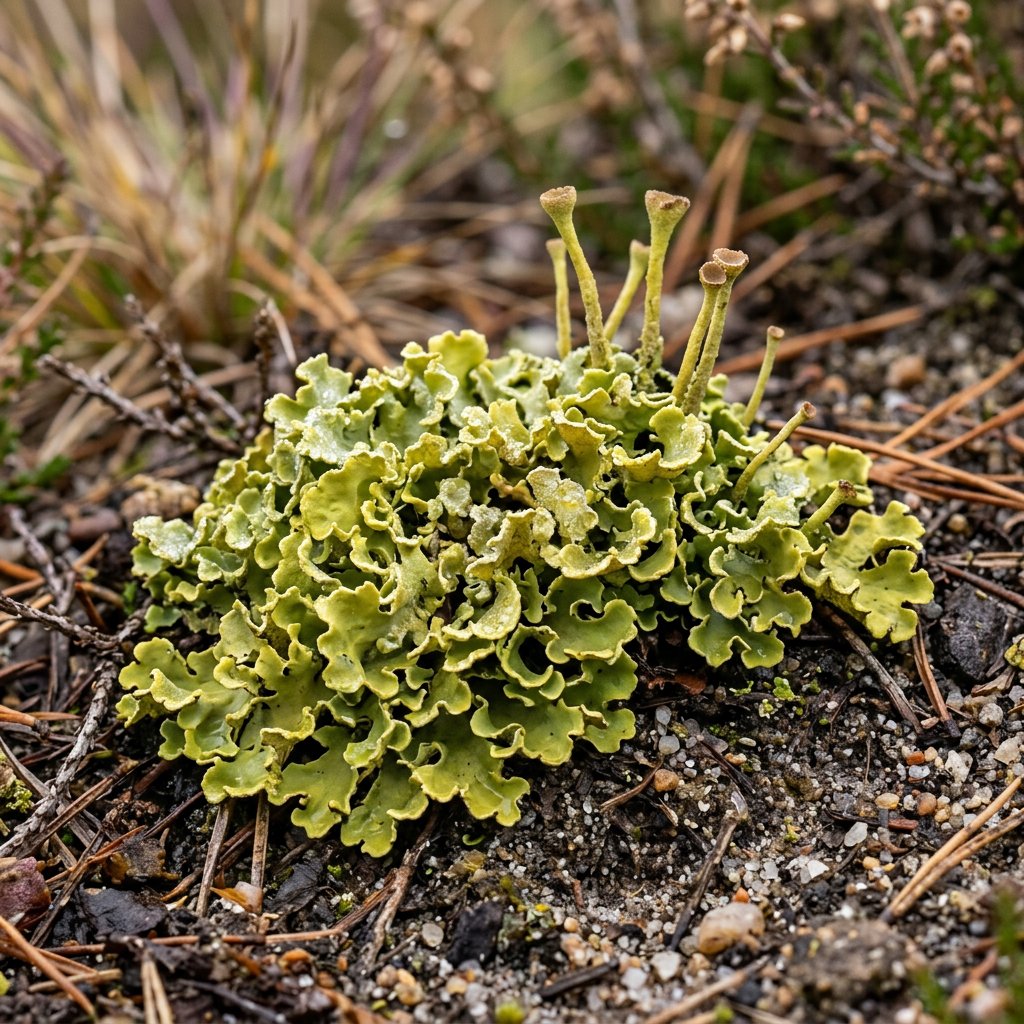
- 🥬 The Squamules: The most striking feature is the "leaves" (squamules), which are deeply lobed and elongated. They look like tiny, scattered pieces of torn lettuce or kale.
- 🎨 Two-Toned Color: The upper surface is a pale yellowish-green or grey-green, while the underside is a distinct creamy white or pale yellow. When the plant is dry, the leaves curl upward, revealing the lighter underside.
- 🍄 The Podetia: Occasionally, it produces small, inconspicuous stalks or "cups" (fruiting bodies), though this species is mostly identified by its carpet of leafy scales rather than its height.
🌲 Habitat & Ecology
- 🏖️ Preferred Ground: You will rarely find this on a tree; it prefers to hug the earth. It thrives in open, sunny spots with sandy or stony soil, such as coastal dunes, heaths, and dry, acidic grasslands.
- 🤝 The Great Collaborator: As a lichen, it plays a vital role in soil crusts, helping to prevent erosion in delicate ecosystems. It often grows in tight-knit colonies alongside various mosses, creating a lush, multi-textured carpet.
⚠️ Safety & Toxicity
- 🚫 Status: NOT EDIBLE. While not typically classified as "deadly" like some true mushrooms, Cladonia foliacea contains complex lichen acids that can cause severe digestive distress if ingested.
- 🐾 Pets & Foraging: Because it grows low to the ground, it can be easily stepped on or nibbled by curious pets. It is best enjoyed as a visual treasure only; keep it out of reach of children and animals to avoid accidental ingestion.
✨ Fun Fact
Lichens like Cladonia foliacea are essentially "living air sensors." They lack a waxy outer cuticle, meaning they absorb everything directly from the atmosphere. Because of this, they are extremely sensitive to pollution; if you find a large, healthy colony of Leafy Lichen, it is a sign that the air you are breathing is exceptionally clean!
More Details







