Info
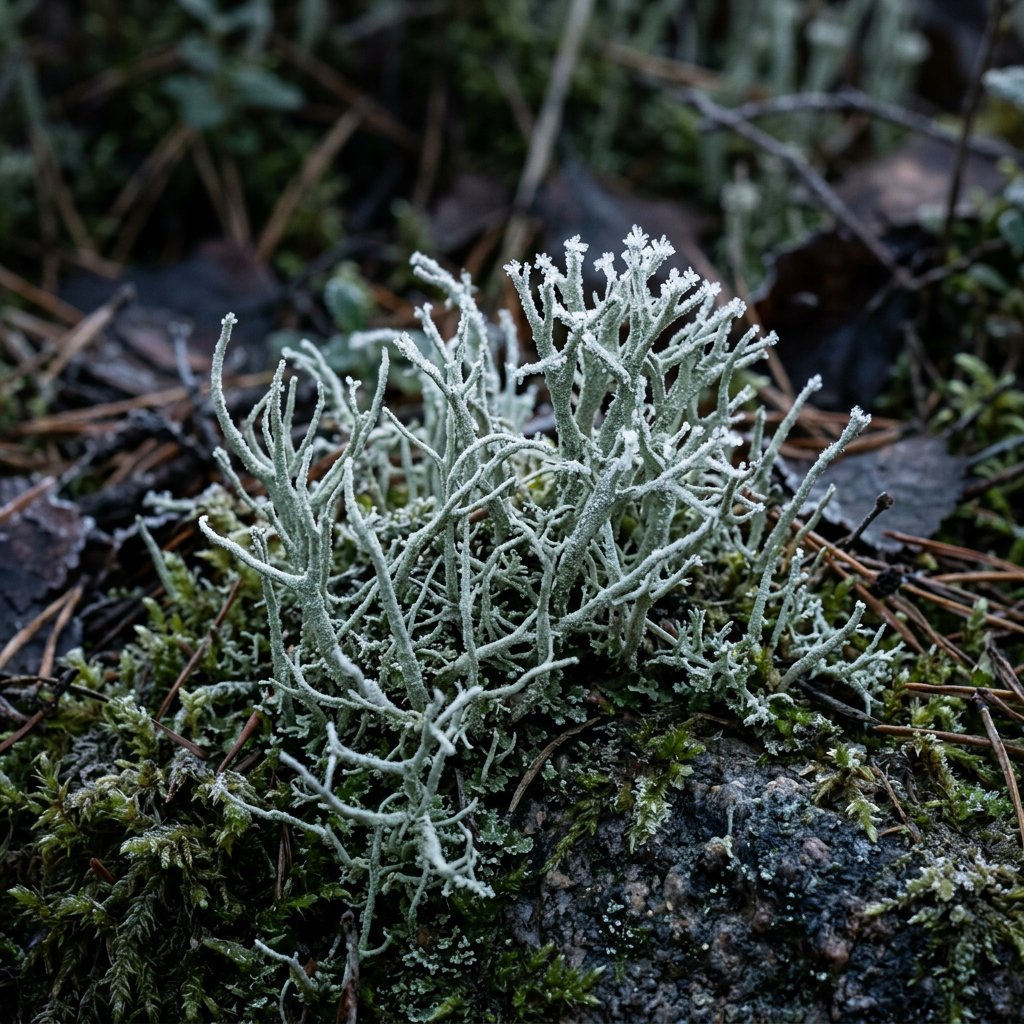
Commonly known as the Glaucous Cup Lichen, this delicate organism is a fascinating example of nature’s teamwork. It isn't a single plant, but a symbiotic partnership between a fungus and an alga working together to survive in harsh conditions. Often appearing like ghostly, miniature antlers or frosted spears rising from the earth, it adds a touch of "fairy-tale" mystery to forest floors and peat bogs.
🔍 How to Identify
- 🌵 The Podetia: The main body consists of upright, slender stalks that look like pale, grayish-green needles. They are typically unbranched and taper to a fine point, though they occasionally form very narrow, indistinct cups.
- ❄️ Surface Texture: The stalks have a "glaucous" (waxy or frosted) appearance and are often covered in fine, powdery granules called soredia. This gives them a dusty, matte look rather than a shiny one.
- leaf The Base: At the very bottom, you’ll see tiny, scale-like structures known as squamules. These small "leaves" hug the soil or wood from which the stalks grow.
🌲 Habitat & Ecology
- 🧪 Acid Specialist: Unlike many plants that need neutral soil, Cladonia glauca thrives in highly acidic environments. It is most commonly found on peat moors, heaths, and very old, decaying conifer logs.
- 🌬️ Air Cleaners: Like most lichens, this species gets its nutrients from the atmosphere rather than the ground. It acts as a natural bio-indicator; it rarely grows in areas with heavy air pollution, so seeing it is a sign of a healthy environment.
⚠️ Safety & Toxicity
- 🚫 Status: NOT EDIBLE. While Cladonia glauca does not contain the deadly poisons found in some "true" mushrooms, it is tough, bitter, and contains lichen acids that are indigestible for humans.
- 🐾 Pets & Wildlife: It is generally safe if touched, but keep an eye on curious pets. Ingesting large amounts of lichen can cause mild digestive upset in cats and dogs due to its complex chemical compounds.
✨ Fun Fact
Lichens are essentially "fungi that discovered farming." The fungal part of Cladonia glauca provides the structure and protection (the "greenhouse"), while the internal algae produce food through photosynthesis to feed them both!
More Details







