Info
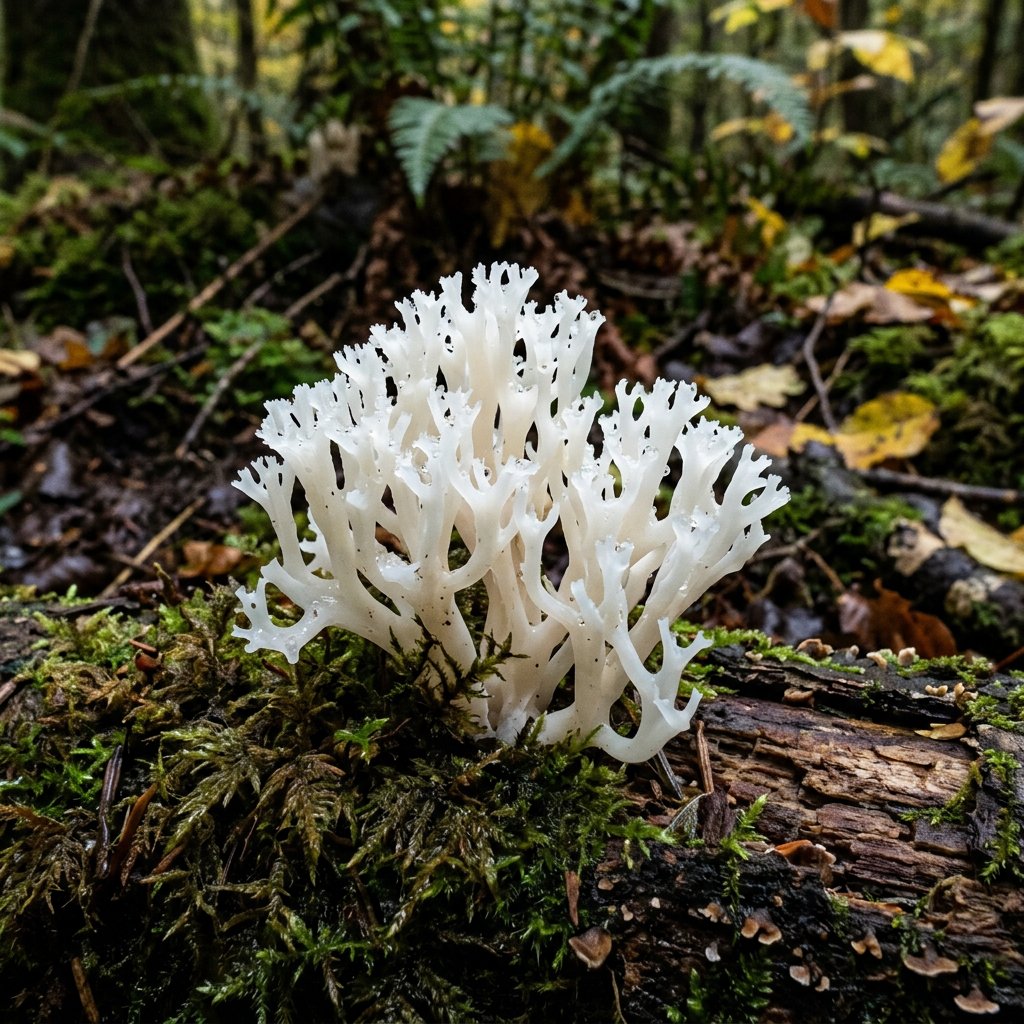
Known as the "Crested Coral Fungus," this delicate white structure looks more like it belongs in the Great Barrier Reef than on a mossy forest floor. In woodland folklore, these ghostly white clusters were sometimes called "fairy fingers," appearing as if a tiny hand were reaching out from the damp soil. They are one of the most common coral-like fungi you’ll encounter during a temperate autumn stroll.
🔍 How to Identify
- 🍴 Branching Structure: It grows in multi-branched clusters that resemble a miniature white shrub, typically reaching about 3–10 cm in height.
- ❄️ Crested Tips: The most distinct feature is the tips of the branches, which are jagged, fringed, or "toothed"—resembling tiny crowns or the frayed ends of a string.
- 🤍 Color Palette: Usually pure white to creamy-ivory. However, as it ages or if it is affected by a specific parasite, the color can shift to a dull gray or even blackish tone.
🌲 Habitat & Ecology
- 🌳 Forest Floor Dweller: This fungus is commonly found on the ground in both coniferous and deciduous forests, often nestled among moss, leaf litter, or rotting wood.
- 🍄 The "Dirty" Look: If you find a specimen that looks smoky or covered in soot, you’ve found a "zombified" mushroom! It is frequently host to a tiny parasitic fungus called Helminthosphaeria clavariarum which turns the white branches gray.
⚠️ Safety & Toxicity
- 🚨 WARNING: While some guidebooks list the Crested Coral as edible, it is not recommended for foraging. Coral fungi are notoriously difficult for even experts to distinguish from one another.
- 🤢 Digestive Risk: Several similar-looking coral species (especially in the Ramaria genus) are toxic and can cause severe gastrointestinal distress, including cramping and purging.
- 🐾 Pets & Children: Because they are fragile and interesting to touch, keep a close eye on toddlers and pets. Ingesting raw forest fungi can lead to vomiting and stomach upset.
✨ Fun Fact
The Crested Coral is a bit of a shapeshifter! Depending on the humidity and the age of the specimen, the "crested" tips can either be very sharp and distinct or almost blunt, leading many early mycologists to accidentally name it as several different species.
More Details
| Hymenium Type | Smooth |
| Stipe Character | Bare Stipe |
| Spore Print Color | White |
| Mushroom Cap Shape | No Mushroom Cap |
| Mushroom Ecological Type | Saprobiont |