Info
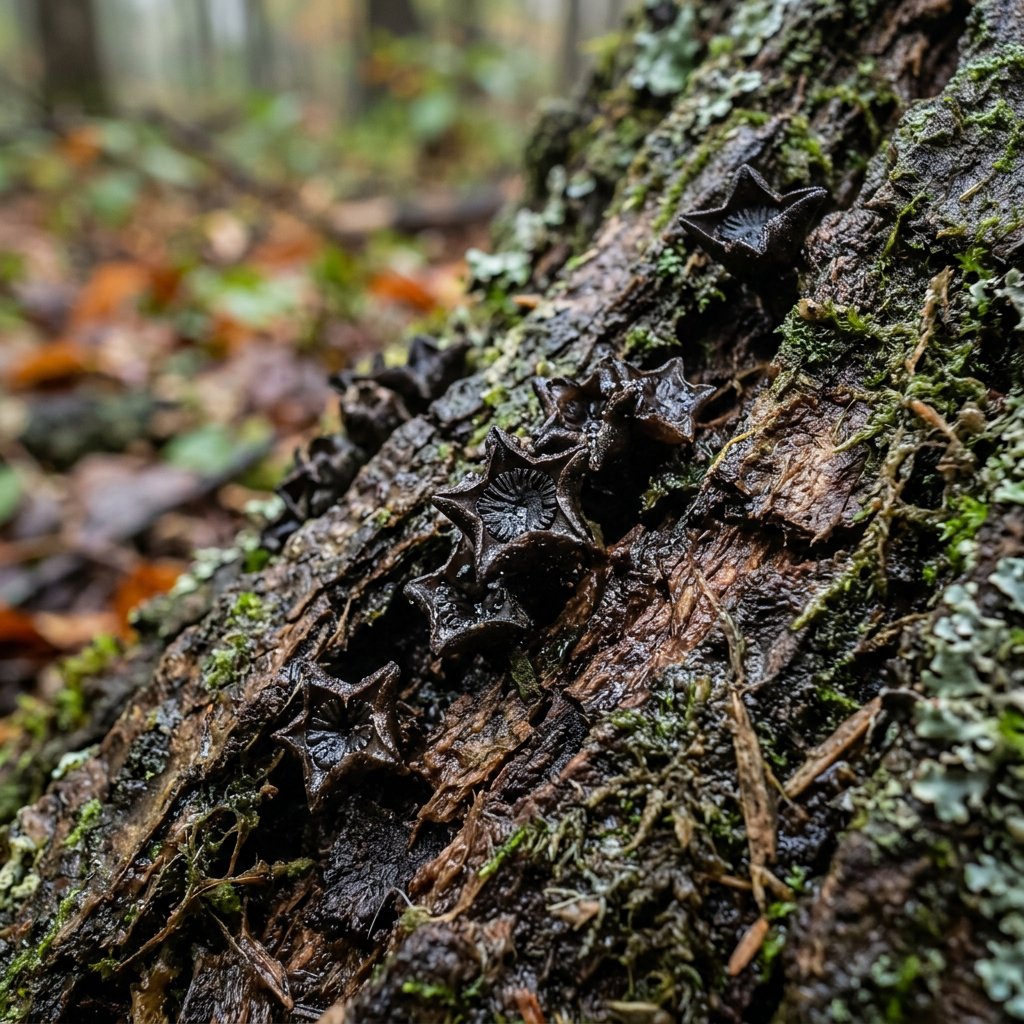
Often appearing as a tiny, geometric secret hidden on the forest floor, Coccomyces dentatus is a fascinating "micro-fungus" that looks like a miniature celestial body. It is most frequently spotted by keen-eyed hikers and naturalists who take the time to inspect the decaying leaves of oak trees. While it lacks the classic "cap and stem" look of a meadow mushroom, its star-shaped structure makes it a favorite for macro photographers.
🔍 How to Identify
- 🌑 The Stroma: It begins its life as a flat, circular, or diamond-shaped black spot (stroma) embedded within the tissue of a fallen leaf, usually measuring only 1 to 3 millimeters across.
- ⭐ The Star Shape: Upon maturity, the black surface splits into 4 to 6 triangular "teeth" or lobes that peel back, making the fungus look like a tiny, dark star.
- 🎨 The Disc: Once the "teeth" open, they reveal a pale gray, cream, or yellowish inner surface, which is the fertile area where spores are produced.
🌲 Habitat & Ecology
- 🍂 Leaf Litter Specialist: This fungus is a specialist that thrives on the fallen, leathery leaves of deciduous trees. It has a very strong preference for Oak (Quercus), but can occasionally be found on Beech or Chestnut leaves.
- ♻️ Forest Janitor: As a saprobic fungus, its primary job is decomposition. It breaks down the tough cellulose and lignin in dead leaves, recycling essential nutrients back into the woodland soil to feed the next generation of trees.
⚠️ Safety & Toxicity
- 🛑 WARNING: Do not attempt to eat this fungus. While there are no records of it being "deadly," it is classified as inedible due to its tiny size, leathery texture, and lack of nutritional value.
- 🧤 General Safety: Because this fungus grows on decaying organic matter, it is often surrounded by bacteria or other molds. It is best enjoyed visually or through a camera lens rather than by touch.
✨ Fun Fact
The specific epithet dentatus comes from the Latin word for "toothed." If you look at this fungus through a magnifying glass, it looks like a tiny, jagged mouth emerging from the leaf, which led early mycologists to describe it as having "prehistoric teeth."
More Details







