Info
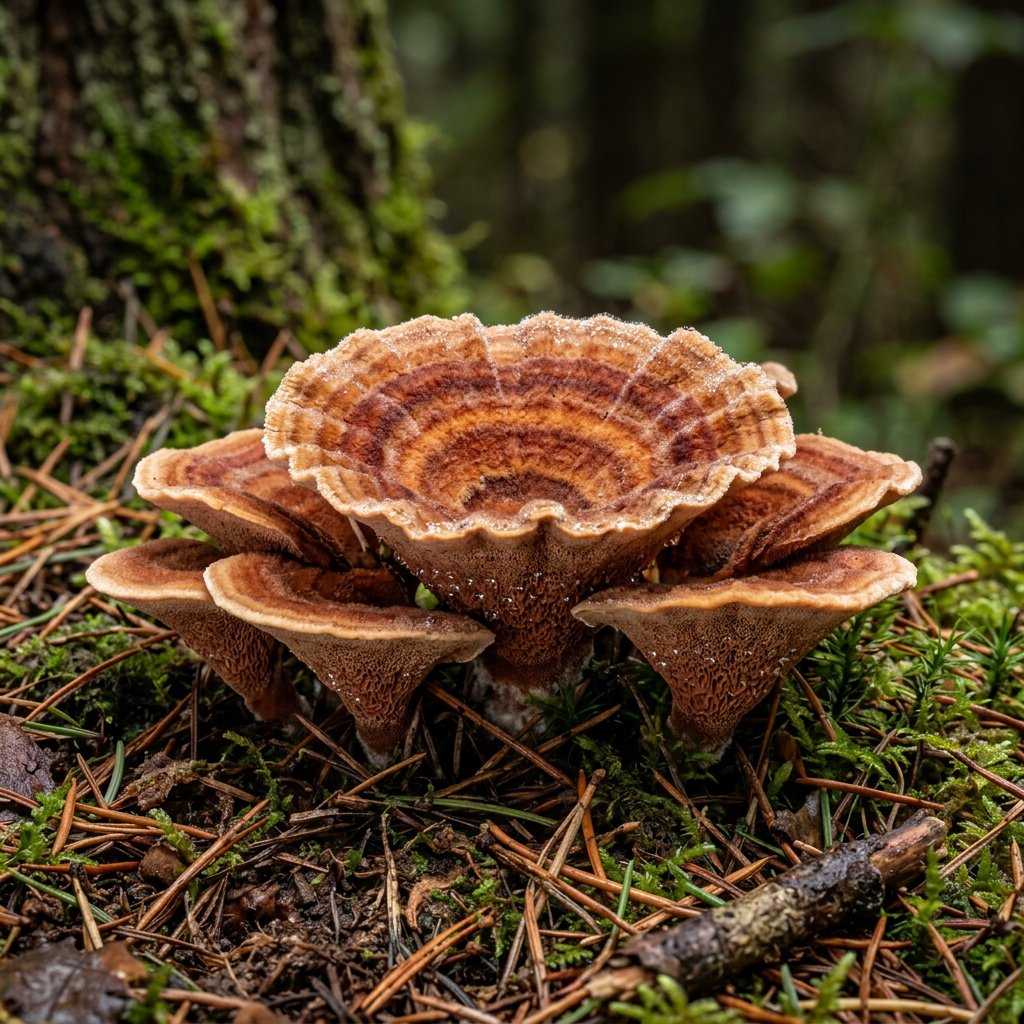
Often called the Tiger's Eye mushroom, this mesmerizing fungus looks more like a piece of polished wood or a leather ornament than a typical toadstool. Its concentric rings of amber, burnt orange, and mahogany create a striking pattern that mimics the iris of a wild cat. Unlike the soft, fleeting mushrooms that pop up and vanish in a day, this sturdy polypore is built to last, often surviving through harsh weather that would melt other fungi.
🔍 How to Identify
- 👁️ The Zoned Cap: The cap is funnel-shaped and marked with distinct, velvety circular bands of color. These "zones" fade from dark brown at the center to a lighter, tan edge.
- 🧮 Pore Surface: Instead of gills, the underside is covered in tiny, grayish-brown pores. If you look closely, these pores actually run slightly down the top of the stem.
- 🏗️ The Stem: It possesses a tough, central stalk that is often covered in fine, rusty-colored hairs, giving it a felt-like texture.
🌲 Habitat & Ecology
- 🏖️ Sandy Soils: This mushroom is a specialist of "poor" ground. You will most often spot it in sandy areas, along the edges of well-trodden forest paths, or in spots where the earth has been recently disturbed.
- 🌲 Conifer Connection: It forms a hidden, beneficial partnership (mycorrhiza) with the roots of pine and spruce trees. It acts as a nutrient recycler, helping the trees thrive in sandy, low-nutrient environments.
- 🔥 Fire Follower: It is frequently found in "burn sites" or old charcoal hearths, as it enjoys the specific chemical balance of scorched earth.
⚠️ Safety & Toxicity
- 🚫 Status: Non-toxic but strictly Inedible.
- 👞 Texture Warning: While it isn't poisonous, you wouldn't want it on your dinner plate. The flesh is incredibly tough, corky, and leathery. Attempting to eat it is comparable to chewing on a piece of cardboard or an old boot.
- 🐾 Pet Safety: Because it is so woody and dry, it generally doesn't attract pets or wildlife as a food source, but it poses no chemical threat if accidentally nibbled.
✨ Fun Fact
The species name perennis means "perennial." While the mushroom itself doesn't live for years like a tree, its leathery fruit body is so durable that it can persist through the winter and still be standing—albeit a bit faded—when the new generation of mushrooms emerges the following year!
More Details